Moving Into a New NJ Home? Why Winter Is the Most Important Time to Test for Radon
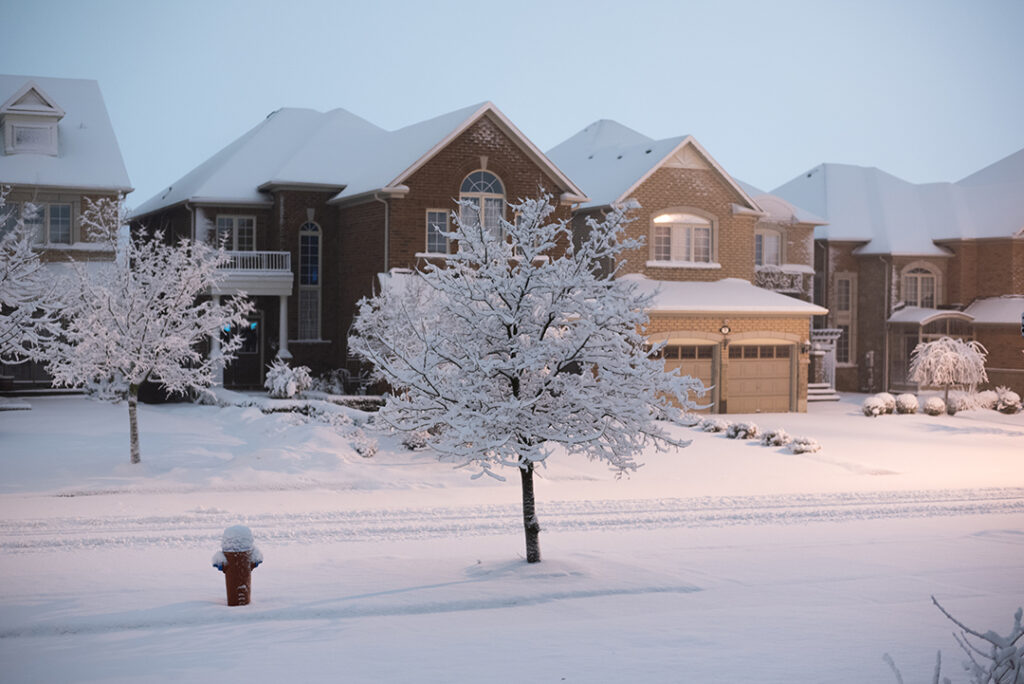
If you’ve just moved into a new home in New Jersey — or you’re settling in after a fall closing — there’s one task that should be on your list before the temperatures drop and the windows stay shut for the season: testing for radon. Winter is not just a convenient time to test for radon. It’s the most important time. And for new homeowners who haven’t yet established a baseline, getting a test done in the first winter you occupy the home is one of the most straightforward things you can do to protect your family’s long-term health.
Radon is a radioactive gas you cannot see, smell, or taste. It forms naturally from the breakdown of uranium in soil and rock, and it seeps into homes through foundation cracks, construction joints, gaps around pipes, and through well water. It’s the second leading cause of lung cancer in the United States, responsible for an estimated 21,000 deaths per year. And New Jersey — with its varied geology, older housing stock, and dense residential development — has significant radon risk across many of its counties.
This article explains why winter matters for radon testing, what new NJ homeowners need to know about radon risk in their area, and what to do if your test comes back above the action level.
Why Radon Levels Are Higher in Winter
Radon concentrations inside a home are not static. They fluctuate based on a range of factors — and seasonal patterns are among the most consistent and predictable. In winter, radon levels in most homes are measurably higher than they are in summer, often significantly so. Understanding why helps you appreciate why a winter test gives you the most useful and conservative picture of your actual exposure.
The primary driver is ventilation. In warmer months, windows are open, fresh air circulates through the home, and radon that seeps in from the soil beneath the foundation is diluted and dispersed before it can accumulate. In winter, homes are sealed. Windows stay closed, ventilation rates drop, and radon that enters the living space has nowhere to go. It builds up.
The second factor is the stack effect. In cold weather, warm air inside the home rises and escapes through upper levels, creating a negative pressure zone in the lower levels — particularly the basement. This negative pressure acts like a vacuum, drawing soil gases including radon up through the foundation and into the home at a higher rate than in warmer seasons when pressure differentials are smaller.
Frozen or saturated ground also plays a role. When the ground freezes or becomes heavily saturated with water, radon that would normally disperse through the soil laterally is forced upward — toward the path of least resistance, which is often through or around your home’s foundation.
The EPA acknowledges that radon levels vary seasonally and recommends testing during closed-house conditions — which is exactly what winter provides. A test conducted in July with the windows open and the air conditioning cycling fresh air through the house will almost always return a lower reading than the same home tested in January. If you’re a new homeowner trying to establish whether your home has a radon problem, you want the most accurate picture of typical exposure — and that picture is best captured in winter.
Radon Risk Across New Jersey
New Jersey is not uniformly high-risk for radon, but significant portions of the state — particularly in the north and center — have geology that produces elevated radon levels. The NJDEP maps radon potential by county and municipality, and the pattern is consistent: homes in the Highlands region of Sussex, Warren, Morris, and Passaic counties tend to have the highest radon potential due to the underlying granite and gneiss bedrock. Somerset, Hunterdon, and parts of Mercer and Middlesex counties also show elevated risk.
New homeowners in Hackettstown, Washington Township, Chester, Mendham, Bernardsville, Flemington, and Raritan sit in areas where elevated radon readings are common enough that testing should be considered non-negotiable. In Parsippany, Morris Plains, and Denville, radon levels above the EPA action level of 4 picocuries per liter (pCi/L) are regularly found during real estate transactions and post-purchase testing. Even in areas with lower average risk — parts of Ocean, Atlantic, and Cape May counties — individual homes can still test high depending on foundation type, construction, and local soil conditions.
The important thing to understand is that radon risk is hyperlocal. Your neighbor’s test result tells you very little about your own home. The only way to know your radon level is to test your home directly.
What New Homeowners Need to Know About Prior Testing
Many new homeowners assume that because a radon test was conducted during the home purchase process, they’re covered. This assumption deserves scrutiny. Real estate radon tests are typically short-term tests — 48 to 96 hours — conducted under closed-house conditions as required. They provide a snapshot, not a long-term average. They’re useful for triggering negotiations about mitigation, but they’re not a substitute for a comprehensive baseline established by you, in your occupancy conditions, over a longer period.
There’s also the question of when the test was conducted. A radon test done in August during a home inspection may have been performed during a period when windows were open for cooling, or when the home was vacant and ventilation patterns were different from those of an occupied residence. The result may legitimately underrepresent what a full winter of occupancy would show.
If a radon mitigation system was already installed in the home when you purchased it, that’s good news — but it doesn’t mean you can skip testing. Mitigation systems require periodic verification that they’re still functioning effectively. Fan failure, changes to the home’s pressure dynamics from renovations or additions, and degradation of seals over time can all affect system performance. A post-occupancy test confirms the system is doing its job. Learn more about how residential radon mitigation works and what a properly functioning system should deliver.
How to Test for Radon in Your New NJ Home
Radon testing is straightforward and inexpensive. There are two main approaches: short-term tests and long-term tests.
Short-term tests use a small charcoal canister or electret ion chamber that you place in the lowest livable level of your home — typically the basement, or the first floor if there is no basement — for a period of 48 hours to 7 days. You then mail the device to the included laboratory and receive results within a few days. Short-term tests are widely available at hardware stores and online. They give you a quick answer and are the most common approach for initial screening.
Long-term tests use an alpha track detector that remains in place for 90 days to one year. Because radon levels fluctuate daily and seasonally, a long-term test provides a more accurate picture of your average annual exposure than a short-term test can. If your short-term result is close to the 4 pCi/L action level — say, between 2 and 6 pCi/L — a follow-up long-term test is worth conducting before committing to mitigation.
For the most reliable results, the EPA recommends conducting tests under closed-house conditions — keeping windows and exterior doors closed as much as possible for at least 12 hours before and during the test. Winter naturally satisfies this condition, which is another reason a first-winter test is so valuable.
If you’d prefer professional testing, a certified radon measurement specialist can conduct the test and provide a report that carries more weight if you ever resell the home. The NJDEP maintains a list of certified radon testing professionals in New Jersey at nj.gov.
Understanding Your Results
The EPA’s action level for radon is 4 pCi/L. At or above this level, the EPA recommends mitigation. The average indoor radon level in the United States is about 1.3 pCi/L. The average outdoor level is approximately 0.4 pCi/L.
If your test result comes back below 2 pCi/L, your home is in good shape. Retest every two years or after any significant renovation that affects the foundation or lower levels of the home. If your result falls between 2 and 4 pCi/L, consider a long-term follow-up test to get a more precise average, and keep the result in mind for future monitoring. If your result is at or above 4 pCi/L, schedule a radon mitigation consultation. At levels above 8 pCi/L, the EPA recommends acting within a few months rather than waiting.
It’s worth noting that there is no safe level of radon — even below 4 pCi/L there is some risk. The action level is a practical threshold, not a bright line between safe and unsafe. Some homeowners in Princeton, Lawrenceville, and Cherry Hill choose to mitigate at levels between 2 and 4 pCi/L, particularly when young children or family members with respiratory conditions are in the home. That’s a reasonable and increasingly common approach.
What Radon Mitigation Involves
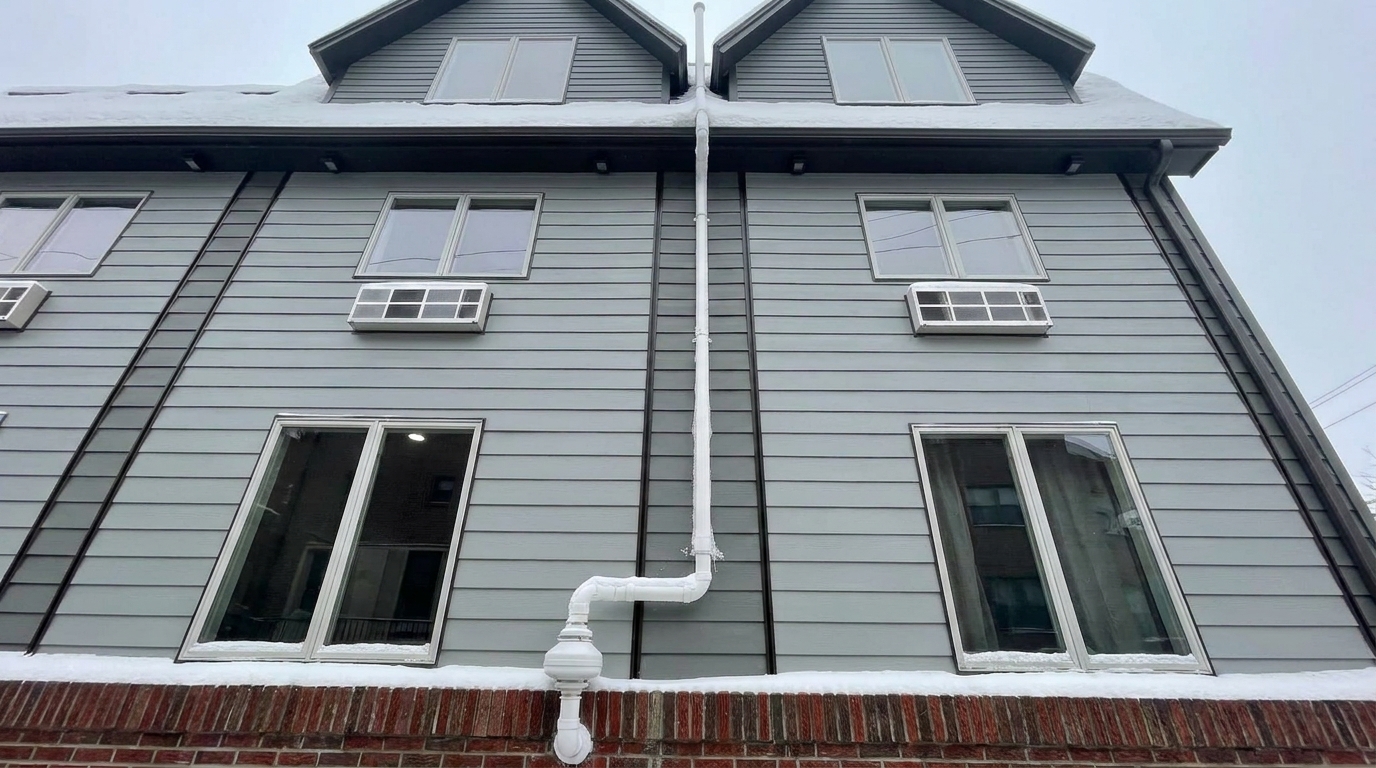
If your test result calls for mitigation, the process is less disruptive than most homeowners expect. The most common and effective method for NJ homes is sub-slab depressurization — a system that uses a PVC pipe inserted through the foundation slab and a continuously running fan to create negative pressure beneath the house, drawing radon out of the soil before it can enter the living space and venting it safely outside.
Installation typically takes a few hours and does not require you to vacate the home. The system runs quietly in the background, and most homeowners are unaware of it once it’s in place. A well-designed mitigation system can reduce radon levels by up to 99 percent. Post-mitigation testing, conducted a few days after installation, confirms that the system is performing as intended.
You can read a full breakdown of how active radon mitigation systems work — including the role of suction pits, PVC vent pipes, and radon fans — in our earlier post on the science behind radon mitigation systems.
Don’t Forget: Radon in Water Is a Separate Issue
If your new NJ home runs on a private well, air radon testing is only part of the picture. Radon dissolves into groundwater and can be present in your well water at significant concentrations — separate from and in addition to radon entering through the foundation. When well water with elevated radon is used for showering, washing dishes, or running the dishwasher, radon is released into the indoor air, adding to your total exposure.
A radon air test does not detect radon in water. They require separate tests. If your home is on a private well in a high-radon area of New Jersey — Sussex, Warren, Morris, Somerset, or Hunterdon counties in particular — testing both air and water is the complete approach. Learn more about radon in well water treatment options available for NJ homeowners.
If you’re just getting started as a new well water homeowner and want a full picture of what to prioritize in your first weeks, our guide on the 30-day water safety checklist for new NJ well water homeowners covers the complete first-month testing plan.
Test This Winter — Before Another Season Passes
Radon is a slow-moving threat. The health effects of exposure accumulate over years, not days, which makes it easy to deprioritize. But the same quality that makes radon less immediately alarming than a burst pipe or a failed furnace is exactly what makes early testing so important. You don’t feel radon. You won’t know it’s there until you test. And winter — when your home is sealed, pressures are working against you, and exposure is at its seasonal peak — is the time when testing gives you the clearest, most protective picture of what you’re actually breathing.
At Jersey Radon, we help new homeowners across New Jersey — from Hackettstown and Flemington to Parsippany, Somerville, and Toms River — test for radon, understand their results, and install mitigation systems that work. If you’ve just moved in and want to get a radon test scheduled or talk through what your results mean, reach out to our team for a free consultation. It’s one of the simplest and most important things you can do for your new home this winter.
