Those White Spots on Your Faucets Aren’t Dirt. They’re a Warning.
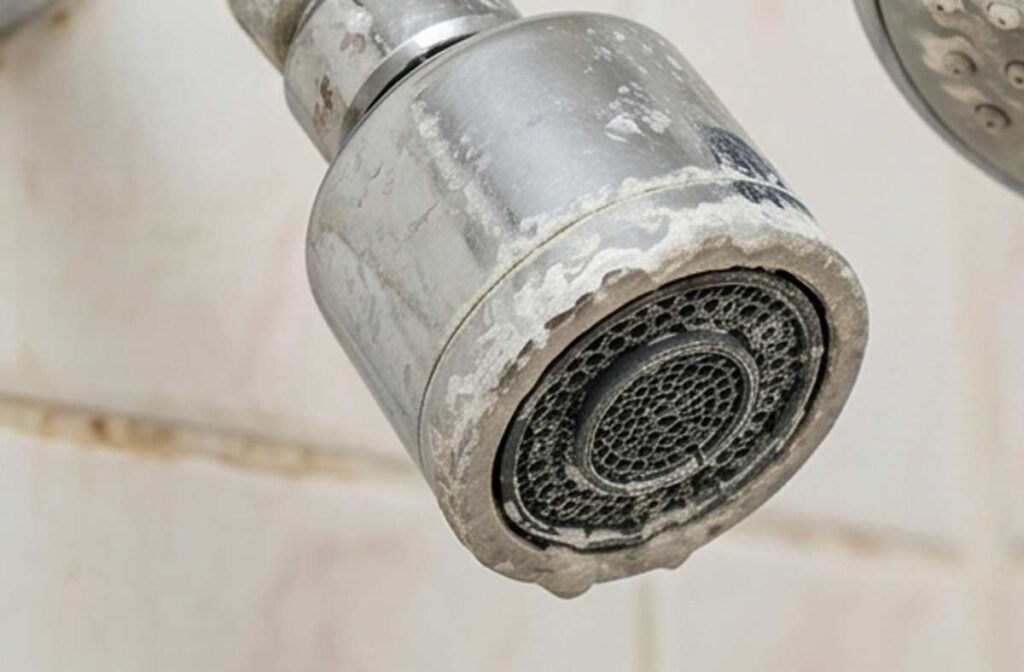
You have scrubbed them. You have tried the vinegar trick. They come back within days, sometimes hours. The white crusty buildup around your faucet base, on your showerhead, along the edge of your sink — it is not a cleaning problem. It is a water problem, and cleaning it off the surface does not address what is causing it.
Here is what those white spots actually are, why they keep coming back, and what it means for your home beyond the cosmetic annoyance. If you are on well water or city water in New Jersey, the answer almost certainly points toward water softener installation as the fix that actually works.
What the White Spots Are
The white deposits are calcium and magnesium carbonate — minerals left behind when water evaporates from a surface. Every time water sits on or drips down a faucet, showerhead, or fixture and then dries, the water itself evaporates but the dissolved minerals do not. They stay behind, accumulate layer by layer, and harden into the chalky white or off-white crust you are seeing.
This is called limescale or mineral scale, and it is the direct physical evidence of hard water. The harder your water — meaning the higher the concentration of calcium and magnesium — the faster and more aggressively scale builds up.
Why Cleaning Does Not Fix It
Acidic cleaners like white vinegar, citric acid-based products, and commercial descalers can dissolve calcium carbonate deposits temporarily. That is why the vinegar trick works in the short term. But cleaning the surface does nothing to change the water coming out of the tap. As long as hard water continues flowing through your fixtures, scale will continue forming. The cleaning cycle is infinite because the source of the problem is never addressed.
This is the distinction between treating a symptom and treating a cause. Limescale on your faucets is a symptom. The cause is hard water.
What Is Happening Inside the Fixtures You Cannot See
The visible scale on the outside of your faucets is the least of the problem. The same mineral buildup is happening inside the aerator — the small screen at the tip of the faucet — where it restricts water flow over time. It is happening inside the showerhead nozzles, which is why older showerheads in hard water homes spray unevenly or lose pressure. It is happening inside the valve body of the faucet itself, where mineral deposits accelerate wear on washers, O-rings, and cartridges and cause dripping, stiffness, and premature valve failure.
Faucets in hard water homes fail earlier and require more frequent cartridge or washer replacement than the same fixtures in soft water homes. The fixtures look the same from the outside — until they do not.
What It Means for the Rest of Your Home
Faucet scale is visible evidence of a process happening everywhere water flows in your home. The same calcium and magnesium depositing on the outside of your fixtures are depositing inside your pipes, inside your water heater, inside your dishwasher, and on your shower glass. The faucet deposits are just the most obvious and accessible sign.
Homes in New Jersey with hard water — which describes most of the state, both on well water and municipal supply — experience measurable appliance efficiency loss, shortened water heater lifespan, and higher long-term maintenance costs relative to homes with treated water. The white spots on your faucets are telling you all of that is happening.
How Hard Water Treatment Stops It
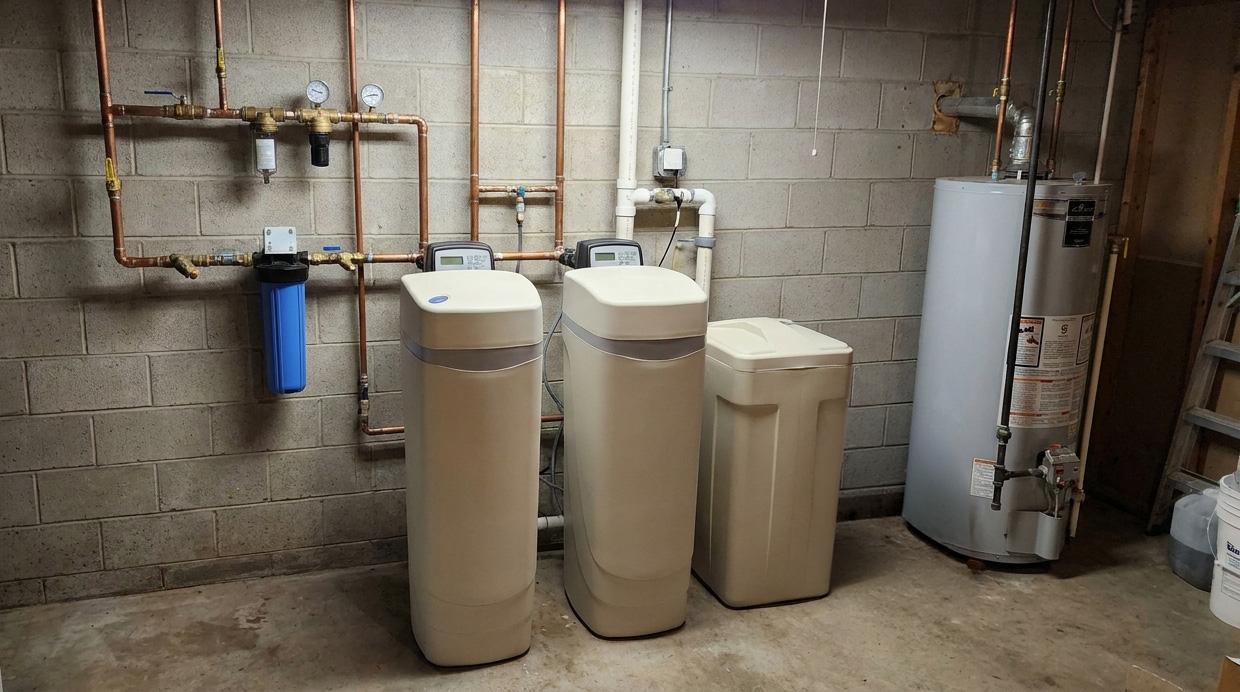
A whole-house water softener removes calcium and magnesium from your water supply before it reaches any fixture, appliance, or pipe in your home. Water that has had its hardness minerals removed does not deposit scale. Faucets stay clean with normal cleaning. Showerheads maintain consistent pressure. Appliances and pipes accumulate no mineral buildup.
Existing scale on fixtures does not disappear immediately after a softener is installed — you will still need to clean off what has already accumulated. But scale stops forming, and over time surfaces stay cleaner with less effort.
Getting to the Actual Fix
If white mineral deposits are a recurring problem in your home, a water hardness test will confirm what you are dealing with and at what level. New Jersey groundwater hardness varies by region and water source, and the right softener size depends on your actual hardness measurement, household water usage, and whether iron or other minerals are also present.
Jersey Radon provides water hardness testing and professional water softener installation throughout New Jersey. Free estimates are available, and the evaluation process starts with understanding your actual water conditions before recommending any equipment. Contact Our Team to schedule your assessment.
