Arsenic, PFAS, and Toxic Contaminants in NJ Well Water: What You Need to Know
Three weeks ago, we tested a well in Randolph that showed 47 parts per billion arsenic—nearly five times the EPA’s maximum contaminant level of 10 ppb. The family had lived there for eight years, drinking the water daily, completely unaware they were consuming a known carcinogen at dangerous levels. This isn’t rare. We find arsenic exceeding safe limits in approximately 35 percent of wells we test in Morris, Sussex, Warren, and Hunterdon counties. The terrifying part? The water looked crystal clear, tasted fine, and showed no visible signs of contamination. This is the reality of toxic well water contamination New Jersey homeowners face: the most dangerous contaminants are completely undetectable without laboratory testing.
Over 20 years testing New Jersey wells, we’ve documented arsenic levels reaching 150 ppb, PFAS contamination at 800 parts per trillion, radium exceeding 30 picocuries per liter, and nitrate concentrations at 45 parts per million—levels that can kill infants. According to New Jersey Department of Health data on private wells, arsenic from rock formations and radionuclides from natural decay represent the two most common contaminants statewide, but human-caused chemicals like PFAS and volatile organic compounds pose equally serious health threats in contaminated areas.
Arsenic: New Jersey’s Geological Health Threat
Arsenic occurs naturally in bedrock throughout northwestern New Jersey, particularly in the Reading Prong formation. Wells drilled into uranium-rich crystalline rocks show concentrations from barely detectable to over 100 ppb, with Newark Basin sedimentary rocks showing lower but still concerning levels.
Arsenic causes bladder, lung, and skin cancers at low exposure levels. The EPA’s 10 ppb standard represents a compromise, not truly safe levels—cancer risk increases linearly with concentration. At 20 ppb, risk doubles compared to 10 ppb. Beyond cancer, chronic exposure causes cardiovascular disease, diabetes, peripheral neuropathy, and developmental problems in children. Pregnant women at 30 ppb face elevated risks of miscarriage and infant mortality. We recommend immediate treatment above 5 ppb for households with pregnant women or young children.
Reverse osmosis removes 93 to 97 percent of arsenic. Under-sink RO systems cost $400 to $800 installed, producing 50 to 75 gallons daily for drinking and cooking. Annual membrane replacement runs $80 to $120 plus filter changes at $40 to $60 every 6 to 12 months. Whole-house systems using iron oxide or activated alumina media cost $2,500 to $4,500 installed, requiring media replacement every 3 to 5 years. Above 50 ppb, point-of-entry treatment becomes expensive due to frequent media changes.
PFAS: The Forever Chemicals Crisis
PFAS contamination affects wells up to three miles from sources, migrating readily through groundwater. Joint Base McGuire-Dix-Lakehurst contamination has reached hundreds of Burlington County wells at concentrations exceeding 500 ppt. New Jersey’s maximum contaminant levels—13 ppt for PFOA, 14 ppt for PFOS, and 13 ppt for PFNA—represent the nation’s strictest standards. One part per trillion equals one drop in 20 Olympic pools. These incredibly low limits reflect that no safe PFAS exposure level exists. The chemicals cause liver damage, thyroid disease, immune suppression, developmental delays, and cancer at parts-per-trillion concentrations.
Granular activated carbon removes PFAS through adsorption. Whole-house GAC systems sized for 300 to 500 gallons daily cost $3,500 to $5,500 installed. Carbon requires replacement every 12 to 18 months at levels below 100 ppt ($400 to $600 per changeout), or every 6 to 9 months above 100 ppt. Reverse osmosis removes PFAS with 95 to 99 percent efficiency. Point-of-use RO treating drinking water costs $600 to $1,200 installed—the most cost-effective protection. Whole-house RO systems cost $8,000 to $15,000 and produce 3 to 4 gallons waste per gallon treated.
Radionuclides, Nitrates, and VOC Contamination
Northwestern New Jersey’s uranium-rich bedrock creates radioactive contamination. We’ve tested wells showing radon at 85,000 pCi/L, radium at 42 pCi/L, and uranium at 180 ppb. EPA’s proposed radon limit is 300 pCi/L (or 4,000 pCi/L with indoor air programs), radium at 5 pCi/L combined, and uranium at 30 ppb. Radon poses dual risks through ingestion and inhalation when released during showering. Approximately 10,000 pCi/L in water adds 1 pCi/L to indoor air. A 40,000 pCi/L well adds 4 pCi/L indoors, matching EPA’s air action level. For detailed radon information, see our guide to radon water contamination. Radium and uranium cause bone cancer and kidney damage, accumulating in bones over decades.
Nitrate contamination from septic systems and agriculture ranges from 15 to 40 ppm in affected wells. EPA’s 10 ppm limit protects against methemoglobinemia in infants. Standard softeners don’t remove nitrates. Reverse osmosis removes 85 to 95 percent, making point-of-use RO most practical. Ion exchange with nitrate-selective resin costs $2,500 to $4,000 for whole-house treatment.
VOCs including trichloroethylene, perchloroethylene, and benzene contaminate wells near industrial sites and underground storage tanks. We find VOC exceedances in 15 percent of wells within a half-mile of industrial properties. Activated carbon removes most VOCs with 90 to 99 percent efficiency. Whole-house systems cost $1,800 to $3,500 with media replacement every 3 to 5 years. Point-of-use carbon filters cost $300 to $600 with 6 to 12 month filter changes. Newark homeowners concerned about contaminants in their water supply can find local testing details on our water testing page for Newark, NJ.
Comprehensive Treatment System Design
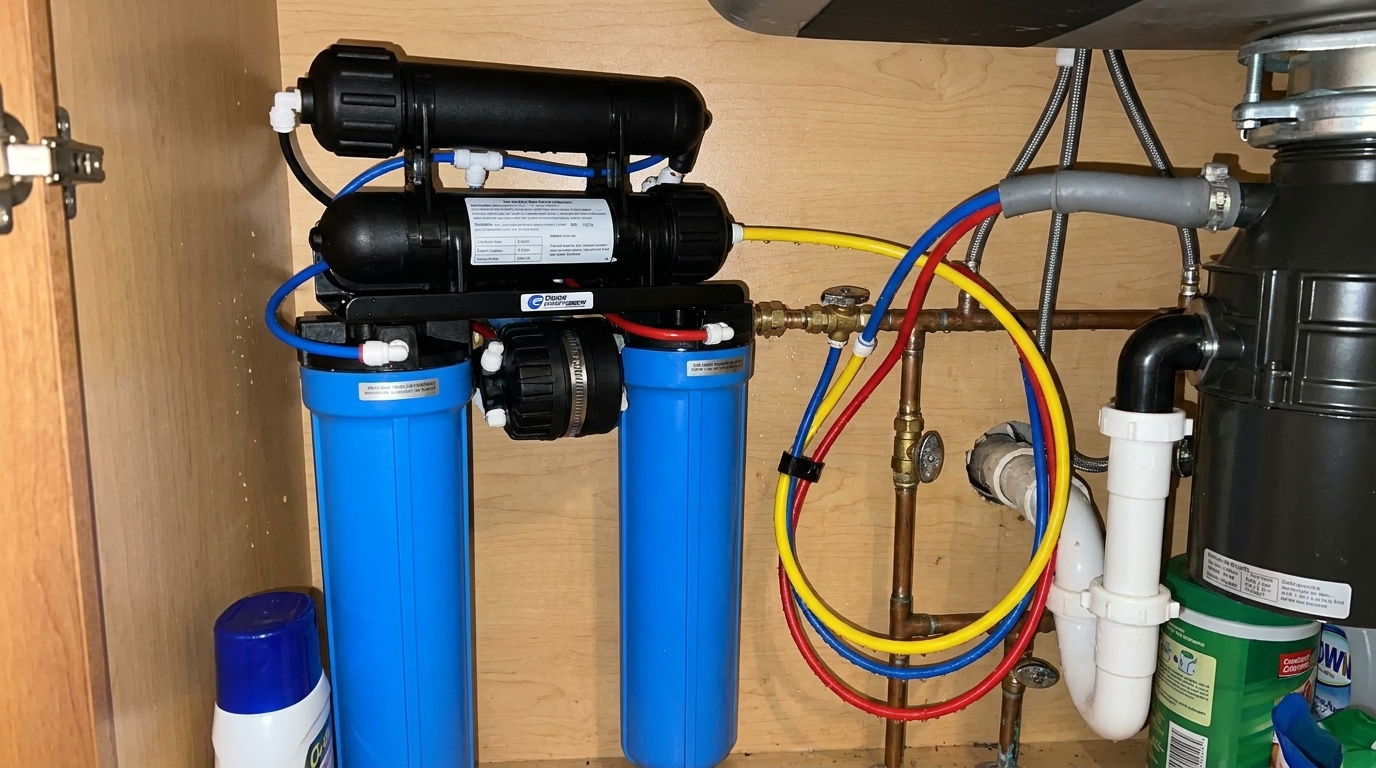
Wells with multiple contaminants require staged treatment: sediment filtration protecting downstream equipment, iron oxidation preventing fouling, radon aeration removing radioactive gas, reverse osmosis or ion exchange for arsenic, PFAS, radium, and uranium, and activated carbon polishing for taste and organics. These comprehensive systems cost $8,000 to $18,000 installed depending on contaminant levels and technologies required, with bypass capabilities allowing individual stage isolation for maintenance without shutting off water. Understanding serious health risks from arsenic, PFAS, radionuclides, and toxic contaminants emphasizes why regular testing protects family health. Our comprehensive testing identifies contaminants well below regulatory limits, providing early warning before problems become crises. For professional assessment, treatment system design specific to your contamination profile, or emergency response to dangerous levels, contact our specialists today for testing and treatment solutions proven effective across thousands of New Jersey installations.
