Your Water Is Hard. Here’s What It’s Slowly Destroying.
Most New Jersey homeowners know their water is hard. They see the white crust around the faucet. They feel the film on their skin after a shower. They pull dishes out of the dishwasher that look worse than when they went in. And most of them do nothing about it, assuming it is more of an annoyance than a real problem.
It is not just an annoyance. Untreated hard water causes measurable, compounding damage to your plumbing, your appliances, and your monthly costs — damage that adds up quietly over years until something fails. If you are a New Jersey homeowner on well water or city water with elevated mineral content, understanding what you are actually dealing with is worth your time. Professional water softener installation in New Jersey is one of the more straightforward ways to stop this damage before it becomes expensive.
What Makes Water Hard in New Jersey?
Hard water contains elevated levels of dissolved calcium and magnesium. These minerals enter groundwater as it moves through limestone, sandstone, and other mineral-rich rock formations — geology that is common across much of New Jersey. Hardness is measured in grains per gallon (GPG) or parts per million (PPM). Anything above 7 GPG is considered hard. Northern NJ typically runs 85–171 PPM. Central NJ often reaches 120–205 PPM. Southern NJ can hit 171–256 PPM or higher on private wells.
Municipal water systems are required to meet federal and state safety standards, but water hardness is not classified as a health contaminant, so utilities have no obligation to soften water before it reaches your tap. That means whether you are on a private well in Morris County or on city water in Edison, you are likely getting hard water.
What Happens to Your Pipes
Mineral scale does not just collect on the outside of things. It builds up inside your pipes. Over time — years, not decades — scale narrows the interior diameter of supply lines, reducing flow and increasing the pressure your system has to generate to push water through. This puts ongoing stress on pipe joints, valves, and fittings.
In older homes with galvanized steel pipes, the combination of scale buildup and corrosion accelerates failure significantly. Even in newer homes with copper or PEX supply lines, scale accumulation at joints and fixtures creates maintenance problems that would not otherwise exist. Plumbers working on homes with hard water regularly find scale deposits that explain reduced pressure, leaks at fittings, and premature valve failure.
What Happens to Your Water Heater
Your water heater is probably the most expensive casualty of untreated hard water. The heating element or burner sits at the bottom of the tank, right where sediment and scale settle and accumulate. As scale builds on the heating surface, the unit has to work harder and longer to heat the same volume of water. Energy consumption goes up. Recovery time slows. The element or burner runs hotter to compensate, which accelerates wear.
Research on water heater efficiency has consistently shown that hard water scale reduces efficiency meaningfully within a few years of installation without treatment. A unit rated for 12 to 15 years may begin showing efficiency loss well before the halfway point. In extreme hard water conditions, premature element failure, tank corrosion, and complete unit replacement years ahead of schedule are common outcomes.
This is one of the most direct financial arguments for addressing hard water. A water softener that costs a few thousand dollars installed protects a water heater that costs $800 to $2,500 to replace — plus labor, plus the downstream cost of running an inefficient unit every month in the meantime. Newark homeowners can find local service information on our water softener installation page for Newark, NJ, while Montclair homeowners can find area-specific details on our water softener installation page for Montclair, NJ.
What Happens to Your Appliances
Dishwashers, washing machines, ice makers, and coffee makers all share the same exposure. Hard water passes through their internal valves, spray arms, filters, and heating elements continuously. Scale accumulates on each of these components the same way it does inside pipes and water heaters.
In dishwashers, scale clogs spray arm nozzles and coats the interior, reducing cleaning performance and eventually causing the unit to fail prematurely. In washing machines, scale builds on heating elements, reduces valve function, and leaves mineral residue in the drum that transfers to laundry. Ice makers and coffee makers are particularly sensitive to scale because their internal passages are narrow and their heating elements are small.
Appliance manufacturers note that operating equipment in hard water without treatment voids warranties in some cases and is a recognized factor in shortened service life across the board.
What Happens to Your Fixtures and Surfaces
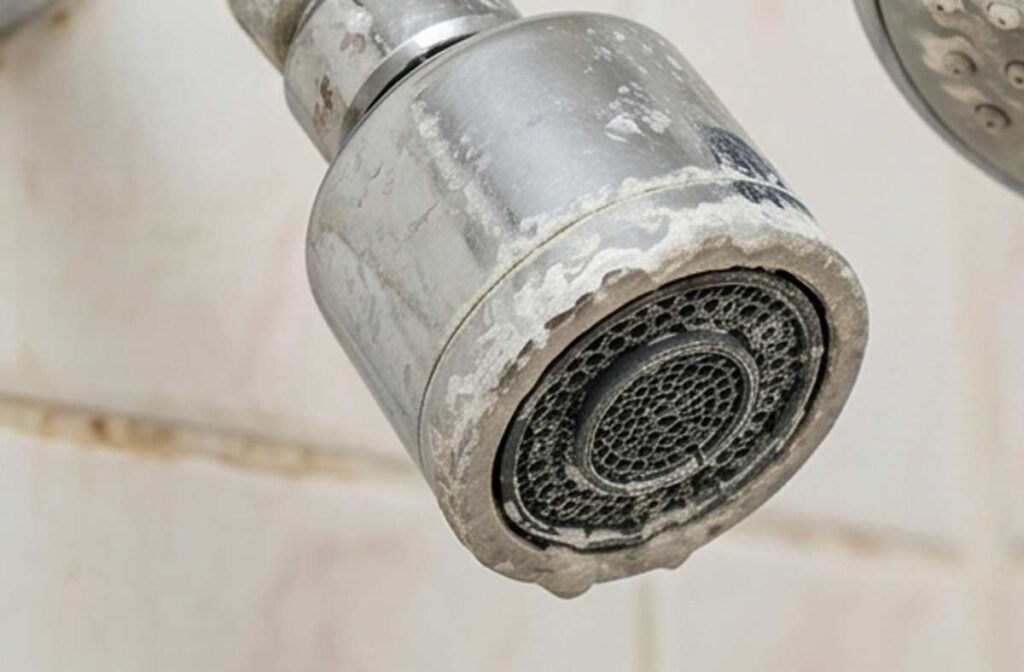
The visible effects of hard water are the ones most homeowners recognize first. Scale deposits on faucet aerators and showerheads restrict flow as mineral buildup narrows or clogs openings. Chrome fixtures develop a dull, spotted appearance that resists standard cleaning products. Grout lines in tile showers accumulate mineral staining that becomes progressively harder to remove the longer it is left.
Glass shower enclosures develop etching over time from mineral contact, which is different from surface deposits — the minerals actually alter the glass surface, and once etching sets in, it cannot be cleaned away. Toilets develop scale rings in the bowl that require aggressive treatment to remove. Sink basins and tub surrounds show similar buildup around the drain and waterline.
None of this is cosmetic in the way a paint color is cosmetic. These are maintenance costs that compound, and the longer hard water is left untreated, the more labor-intensive the corrective cleaning and repair becomes.
What Happens to Your Skin and Hair
Hard water minerals interfere with soap chemistry. Calcium and magnesium ions react with soap compounds to form a sticky residue — soap scum — rather than allowing the soap to rinse cleanly from skin and hair. The result is that even after a thorough shower, a mineral film remains on the skin that blocks moisture and leaves skin feeling dry or tight.
Hair washed in hard water accumulates mineral deposits on the shaft, which makes it look dull, feel heavier, and respond poorly to conditioner. Shampoo and conditioner are both less effective in hard water because the same mineral interference that affects soap affects other surfactant-based products.
For households with young children or anyone with sensitive skin or eczema, hard water is a frequently overlooked contributing factor to chronic dryness and irritation.
What It Actually Costs to Do Nothing
The financial case for treating hard water is not complicated. Untreated hard water shortens the life of your water heater, your dishwasher, your washing machine, and your plumbing fixtures. It increases energy consumption. It increases cleaning product usage because soap and detergent perform less efficiently. It creates maintenance and repair costs that accumulate invisibly until something needs to be replaced.
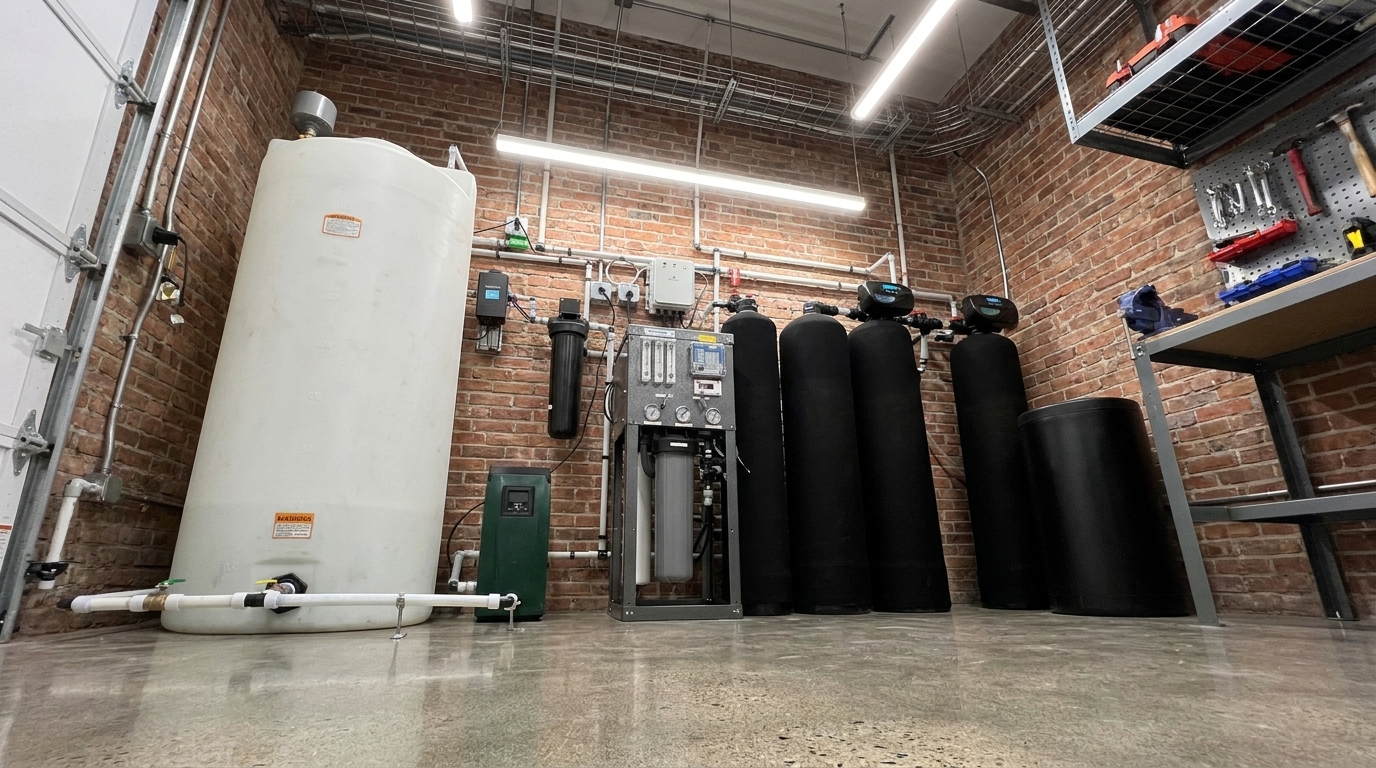
Water softener installation in New Jersey typically runs $1,800 to $7,000 depending on system size and installation complexity. That is a one-time cost. The alternative is paying the hard water tax indefinitely — in higher utility bills, shorter appliance lifespans, more frequent plumbing service calls, and more cleaning time and product cost.
For most New Jersey homeowners, the math favors treatment.
The Right Next Step
If you are seeing scale buildup, dealing with appliance performance issues, or just noticing the daily friction of hard water in your home, a water hardness test will tell you exactly what you are working with. From there, the right system size and configuration can be matched to your household’s actual water conditions and usage. Newark homeowners can find local service information on our water softener installation page for Newark, NJ and Montclair homeowners can find area-specific details on our water softener installation page for Montclair, NJ.
Jersey Radon provides professional water softener installation and repair throughout New Jersey, with free estimates and an evaluation process designed to give you a clear picture before any work begins. Contact our team to schedule your estimate.
