Water Softener or Water Filter? Here’s How to Know Which One Your Home Actually Needs.
These two terms get used interchangeably by homeowners, and occasionally by people who should know better. They are not the same thing. A water softener and a water filter solve different problems, work through different mechanisms, and address different contaminants. Buying the wrong one — or assuming one covers what the other does — leaves you with a system that does not fix what is wrong with your water.
If you are trying to figure out what your New Jersey home actually needs, this will help you sort it out. And if hard water is part of the picture, professional water softener installation in New Jersey is worth understanding before you make any decisions.
What a Water Softener Does
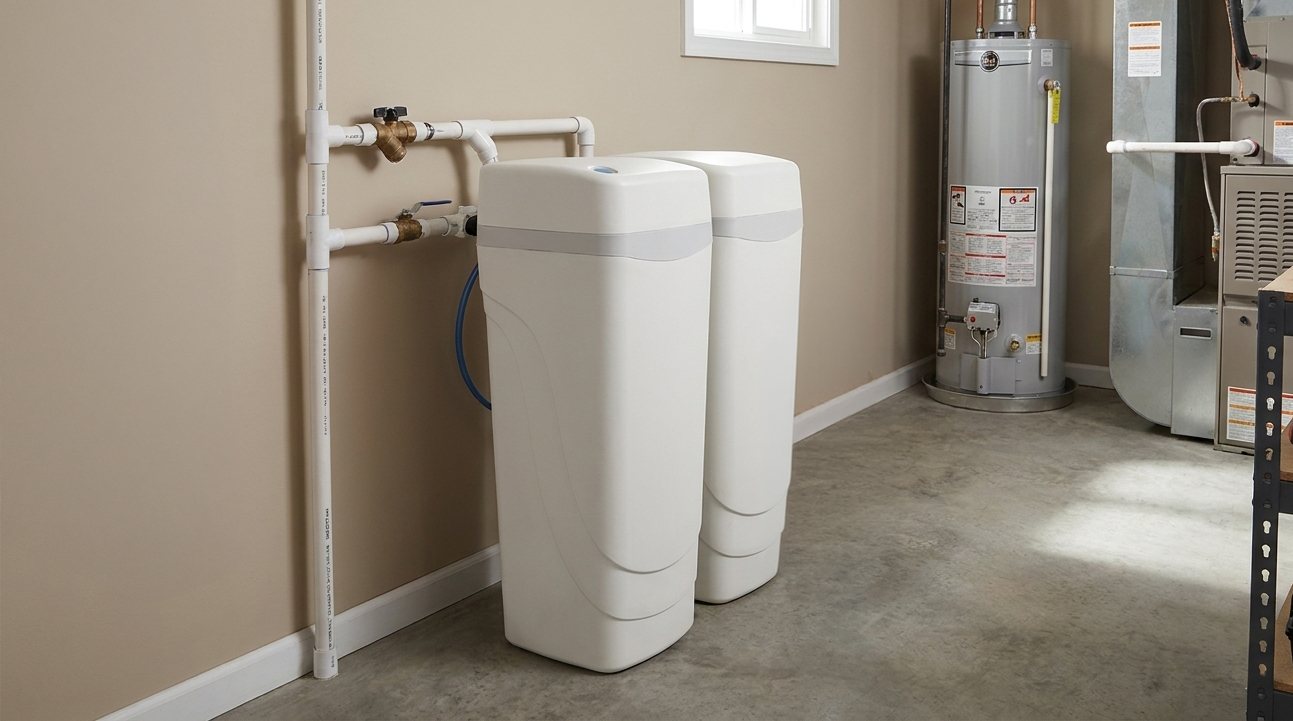
A water softener targets hardness minerals — specifically calcium and magnesium. It works through a process called ion exchange. Water passes through a resin tank filled with negatively charged beads. Calcium and magnesium ions, which carry a positive charge, are attracted to those beads and swap places with sodium ions. The water that comes out the other side has had its hardness minerals removed and carries a small amount of sodium instead.
That is it. A water softener does one thing: it removes hardness. It does not filter out bacteria, chlorine, iron, PFAS, arsenic, nitrates, or any other contaminant. If your water has a hardness problem, a softener fixes it. If your water has a safety or contamination problem, a softener does not touch it.
What a Water Filter Does
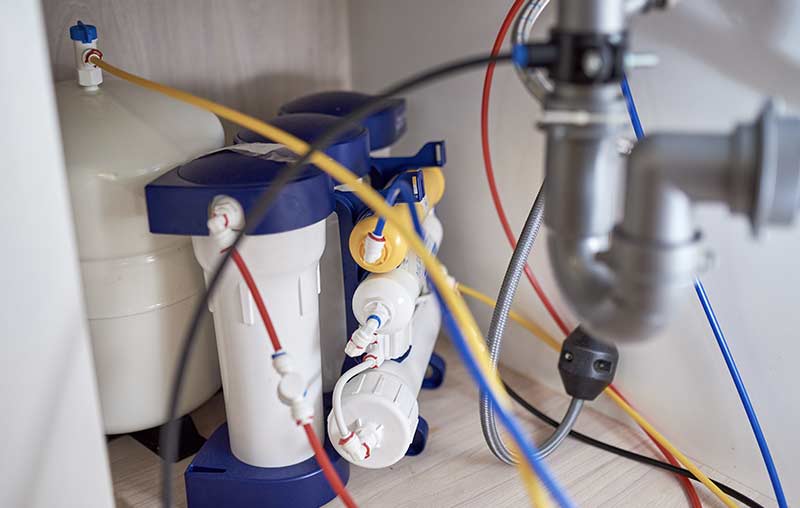
Water filtration is a broader category that covers a range of technologies depending on what needs to be removed. Carbon filters target chlorine, chloramines, volatile organic compounds, and some taste and odor issues. Iron filters use oxidation and media filtration to remove dissolved and particulate iron. Reverse osmosis systems remove a wide spectrum of contaminants including PFAS, arsenic, nitrates, lead, and dissolved solids. UV systems neutralize bacteria and other biological contaminants.
A water filter does not remove hardness minerals in any meaningful way. Carbon filtration, iron filtration, and UV treatment leave calcium and magnesium in the water entirely. Reverse osmosis does reduce hardness, but RO systems are point-of-use devices — typically installed at a single kitchen tap — not whole-house solutions.
Why New Jersey Homes Often Need Both
New Jersey water quality issues rarely come in singles. The state has significant hardness across most regions, but well water in particular frequently combines hardness with iron, manganese, bacteria, or other contaminants depending on local geology and land use history. Municipal water sources add chlorine and chloramines that affect taste and odor even when the water meets all safety standards.
A softener handles the hardness. A filter handles everything else. The two systems work together without interfering with each other when installed correctly — typically with an iron or sediment filter upstream of the softener to protect the resin, and a carbon or RO system downstream for drinking water quality.
Getting a water test before buying anything is the only way to know what combination your specific water supply actually requires.
How to Tell Which Problem You Have
Hard water leaves physical evidence. Scale buildup on faucets and showerheads, spots on dishes and glassware, soap that will not lather, dry skin and dull hair after showering, and reduced appliance efficiency are all hard water symptoms. If these are your complaints, a softener addresses them directly.
Filtration problems show up differently. Chlorine or chemical odor, sulfur or rotten egg smell, metallic taste, orange or rust staining on fixtures and laundry, cloudy water, or any concern about bacterial contamination or chemical exposure point toward filtration needs. These issues are not affected by a water softener.
If you are seeing both sets of symptoms — scale buildup and a sulfur smell, for example, or spotty dishes and rust staining — you likely need both systems.
Iron Is a Special Case
Iron deserves specific attention because it is common in New Jersey well water and it sits at the intersection of both categories. Low levels of clear-water iron — iron that is dissolved in the water and invisible to the eye — can be handled by a properly sized water softener. The resin captures iron ions the same way it captures calcium and magnesium.
But elevated iron levels, or iron that has already oxidized into particulate form visible as orange or red tint in the water, will foul softener resin quickly and shorten system life significantly. In those cases, an iron filter needs to go upstream of the softener to handle the iron before the water reaches the resin. Your water test results and iron levels determine which approach applies.
The Decision Framework
If your primary complaints are scale, spotting, soap performance, dry skin, and appliance wear — start with a softener. If your primary complaints are taste, odor, staining, or any concern about contaminants affecting health or safety — start with filtration. If you have both sets of issues, plan for both systems. A water test will confirm what is actually present and in what concentrations, which determines the right equipment and the right sequence.
Skipping the water test and guessing based on symptoms alone is how homeowners end up with systems that partially solve the problem or do not solve it at all.
Next Step
Jersey Radon provides water testing and professional installation of water softeners and filtration systems throughout New Jersey. If you are not sure what your water needs, a water test is the right place to start — and a free estimate will tell you what addressing it actually looks like. Contact Our Team our team to schedule your evaluation.
