Hard Water Is Quietly Destroying Morristown Homes. A Water Softener Stops It.
Hard water doesn’t announce itself dramatically. It works slowly — coating the inside of your water heater with mineral scale, calcifying the jets in your dishwasher, leaving a film on your skin after every shower. Morris County water is moderately to significantly hard depending on your source, and for most Morristown homeowners that hardness has been running unchecked for years. The damage accumulates quietly until an appliance fails early, a plumber finds scale-clogged pipes, or someone finally connects the dots between the water and the symptoms.
A water softener installation solves this at the source. Rather than descaling appliances, replacing showerheads, or buying better moisturizer, you address the mineral content before it enters your home’s plumbing — and every fixture, appliance, and person in the house benefits immediately.
What Hard Water Actually Does to a Morristown Home Over Time
The effects of hard water are cumulative and expensive. Calcium and magnesium — the minerals that make water “hard” — don’t stay dissolved. They deposit on every surface they contact, and inside the plumbing and appliances your home depends on, those deposits compound year after year.
Your water heater works harder to heat water through an insulating layer of mineral scale. The efficiency loss is measurable — studies have shown that a scaled water heater can use 25–30% more energy than a clean one, and most scaled units fail years before their rated lifespan. Dishwashers and washing machines suffer the same fate, with scale clogging spray arms, heating elements, and internal valves. In Morris County homes where well water or Rockaway River-fed municipal supply runs hard, these effects are pronounced enough that homeowners replacing appliances ahead of schedule often don’t realize the water was the cause.
On the surface, hard water leaves the white crusty scale on showerheads and faucets, the hazy film on glassware, and the soap scum that never fully rinses clean. On your skin and hair, it leaves calcium deposits that prevent soap from lathering properly, strip moisture from skin, and leave hair feeling coated and flat. These aren’t cosmetic inconveniences — they’re daily costs that add up.
Why Morris County Homes Struggle with Hard Water
Morristown’s water supply draws from the Rockaway River system and, in parts of the surrounding township, from private wells tapping local bedrock aquifers. Both sources carry elevated mineral content relative to soft-water regions. The bedrock geology of Morris County — particularly in areas near the Watchung Ridgeline — produces groundwater with naturally high calcium and magnesium concentrations. Municipal treatment addresses bacteria, disinfection, and other health-related parameters but does not remove hardness minerals. What enters the distribution system hard arrives at your tap hard.
Nearby Morris Plains, Parsippany, Madison, and Florham Park homeowners deal with the same characteristics. Across this part of North Jersey, water softeners are among the most impactful home improvements a homeowner can make — not aesthetically, but functionally, in terms of appliance protection and long-term cost savings.
What a Water Softener Installation Includes
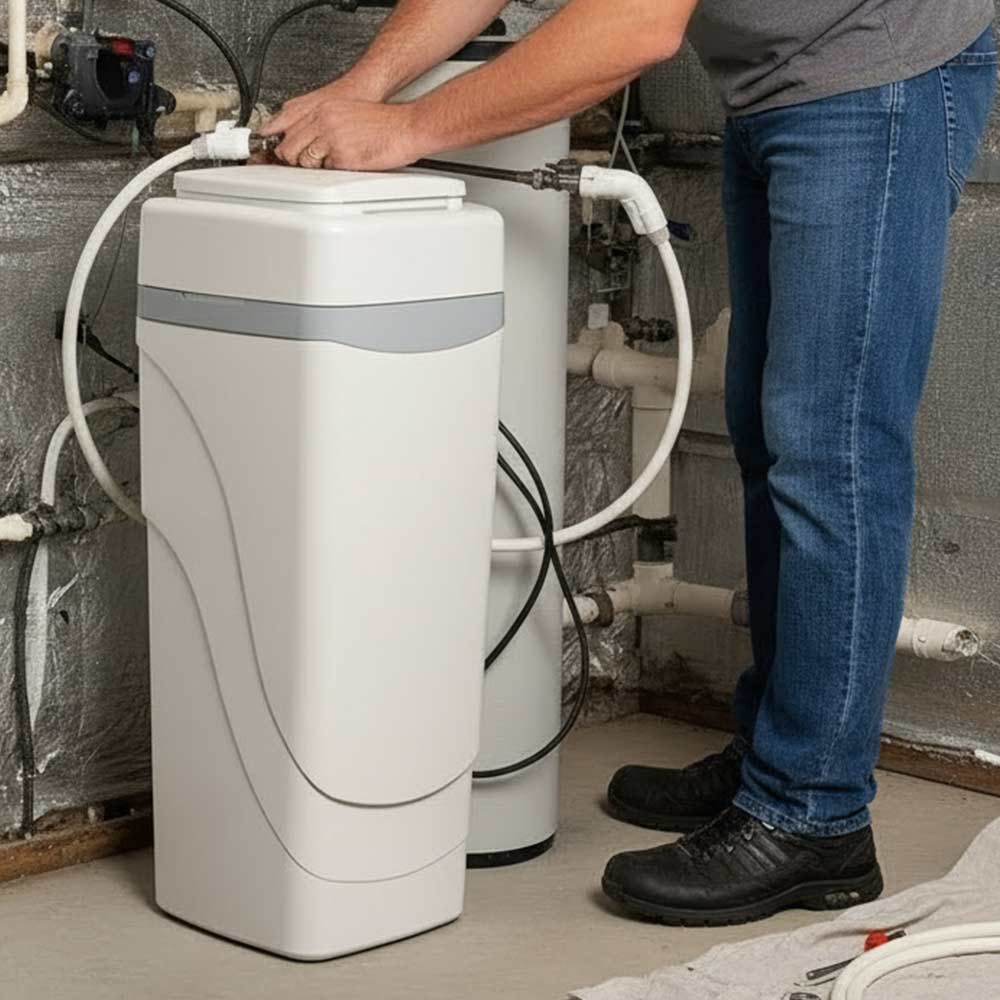
A whole-home water softener works through a process called ion exchange — sodium ions replace calcium and magnesium ions as water passes through a resin tank, producing softened water that flows to every faucet, fixture, and appliance in the house. The system regenerates automatically using a brine solution, flushing accumulated minerals down the drain on a scheduled cycle.
Our installation process for Morristown homes includes:
- Water hardness testing to confirm mineral levels and size the system correctly
- System selection based on household size, water usage, and hardness level
- Professional installation including bypass valve, drain connection, and brine tank setup
- Calibration and programming of regeneration cycles
- Walkthrough of system operation and maintenance requirements
Sizing matters significantly. An undersized softener runs out of capacity between regeneration cycles, leaving you with unsoftened water. An oversized system wastes salt and water on unnecessary regeneration cycles. We size based on your actual hardness level and household demand — not a generic estimate.
The Difference Softened Water Makes — Immediately and Over Time
The changes after a water softener installation are noticeable within days. Scale stops forming on fixtures. Soap lathers fully. Skin feels different after the first shower. Glassware comes out of the dishwasher clear. These immediate improvements are satisfying — but the more significant benefits are the ones that compound over years:
- Water heaters operate at full efficiency and reach their rated lifespan instead of failing early
- Dishwashers and washing machines run cleanly without scale clogging internal components
- Pipes maintain full flow capacity without mineral buildup restricting diameter over time
- Plumbing fixtures last longer without the corrosive interaction between hard water and metal surfaces
- Soap, shampoo, and cleaning product consumption drops because softened water requires significantly less to lather
What Water Softener Installation Costs in Morristown
Water softener installation in the Morristown area typically ranges from $3,000 – $12,000+ depending on system type, capacity, and installation complexity. A standard whole-home ion exchange softener for a typical Morris County household falls in the $3,000–$6,000 range installed. Premium systems with higher grain capacity, dual-tank configurations for continuous soft water, or combination softener-filtration systems run higher. Homes with complex plumbing configurations or installations requiring significant pipe work fall toward the upper end of the range.
The cost of not softening is worth factoring in as well. A water heater that fails five years early, two dishwashers replaced in the span of time one should have lasted, and the ongoing cost of descaling products and excess soap all represent real expenses. For most Morris County homeowners, a water softener pays for itself in appliance longevity alone over a 10-year period.
If you haven’t yet confirmed your water’s hardness level, starting with a professional water test gives you the data to make an informed decision about system sizing and whether softening alone addresses your water quality concerns or whether additional filtration makes sense alongside it.
Serving Morristown and Morris County
We install water softeners throughout Morristown and across Morris County, including Morris Plains, Parsippany, Madison, and Florham Park — communities that share the same hard water characteristics and benefit from the same solutions. Our full New Jersey service area covers communities statewide, and our water softener service page has more detail on system types and what installation involves.
Frequently Asked Questions — Water Softener Installation in Morristown, NJ
How do I know if my Morristown home needs a water softener?
The most reliable way is a water hardness test — it gives you a specific number in grains per gallon (GPG) that determines both whether softening is warranted and what size system you need. Visible signs like scale on fixtures, hazy glassware, dry skin after showering, and appliances failing ahead of schedule are strong indicators that your hardness level is high enough to cause real damage.
Will a water softener affect my well water in Morris County?
Yes, and usually significantly. Private wells in Morris County’s bedrock geology tend to run harder than municipal supply — in some cases substantially harder. Well water softeners work the same way as municipal water softeners but may need to be sized differently based on flow rate and hardness level. We test your well water first to ensure the right system is specified.
Does softened water taste different?
Softened water has a slightly different mouthfeel — it’s often described as smoother or silkier. The sodium added through ion exchange is minimal at typical hardness levels and is not a health concern for most people. If you prefer, a reverse osmosis system at the kitchen tap can remove the trace sodium for drinking and cooking while the softener handles the rest of the house.
How much salt does a water softener use?
A properly sized softener for a typical household uses roughly 6–10 lbs of salt per regeneration cycle, regenerating every few days depending on water usage and hardness level. Annual salt cost for most Morris County households runs $100–$300 depending on the system and local salt prices.
How long does installation take?
Most standard installations are completed in a single visit of 2–4 hours. More complex configurations — dual-tank systems, installations requiring significant pipe routing, or combination softener-filter setups — may take longer. We’ll give you a clear timeline before scheduling.
Schedule Your Water Softener Installation in Morristown
If hard water has been costing you in appliance wear, cleaning products, and daily frustration — a water softener installation is the fix that addresses all of it at once. We serve Morristown and all of Morris County. Call us at (732) 357-1988 or schedule online to get started.