Hard Water in New Jersey Homes: What It Is, Why It Matters, and How to Fix It
Hard water is one of the most common — and most overlooked — water quality issues affecting residential homes across New Jersey. It doesn’t make your water unsafe to drink, but it works quietly against your plumbing, your appliances, your skin, and your household budget. Understanding what hard water is, where it comes from in NJ specifically, and what your treatment options look like is the first step toward protecting your home and making a confident decision about water quality — whether you’ve lived in your house for twenty years or you’re about to close on one.
What Exactly Is Hard Water?
Hard water is water that contains elevated concentrations of dissolved minerals — primarily calcium and magnesium — that it picks up as it moves through rock and soil on its way to your tap. The term “hardness” refers to the mineral load, not to any physical property of the water itself. According to the U.S. Geological Survey Water Science School, water is classified as soft below 60 milligrams per liter (mg/L) as calcium carbonate, moderately hard between 61 and 120 mg/L, hard between 121 and 180 mg/L, and very hard above 180 mg/L. These aren’t just abstract numbers — each threshold corresponds to a noticeable change in how water interacts with soap, surfaces, pipes, and equipment inside your home.
The minerals responsible for hardness are not toxic at the concentrations typically found in household water. The EPA has not set a legal limit for hardness in drinking water precisely because calcium and magnesium don’t pose the same direct health risks as contaminants like lead, arsenic, or nitrates. What hard water does cause is a long list of practical, costly problems that build up gradually over time — in ways most homeowners don’t connect back to their water until the damage is already done.
How Does Water Become Hard in the First Place?
As precipitation falls and percolates through the ground, it comes into contact with mineral-bearing rock formations — particularly limestone, chalk, dolomite, and gypsum. Water is a natural solvent, and over time it dissolves calcium and magnesium ions from these formations and carries them into the groundwater supply. The longer water stays in contact with mineral-rich rock, and the more porous or soluble that rock is, the harder the resulting groundwater becomes. Surface water drawn from lakes, rivers, or reservoirs generally has less time in contact with mineral formations, which is why it tends to be softer than well water drawn from deep aquifers.
Is New Jersey’s Water Hard?
New Jersey’s water hardness is genuinely variable — and the variation isn’t random. It’s driven by geology. The state sits across two distinct physiographic regions: the non-Coastal Plain north of the Fall Line, and the Coastal Plain to the south and southeast. Aquifers in the valley and ridge sedimentary units and in the Newark Group formations — which run through much of northern and central NJ — typically produce water with hardness exceeding 120 mg/L, placing them squarely in the “hard” classification according to U.S. Geological Survey data on New Jersey’s major aquifer systems. Those same formations can also carry elevated iron concentrations, which compounds the treatment picture considerably.
Across the state, reported hardness levels range from around 27 PPM in parts of South Jersey to over 485 PPM in some central NJ communities. The statewide average sits near 106 PPM — technically in the moderately hard range — but that average masks significant local variation. Communities like Trenton have recorded hardness above 200 PPM. East Orange has documented levels near 485 PPM, which is severe by any standard. Meanwhile, cities like Newark draw from sources that test considerably softer. The takeaway is that your neighbor’s water quality experience may not match yours, and a regional average won’t tell you what’s coming out of your own tap.
Why Does Hardness Vary So Much Across NJ?
The short answer is source water. About 63% of New Jersey residents get their water from surface sources — the Raritan River, Delaware River, Millstone River, and the D&R Canal system — which typically produce softer water. The remaining 37% rely on public or private groundwater wells, which pull from aquifers directly in contact with mineral-bearing bedrock. Well water users in central and southern NJ are far more likely to deal with hard water, and private well owners don’t have the same municipal reporting obligations that let homeowners check a consumer confidence report. If you’re on a private well, the only reliable way to know your hardness level is to test.
What Are the Signs That Your Home Has Hard Water?
Hard water announces itself in ways that are easy to dismiss as minor annoyances — until you start connecting them. Scale buildup on faucets and showerheads is one of the clearest indicators: that white, chalky crust is calcium carbonate depositing as water evaporates. Cloudy or spotted dishes coming out of the dishwasher are another reliable sign, as are soap and shampoo that don’t lather well and leave a film rather than rinsing clean. Skin that feels dry or tight after bathing, and hair that looks dull or feels stiff, are also common hard water complaints — you can read more about how mineral-laden water affects skin and hair on our dry skin and hair problem page.
Some of the most consequential signs are inside the plumbing you can’t see. Scale accumulates on the interior walls of pipes, water heaters, and appliance connections. A water heater that was rated for a 12-year lifespan might start losing efficiency at year 6 or 7 in a hard water home because of mineral deposits coating the heating element. Reduced water pressure that develops gradually over months or years often traces back to scale restriction in supply lines, not failing pressure regulators or pump issues.
- White or yellowish scale buildup on faucets, showerheads, and tile grout
- Spotted, filmy dishes and glassware even after a full dishwasher cycle
- Soap, shampoo, and detergent that don’t lather or rinse away cleanly
- Dry, itchy skin and dull or brittle hair after bathing
- Gradual reduction in water pressure throughout the home
Does Hard Water Cause Health Problems?
Hard water is not a direct health hazard at the levels found in most NJ homes. Calcium and magnesium are essential minerals the body needs, and consuming them through drinking water contributes to your dietary intake. The World Health Organization has noted that drinking water can be a meaningful source of these minerals for people who don’t get enough through food alone. There is no established link between drinking moderately to severely hard water and adverse health outcomes in otherwise healthy individuals.
That said, there are some nuances worth understanding. People with certain kidney conditions may be advised by their physician to limit calcium intake, in which case very hard water could be a consideration. For infants on formula, some physicians recommend using filtered or purified water rather than hard tap water, though this is a conversation to have with a pediatrician rather than a blanket rule. If hard water is accompanied by elevated iron — which is common in NJ’s non-Coastal Plain aquifers — the combination can affect taste, staining, and in some cases raise questions about bacterial growth in iron-rich well systems. Our team addresses those situations through comprehensive water testing before recommending any treatment system, because treating hard water and treating iron often require different or complementary approaches.
What Does Hard Water Do to Your Home’s Plumbing and Appliances?
This is where the real cost of untreated hard water becomes concrete. Scale buildup inside pipes, water heaters, dishwashers, washing machines, and coffee makers reduces efficiency and accelerates wear. A water heater working against a layer of mineral deposits on its heating element uses more energy to reach the same temperature — research on residential water heating efficiency has documented measurable energy losses in heavily scaled units over time. Washing machines and dishwashers running on hard water require more detergent to achieve the same cleaning result, and the residue those machines leave behind can shorten fabric life and etch glassware over time.
The plumbing impact is often the most expensive and least visible. Scale deposits in supply lines reduce flow gradually — so gradually that most homeowners don’t notice until a fixture fails or a pressure test during a home sale reveals a problem. In older homes with galvanized steel pipes, which are still common in parts of central and northern NJ, hard water accelerates corrosion and narrows the effective pipe diameter over decades of use.
| Home System or Area | Effect of Hard Water | Typical Timeline |
|---|---|---|
| Water heater | Scale on heating element reduces efficiency; tank sediment buildup shortens lifespan | Noticeable within 3–5 years in hard water areas |
| Supply pipes | Scale narrows interior diameter; reduces pressure and flow rate | Gradual; accelerated in galvanized steel pipes |
| Dishwasher | Mineral film on dishes, interior etching, spray arm clogging | Visible spotting often begins within months |
| Washing machine | Detergent inefficiency, residue on fabrics, valve and seal wear | Ongoing; accelerates mechanical wear over years |
| Faucets and fixtures | Scale buildup around aerators and valve seats; cosmetic staining | Visible within weeks to months depending on hardness level |
| Showers and bathtubs | Soap scum, tile grout staining, showerhead clogging | Ongoing and progressive |
How Much Can Hard Water Cost a NJ Homeowner Over Time?
The cumulative cost of unaddressed hard water is real, though it’s spread across enough budget lines that it rarely gets attributed to water quality. Higher energy bills from an inefficient water heater, more frequent appliance repairs or replacements, increased soap and detergent consumption, and the accelerated replacement of plumbing fixtures all add up. For home buyers, this matters especially — a house with very hard water and no treatment system may already have a decade of scale accumulation in the pipes and appliances that won’t show up in a standard home inspection. Getting a water test done before closing, or factoring a water softener installation into your first-year home budget, is a straightforward way to protect the investment you’re making.
What Are Your Options for Treating Hard Water in NJ?
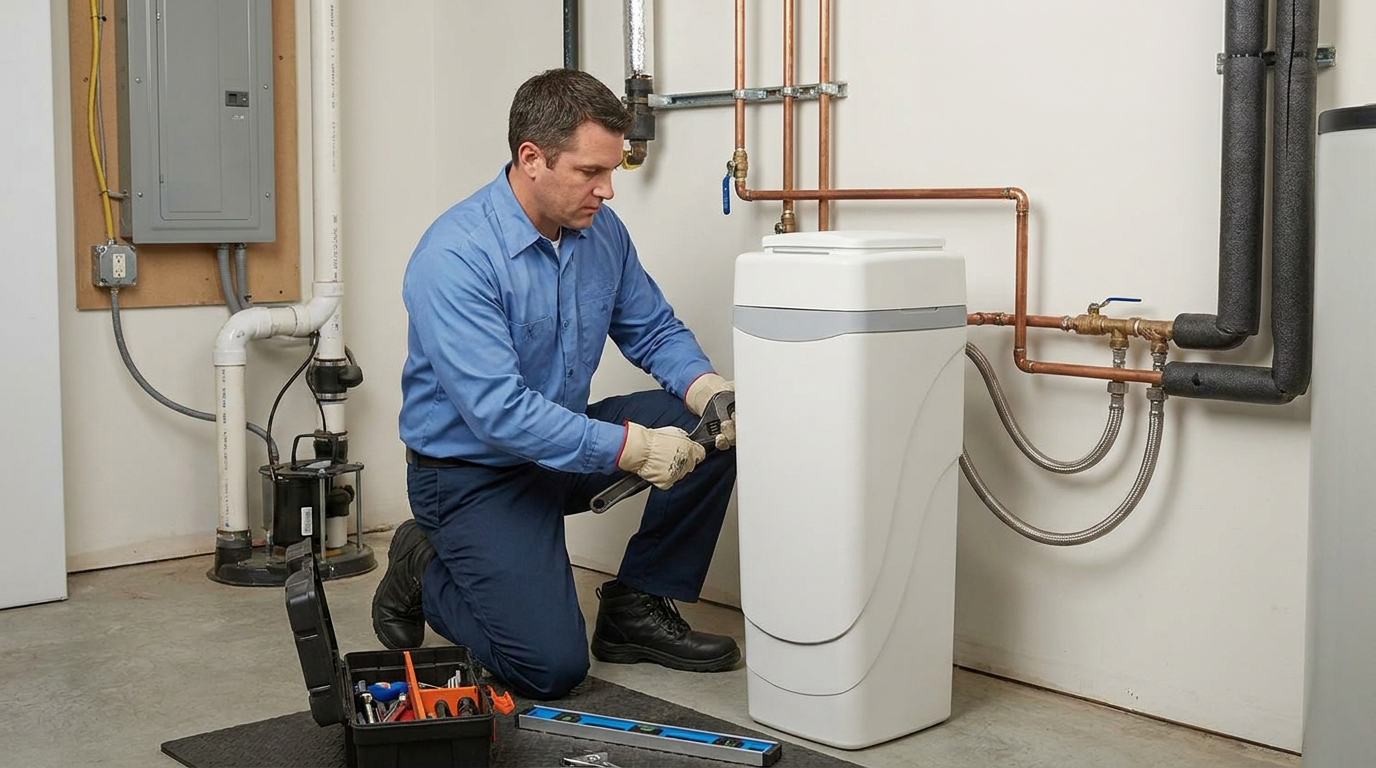
The most established and widely used solution for hard water is an ion exchange water softener. These systems work by passing water through a resin bed that replaces calcium and magnesium ions with sodium ions — effectively removing the minerals that cause hardness before they enter your home’s plumbing. A properly sized and installed softener eliminates scale buildup, restores soap efficiency, and extends appliance life. If you want to go deeper on how the technology works and what sizing means for your household, our guide on how water softeners work in NJ homes covers that in detail.
Salt-free conditioners and template-assisted crystallization (TAC) systems are marketed as an alternative for homeowners who want to avoid adding sodium to their water. These systems alter the structure of calcium and magnesium ions so they don’t adhere to surfaces as readily, but they don’t remove the minerals — which means they won’t lower your measured hardness level, and their effectiveness varies significantly by application and water chemistry. For homes with very high hardness or combined hardness and iron issues, a conventional ion exchange softener is typically the more reliable path.
Reverse osmosis systems address hardness at the point of use — typically a dedicated kitchen tap — and produce very soft, highly purified water for drinking and cooking. They don’t treat the rest of the home’s water supply, so they’re often paired with a whole-house softener rather than used as a standalone solution. If you’re weighing the differences between point-of-use purification and whole-house filtration, that comparison is covered in our guide on reverse osmosis vs. whole-house filtration. You can also learn more about the filtration options we install across NJ on our water filtration service page.
When Does a Water Softener Make Sense vs. Other Options?
A water softener is generally the right call when your measured hardness exceeds 7 grains per gallon (about 120 mg/L), you have visible scale buildup in your home, or your water heater is working harder than it should. If your hardness is in the moderate range and your primary concern is drinking water quality rather than plumbing protection, a point-of-use reverse osmosis system may be sufficient. The right answer always starts with a water test — not because the symptoms aren’t obvious, but because hardness rarely travels alone. Iron, manganese, pH imbalance, and bacterial contamination are all common companions to hard water in NJ well systems, and knowing what you’re dealing with before selecting equipment prevents under-treating or over-spending.
Should Home Buyers in NJ Test for Hard Water Before Closing?
Yes — and not just for hardness. A standard home inspection does not include water quality analysis. An inspector will check that water flows, that drains clear, and that visible fixtures are functional. They will not tell you that the water running through those fixtures has a hardness of 300 PPM, or that it carries iron, or that the well hasn’t been tested for nitrates or coliform bacteria since the last sale. In New Jersey, private well water testing requirements apply at the time of a real estate transaction under the Private Well Testing Act, but the tests required by that statute cover a specific list of contaminants — hardness isn’t always among them. That means a buyer can satisfy the legal testing requirement and still have no idea that their new home’s water is hard enough to scale the water heater within two years.
For home buyers, the smarter play is a comprehensive water test that goes beyond the minimum requirement — one that covers hardness, iron, pH, TDS, and any contaminants of concern for the region. Our well water testing guide for NJ homeowners walks through what to test for and why. If you’re purchasing a home with known hard water or an existing water softener that hasn’t been serviced, our team can evaluate the current system and recommend whether it needs adjustment, repair, or replacement before you move in.
Getting Hard Water Under Control in Your NJ Home
Hard water is a solvable problem. The technology is proven, the installation is straightforward when done correctly, and the long-term payoff — in appliance lifespan, plumbing health, and daily comfort — is well worth the upfront investment. What makes the difference is sizing the system correctly for your household’s actual water chemistry, not guessing based on zip code or a neighbor’s experience. Jersey Radon’s licensed water treatment team serves residential homes throughout New Jersey, and every recommendation we make starts with a real water test and a clear explanation of your options.
If you’re dealing with hard water symptoms, buying a home and want to understand your water quality before closing, or you have an older softener that may no longer be keeping up, we’d be glad to help. Contact us for a free estimate or call us directly at (732) 357-1988 — we serve all of New Jersey and are available any time.