What Most Home Inspections Won’t Tell You About Water Quality
You hired a licensed home inspector. You attended the inspection, walked through the property, reviewed the report. Maybe you even negotiated repairs based on what it found. By the time you closed on your new New Jersey home, you felt reasonably confident you knew what you were getting into. And then you moved in — and started wondering about the water.
Here’s the thing about home inspections in New Jersey: they are visual assessments of accessible systems and components. A good inspector will tell you whether the water heater is past its expected service life, whether there’s evidence of past leaks under the sink, and whether the pressure tank looks like it’s in reasonable condition. What a home inspection will almost never tell you is what’s actually in your water. The chemistry, the contaminants, the biological activity, the dissolved gases — none of that is visible, and none of it falls within the standard scope of a general home inspection.
For homeowners on private wells in New Jersey, this gap is significant. And understanding exactly what was and wasn’t assessed during your home purchase process is the first step toward filling it. Westfield homeowners looking for local testing service can visit our water testing page for Westfield, NJ.
What a Standard NJ Home Inspection Actually Covers
Licensed home inspectors in New Jersey follow the Standards of Practice established by the American Society of Home Inspectors (ASHI) and the InterNACHI standards, both of which define the scope of a general home inspection clearly. The inspection covers the visible and accessible components of the home’s structure and systems: foundation, roof, electrical, HVAC, plumbing fixtures, insulation, and so on.
With respect to water specifically, a home inspector will typically observe and operate plumbing fixtures, check for visible leaks, assess the water heater’s condition and age, and look for obvious signs of water damage or moisture intrusion. In homes with private wells, an inspector may note the visible condition of the well head — whether the cap appears intact, whether there’s obvious surface water pooling nearby — but they are not required to test the water and in most cases do not.
What they are explicitly not required to do under standard inspection protocols: test water quality, assess water chemistry, identify contaminants, evaluate the condition of the well casing or pump, or determine whether any existing water treatment equipment is functioning correctly. Those are specialty assessments that require separate engagement of a certified water testing laboratory, a licensed well driller, or a water treatment professional.
The ASHI standards of practice make this limitation explicit — general home inspections are not required to include water quality testing. Most homebuyers don’t read the fine print on what their inspection does and doesn’t cover until after they’ve moved in and started asking questions.
What About the Water Test Required at Closing?
If your purchase was financed with a mortgage, there’s a reasonable chance your lender required a water test as a condition of the loan — particularly if the home is on a private well. FHA and VA loans have specific requirements for well water testing before financing can be approved. Conventional loans may or may not require testing depending on the lender.
But here’s the critical detail: lender-required water tests for mortgage approval in New Jersey are typically limited to bacteria (total coliform and E. coli) and nitrates. That’s it. Those two parameters satisfy the lender’s requirement. They do not constitute a comprehensive assessment of your water quality, and they were never designed to. The lender’s concern is limited liability — ensuring the water doesn’t pose an immediate, obvious health risk that could affect the property’s value or expose the lender to liability. A comprehensive picture of your water quality is not their goal.
What a basic bacteria and nitrate test does not cover: arsenic, lead, iron, manganese, hardness, pH, volatile organic compounds, PFAS, radon in water, hydrogen sulfide, uranium, or any of the dozens of other parameters that can be present in NJ well water at levels of concern. You may have received a clean bill of health on two parameters out of a potential fifty, and walked away from closing thinking your water was tested and cleared.
In Flemington, Raritan, Bridgewater, Somerville, Hackettstown, and across much of Hunterdon, Somerset, and Warren counties — areas where arsenic in groundwater is a documented and geologically predictable concern — homes routinely change hands with a passing bacteria and nitrate test and no arsenic measurement at all. New homeowners in those areas may spend years drinking water with elevated arsenic levels without knowing it, simply because the testing required at closing didn’t look for it.
The Contaminants Most Likely to Be Missed
Understanding the specific gaps in standard home purchase water testing helps you prioritize what to test for after you move in. These are the parameters most commonly absent from closing-related water tests and most relevant to NJ well water homeowners.
Arsenic
Arsenic is a naturally occurring contaminant in New Jersey groundwater, particularly in the Highlands and Piedmont regions of Morris, Somerset, Hunterdon, Sussex, and Warren counties. It has no color, taste, or smell. Long-term exposure is linked to bladder, lung, and skin cancers. The EPA’s maximum contaminant level is 10 parts per billion. New Jersey well water routinely exceeds this level in high-risk geological zones, and arsenic is almost never included in a standard closing water test. Homeowners in Chester, Mendham, Bernardsville, Washington Township, and Hackettstown are in areas where arsenic testing is not optional — it’s essential.
PFAS
PFAS — per- and polyfluoroalkyl substances, the forever chemicals — require a dedicated laboratory test using EPA Method 533 or 537.1 that is entirely separate from standard water quality panels. They are not included in any lender-required water test. New Jersey has some of the highest concentrations of documented PFAS contamination sites in the country, with groundwater plumes affecting private wells in Burlington, Salem, Gloucester, Ocean, and Monmouth counties, among others. For a full breakdown of PFAS risk in NJ well water and what treatment options exist, our dedicated guide on PFAS in New Jersey well water covers everything homeowners need to know.
Radon in Water
Radon in well water is a separate concern from radon in air — and a separate test. Even if a radon air test was conducted as part of your home purchase, it tells you nothing about radon in your water supply. Waterborne radon is released into indoor air during showering, dishwashing, and other water use, contributing to total household radon exposure. It’s particularly relevant for well water homeowners in northern and central NJ. A water radon test is not included in any standard closing water test or home inspection. Learn more about radon in well water and how it’s treated on our water services page.
Volatile Organic Compounds
VOCs — including trichloroethylene, tetrachloroethylene, benzene, and MTBE — enter groundwater from industrial spills, underground storage tank leaks, dry cleaning facilities, and other sources. New Jersey’s dense industrial history means VOC contamination in groundwater is widespread across many counties. VOC testing requires a specific laboratory panel and is not part of a standard closing water test. If your new home is within a few miles of a former industrial site, a gas station, or a dry cleaner, VOC testing is a priority.
Lead
Lead in drinking water typically comes from household plumbing — older lead service lines, lead solder in copper pipes, or brass fixtures with elevated lead content — rather than from the well itself. In New Jersey, homes built before 1986 may have lead solder in their plumbing. Homes in older established neighborhoods in towns like Hackettstown, Flemington, Princeton, or Morristown may have lead service lines or lead-containing fixtures that were never flagged during inspection because they’re not visually distinguishable from lead-free alternatives. Lead testing requires a first-draw sample taken after water has been sitting in the pipes overnight — a specific protocol that a standard water test does not always follow.
Iron, Manganese, and Hardness
These parameters affect water aesthetics and appliance longevity more than direct health, but they’re among the most impactful quality-of-life issues for NJ well water homeowners and are almost never included in closing water tests. As we covered in our recent post on hard water vs. soft water in New Jersey, hardness above 7 GPG causes scale buildup, reduces appliance efficiency, and affects skin and hair. Iron above 0.3 mg/L causes staining, odor, and taste issues. Neither will appear in a bacteria and nitrate test. Short Hills homeowners can find area-specific service details on our water testing page for Short Hills, NJ.
What the Home Inspector Couldn’t See
Beyond water chemistry, there are physical aspects of a private well system that a general home inspector is neither equipped nor required to evaluate. The condition of the well casing below ground — whether it’s cracked, corroded, or improperly grouted — is invisible to a visual surface inspection. The depth of the well and the aquifer it draws from, which affects what contaminants it’s likely to encounter, is not something a home inspector documents. The age and condition of the submersible pump inside the well casing cannot be assessed without a camera inspection or pulling the pump.
A licensed well driller can conduct a well inspection that goes beyond what a general home inspector covers — including a camera inspection of the casing, pump performance testing, and a review of the well driller’s log if available from county records. If the previous owners couldn’t tell you when the well was last serviced or what condition the pump is in, a dedicated well inspection is worth scheduling in your first few months of ownership, particularly for older homes in Toms River, Brick, Howell, Freehold, and other areas with aging housing stock and heavy historical well use.
Existing Treatment Equipment Deserves Scrutiny Too
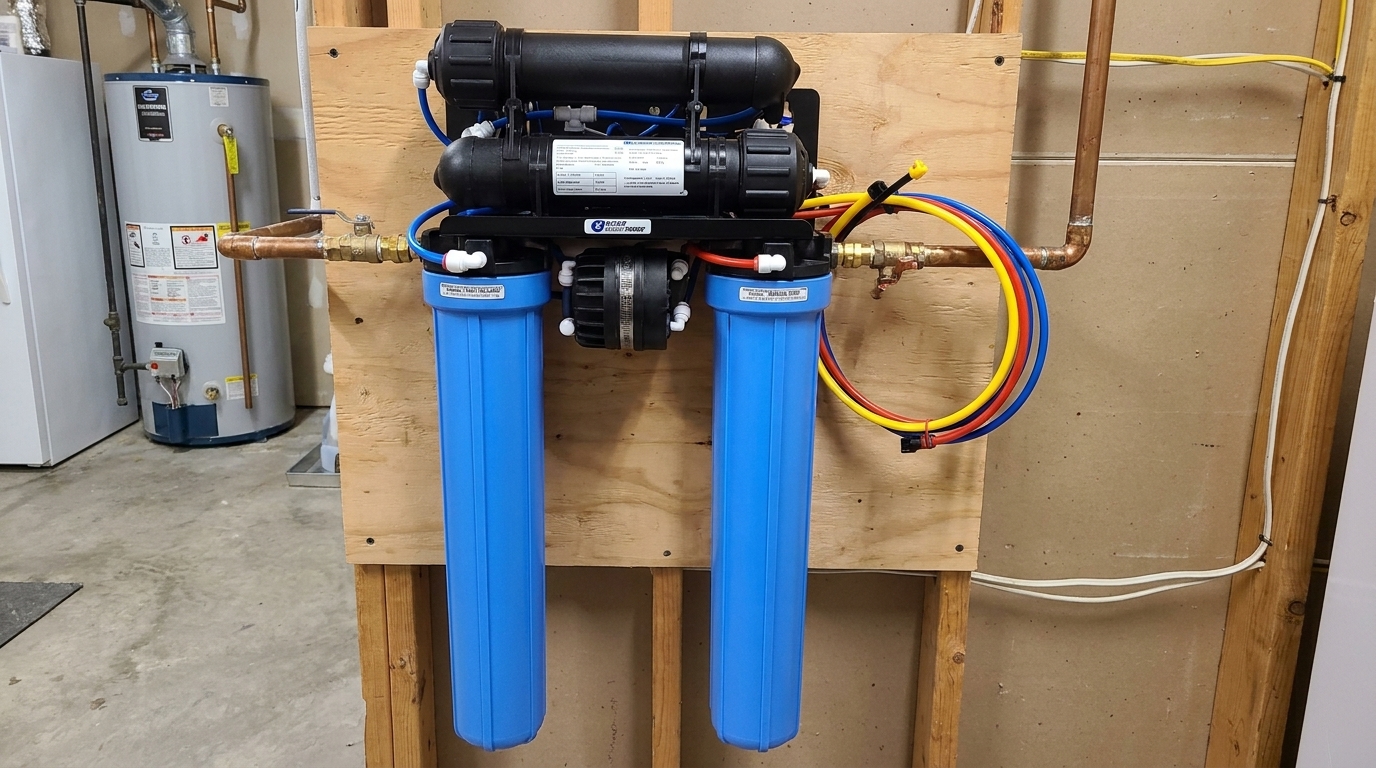
If the home came with water treatment equipment already installed — a water softener, an iron filter, a UV system, a reverse osmosis unit — your home inspector almost certainly noted its presence but did not verify whether it was functioning correctly, whether it was sized appropriately for your household, or whether it was addressing the right contaminants for your specific water chemistry.
A water softener set to the wrong hardness level wastes salt and may not be softening effectively. A carbon filter past its service life may be harboring bacteria rather than removing contaminants. A UV system with an old bulb may not be delivering adequate disinfection. And any treatment system installed to address a previous owner’s water quality issues may not be the right system for your water — if they were on a different aquifer zone, used a different amount of water, or had different contaminant levels than what your current test results show, their solution may not be your solution.
Have any existing equipment inspected and serviced, verify the salt level and regeneration settings on any softener, replace UV bulbs if the replacement date is unknown, and confirm that whatever is installed is actually matched to what your water test results show. Our water testing service is the starting point for understanding whether existing equipment is appropriate and functioning as intended.
How to Fill the Gaps After You Move In
The path forward is straightforward, and it starts with a comprehensive water test from a state-certified laboratory — not a basic bacteria and nitrate test, but a full panel that covers the parameters most relevant to your location and your well’s characteristics. The NJDEP maintains a list of certified labs at nj.gov, and the EPA’s private well owner resources at epa.gov/privatewells provide a useful framework for what to test for and why.
Based on your location in New Jersey, your proximity to industrial sites or military installations, and any sensory observations you’ve made about your water — color, smell, taste, staining — you can prioritize which additional tests beyond the standard panel make sense. PFAS testing if you’re in a documented risk area. Radon in water if you’re on a well in northern or central NJ. VOCs if there are industrial or commercial land uses near your property. Lead if your home was built before 1986.
Your first 30 days as a new NJ well water homeowner are the most important time to establish this baseline. Our complete guide on the 30-day water safety checklist for new NJ homeowners walks through the full first-month process in detail — from locating and inspecting your well to ordering the right tests to understanding your results and making a treatment plan. Summit homeowners can find local service information on our water testing page for Summit, NJ.
The Inspection Was a Starting Point, Not a Finish Line
A home inspection is a valuable tool. It protects buyers from obvious structural and mechanical problems that would be expensive to discover after closing. But it was never designed to be a comprehensive assessment of private well water quality, and in New Jersey — with its complex geology, industrial history, and density of documented contamination sites — treating the home inspection as the last word on your water is a risk no well water homeowner should take.
The contaminants most likely to be present in NJ well water at levels of concern are invisible, odorless, and tasteless. They don’t show up on a visual inspection. They don’t appear in a bacteria and nitrate test. And they won’t announce themselves until a water test specifically designed to find them is conducted.
At Jersey Radon, we work with new homeowners across New Jersey — in Bridgewater, Flemington, Hackettstown, Parsippany, Toms River, Freehold, and communities throughout the state — to fill the gaps that home inspections leave behind. If you’ve recently moved into a home with a private well and you want a clear, complete picture of your water quality, reach out to our team for a free consultation. We’ll help you understand what was tested, what wasn’t, and what to do next.
