Montclair’s Water Passes Treatment Standards. What It Picks Up After That Is a Different Story.
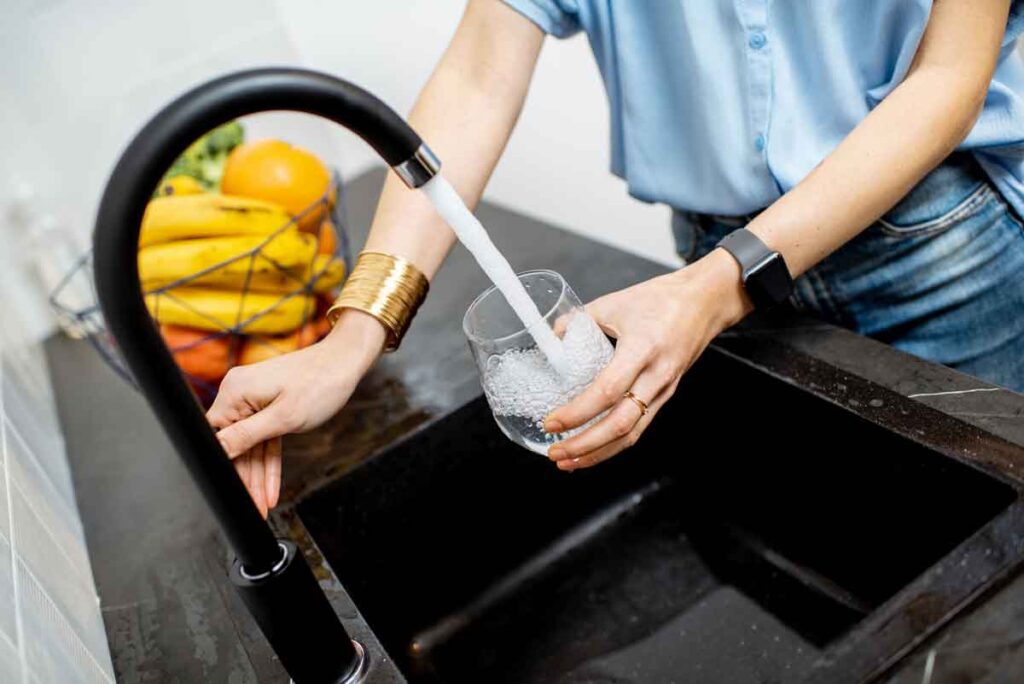
Montclair homeowners deal with water that looks clean, meets regulatory requirements at the plant, and still contains contaminants worth removing. Chloramine disinfection byproducts, lead from aging interior plumbing, and PFAS compounds documented in portions of the Essex County water system are all invisible at the tap — and none of them are addressed by a water softener. Our water filtration installation services are designed specifically for this layer of the water quality picture: the chemical and contaminant concerns that hardness treatment doesn’t touch.
For Montclair’s older housing stock — homes where lead solder at pipe joints and original service connections are common — filtration isn’t an optional upgrade. It’s the most direct way to protect the water your family actually drinks and cooks with.
What Montclair’s Water Contains That Treatment Doesn’t Remove
Essex County’s municipal water is treated to meet Safe Drinking Water Act standards before it enters distribution. But treatment is designed to address the water’s profile at the plant — not what it picks up on the way to your tap, and not every contaminant that enters the system from industrial or environmental sources upstream.
Chloramine is used as the primary disinfectant throughout the Essex County distribution system. It’s more persistent than chlorine and controls bacterial growth effectively across a large network — but it produces trihalomethanes and haloacetic acids as disinfection byproducts that have their own health considerations at elevated concentrations. These byproducts are present in the water of every Montclair municipal customer and are the source of the chemical taste and shower smell most residents have long since stopped noticing.
Lead is a more individual concern — it depends on what’s inside your specific home’s plumbing. In Montclair’s pre-war and mid-century housing stock, lead solder at pipe joints is common, and some homes have original service line components that predate modern lead-free standards. Water that leaves the plant lead-free can pick up lead at any of those points before it reaches your faucet. A whole-home carbon filter won’t address this — lead requires a point-of-use reverse osmosis system at the tap where drinking and cooking water is drawn.
PFAS has been documented in portions of the Essex County water system. New Jersey has strict PFAS standards and requires utilities to test and report, but plant-level compliance doesn’t guarantee what’s arriving at your specific tap — particularly in an older home where aging plumbing may be adding additional variables. Nearby Verona, Glen Ridge, Bloomfield, and West Orange share the same regional water and the same contaminant concerns.
Whole-Home vs. Point-of-Use — Choosing the Right System for Your Montclair Home
The right filtration approach depends on which contaminants are present and where exposure matters most. These two configurations address different problems and are often used together:
A whole-home filtration system treats all water entering the house — every shower, faucet, and appliance receives filtered water. This is the appropriate solution for chloramine byproducts, sediment, and other contaminants where whole-body exposure through bathing and laundry matters alongside drinking. Activated carbon is the core technology for chloramine and byproduct reduction, and it’s effective and long-lasting when properly sized for the home’s water usage.
A point-of-use reverse osmosis system installed under the kitchen sink addresses contaminants where ingestion is the primary concern — PFAS, lead, nitrates, and other dissolved substances that carbon filtration alone doesn’t remove. RO is the most effective technology available for these contaminants and is the system most commonly recommended when a water test reveals PFAS or lead at levels that warrant action.
Many Montclair homeowners use both. If a water softener is also in place, it’s configured upstream of the filtration system in the correct treatment sequence — softening first, then filtration.
What a Filtration Installation Covers in Montclair
Every installation starts with your water quality data. If you’ve already completed a water quality test, we use those results to specify the right system. If not, we test at the time of consultation. The system is matched to what your water actually contains — not to a standard product package. Installation includes:
- Water quality assessment or review of existing test data
- System selection based on contaminant profile, home size, and whole-home vs. point-of-use scope
- Professional installation including all plumbing connections, filter housing mounting, and bypass configuration
- Flow rate verification and system testing after installation
- Complete walkthrough of filter replacement schedule, system indicators, and maintenance
Contaminants in Montclair Area Water — and What Addresses Them
| Contaminant | Source in Essex County | Filtration Solution |
|---|---|---|
| Chloramine and THMs | Municipal disinfection byproducts | Whole-home activated carbon filtration |
| PFAS compounds | Documented in Essex County water system | Point-of-use reverse osmosis |
| Lead | Older interior plumbing and solder | Point-of-use reverse osmosis |
| Sediment and turbidity | Aging distribution lines | Whole-home sediment pre-filter |
| Iron and manganese | Aging supply lines; occasional municipal | Iron filtration or oxidizing filter |
What Water Filtration Installation Costs in Montclair
Water filtration installation in Montclair typically ranges from $4,000 – $15,000+ depending on system type, scope, and installation complexity. A single-stage whole-home carbon system for chloramine and byproduct reduction falls toward the lower end of that range. Multi-stage systems combining sediment pre-filtration, carbon, and UV disinfection run higher. A point-of-use reverse osmosis system for PFAS or lead starts around $800–$1,500 installed and is often paired with a whole-home system for complete coverage. Older Montclair homes with more complex plumbing configurations may require additional pipe work that affects the total.
The right system — and the right budget — depends entirely on what your water test reveals. A homeowner with chloramine concerns needs a different solution than one dealing with lead or PFAS. We specify systems based on actual test data, not assumptions about what the water probably contains.
Serving Montclair and Nearby Essex County Communities
We install water filtration systems throughout Montclair and across Essex County, including Verona, Glen Ridge, Bloomfield, and West Orange — communities sharing the same regional water supply and the same contaminant profile. Our full New Jersey service area covers communities statewide.
Frequently Asked Questions — Water Filtration Installation in Montclair, NJ
What’s the difference between a water filter and a water softener?
A water softener removes hardness minerals — calcium and magnesium — through ion exchange. It addresses scale, appliance wear, and the skin and hair effects of hard water. A water filtration system removes chemical contaminants — chloramine byproducts, PFAS, lead, sediment — that a softener doesn’t touch. They solve different problems and are often installed together. If you’re not sure which your home needs, a water test clarifies the picture.
Does a carbon filter remove PFAS?
Standard activated carbon filtration reduces some PFAS compounds but is not fully effective against all of them, particularly shorter-chain PFAS. Reverse osmosis is the most effective technology for comprehensive PFAS removal and is the system we recommend when a test reveals PFAS at levels that warrant action.
My Montclair home had its lead service line replaced — do I still need filtration?
Possibly. Lead service line replacement addresses one source, but lead solder at interior pipe joints and lead-containing brass fixtures can still contribute lead to drinking water after the street-side line is replaced. A first-draw water test at your kitchen tap tells you definitively whether lead is still reaching your faucet and whether point-of-use filtration is warranted.
How long does installation take?
A point-of-use reverse osmosis installation under the kitchen sink typically takes 2–3 hours. A whole-home carbon or multi-stage system takes 3–5 hours. We assess the site before scheduling and give you a clear timeline.
How often do filters need replacing?
Carbon block filters in whole-home systems typically need replacement every 6–12 months. Reverse osmosis membranes last 2–3 years under normal conditions. Sediment pre-filters may need replacement every 3–6 months depending on sediment load. We walk you through the schedule at installation and offer ongoing service.
Schedule Your Montclair Water Filtration Installation
If your water test has revealed contaminants worth addressing — or if you’ve been accepting chloramine taste and smell as part of life in Montclair — a professionally installed filtration system gives you a permanent solution. We serve Montclair and all of Essex County. Call us at (732) 357-1988 or schedule online.