
Most of the content about private well water in New Jersey is written for buyers. They’re the ones being told to test before closing, to ask for results, to understand what they’re purchasing. Sellers are often left to figure out the water side of the transaction on their own.
Getting ahead of the water quality question before a property hits the market is one of the most practical things a seller with a private well can do. It removes a significant source of negotiating uncertainty and prevents the kind of last-minute surprises that delay or kill closings.
What New Jersey Law Requires Sellers to Test
Under New Jersey’s Private Well Testing Act, sellers of properties with private wells are required to test the water before the transfer of title. The test must be performed by a certified laboratory, the results must be shared with the buyer, and the testing must cover the parameters established by the New Jersey Department of Environmental Protection.
The standard required panel includes coliform bacteria, nitrates, pH, lead, arsenic, and volatile organic compounds, along with any additional parameters required by the county health department where the property is located. Some counties have expanded the required test panel beyond the state minimum based on local groundwater conditions.
Satisfying the legal requirement is the floor, not the ceiling. A test that meets the PWTA standard may not cover everything a buyer in today’s market is likely to ask about.
What Buyers Are Increasingly Asking For
PFAS testing is the single most common well water request that falls outside the standard required panel. New Jersey has established enforceable PFAS standards for drinking water, and awareness of PFAS contamination in NJ groundwater has grown significantly. Buyers — particularly those working with informed real estate attorneys or buyers’ agents who understand the issue — are now routinely requesting PFAS testing as a condition of purchase.
A seller who has already tested for PFAS and can provide those results is in a stronger position than one who receives the request mid-transaction and has to scramble. PFAS testing takes time to come back from the laboratory, and that timeline can create pressure on a closing schedule if it’s initiated after negotiations have already begun.
Buyers are also more likely than a decade ago to ask about arsenic results specifically, to want to see iron and hardness levels even if those aren’t required, and to ask whether any treatment systems on the property are owned outright or under a service contract that will need to be transferred or terminated at closing.
Why Testing Early Gives Sellers More Options
The difference between testing early and testing at the last minute is almost entirely about options. A seller who tests six to eight weeks before listing receives results with enough time to:
- Address any contamination above action levels through treatment rather than price reduction
- Obtain a follow-up test confirming the treatment is effective before the property goes to market
- Disclose the situation proactively with documentation of the solution already in place
- Avoid the price negotiation leverage that a buyer gains when contamination is discovered late
A seller who tests as part of the required closing process has the results when the buyer sees them and no time to do anything about what they show. The buyer may accept the results, may request a price concession, or may walk away depending on what was found and whether treatment is perceived as complicated or costly.
Common Water Quality Issues Found During Pre-Listing Testing
Several water quality problems appear regularly in pre-listing tests for NJ properties with private wells, and most of them are addressable with the right treatment approach.
Bacterial contamination is one of the most common findings and also one of the most alarming for buyers who don’t understand that it’s typically treatable. Shock chlorination followed by a clean follow-up test resolves most cases where bacteria are found. A seller who has already treated and retested can present documentation of a clean result rather than a positive coliform finding.
Elevated nitrates, arsenic, iron, and hardness are the other common findings. For each one, effective treatment options exist that can be installed before listing. Water filtration and water softening systems that are already in place and functioning correctly at the time of sale are an asset, not a liability. They demonstrate that the water quality issue has been identified and addressed.
What to Do With Existing Treatment Equipment Before Listing
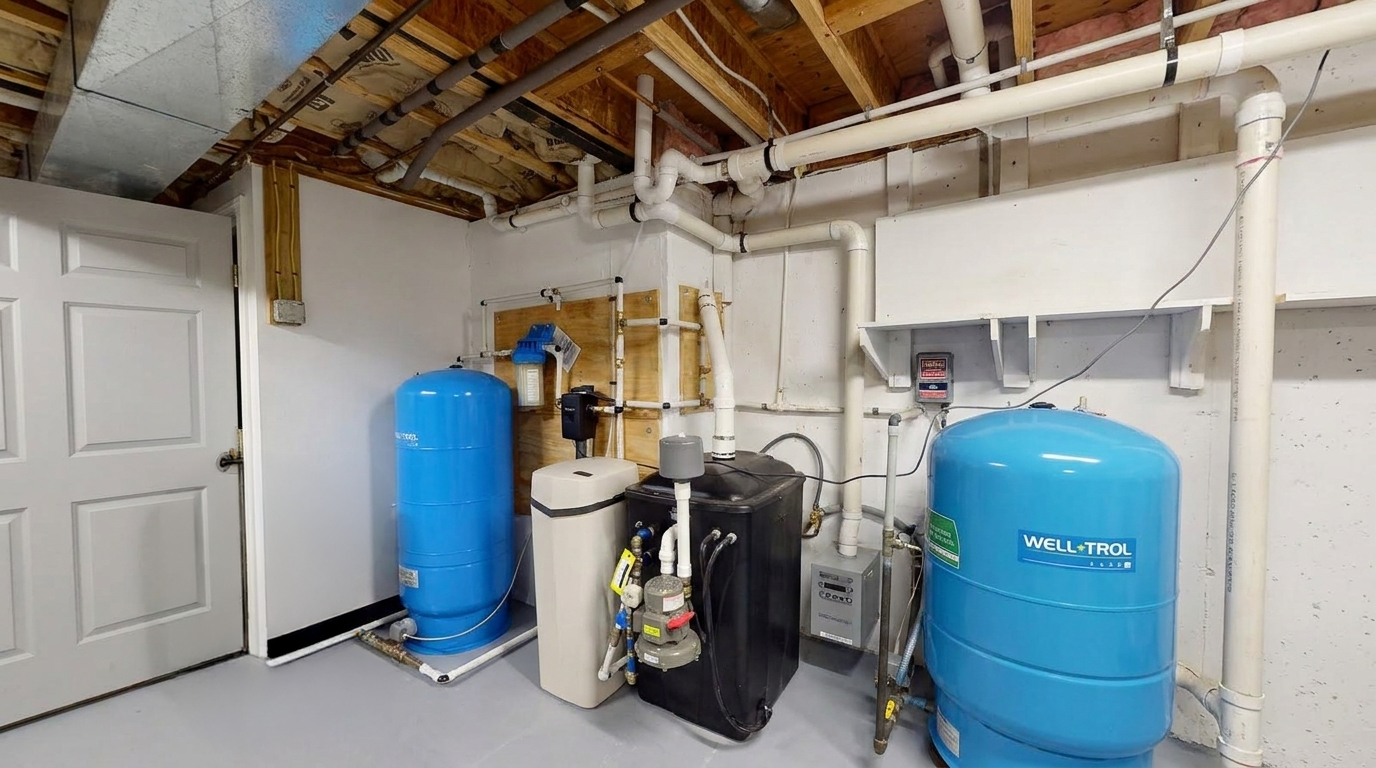
If a water softener, filtration system, or UV purifier is already installed, it needs to be in working order before the property goes to market. Buyers will test after the treatment system has had a chance to run, and results from a poorly maintained or failing system will reflect that.
Before listing, check the water softener salt level and run a manual regeneration cycle. Replace UV lamps if they are approaching or past their rated service life. Change any sediment or carbon filters that are overdue for replacement. Have a water test done with the treatment system running to confirm it’s performing correctly before the buyer’s test takes place.
Document the service history of any treatment equipment, including the purchase date, the last service, and any filter or media replacement records. Buyers and their inspectors will ask about this, and organized documentation builds confidence in the overall condition of the property.
How Jersey Radon Helps Sellers Prepare
Jersey Radon works with residential property owners throughout New Jersey who are preparing to sell and want the water side of the transaction handled before it becomes a complication. We provide water testing, treatment installation, and system service for properties with private wells at every stage of the sale preparation process.
We help sellers who need to:
- Test the water comprehensively before listing, including for contaminants beyond the standard PWTA panel
- Address contamination findings with treatment installed and confirmed effective before going to market
- Service existing treatment equipment so it’s in verifiable working condition at the time of sale
- Provide documentation that supports a clean disclosure rather than an open question
If you’re preparing to list a property with a private well and want to handle the water quality question before it affects the sale, contact Jersey Radon for a free estimate. Getting ahead of it is almost always easier and less expensive than resolving it after a buyer’s test raises a concern.
