Radon and bacteria are two entirely different problems that happen to show up in the same well water sometimes. Treating one doesn’t address the other. The order matters more than most homeowners expect, and it’s a common enough overlap that it’s worth addressing head-on rather than assuming one issue was the whole story.
Two Problems, Two Sources
Radon is a naturally occurring radioactive gas tied to bedrock. Bacteria contamination usually traces back to something else entirely, often surface water intrusion or a well construction issue. A test showing one tells you nothing about the other.
The mechanisms couldn’t be more different. Radon is geological, present since the well was drilled, tied to the rock the water moves through. Bacteria contamination is usually a pathway problem, some route by which surface water is reaching the well that shouldn’t be there.
A well can carry elevated radon with a clean bacteria result. It can carry bacteria with no radon concern at all. Some wells have both. Comprehensive testing is the only way to know which conditions are actually present, and homeowners sometimes assume that one known issue is the extent of the problem. It rarely works that way.
What Shock Chlorination Does to Equipment
Bacteria issues typically call for shock chlorination, a process that introduces a strong chlorine solution throughout the well and plumbing system. That strong a dose can affect sensitive treatment equipment if it isn’t planned around properly.
Chlorine at shock-treatment concentrations is aggressive by design. It has to be, to kill off bacteria throughout the whole well and plumbing system. That same aggressiveness puts sensitive components at risk if the process isn’t coordinated with whatever equipment already sits in the water’s path.
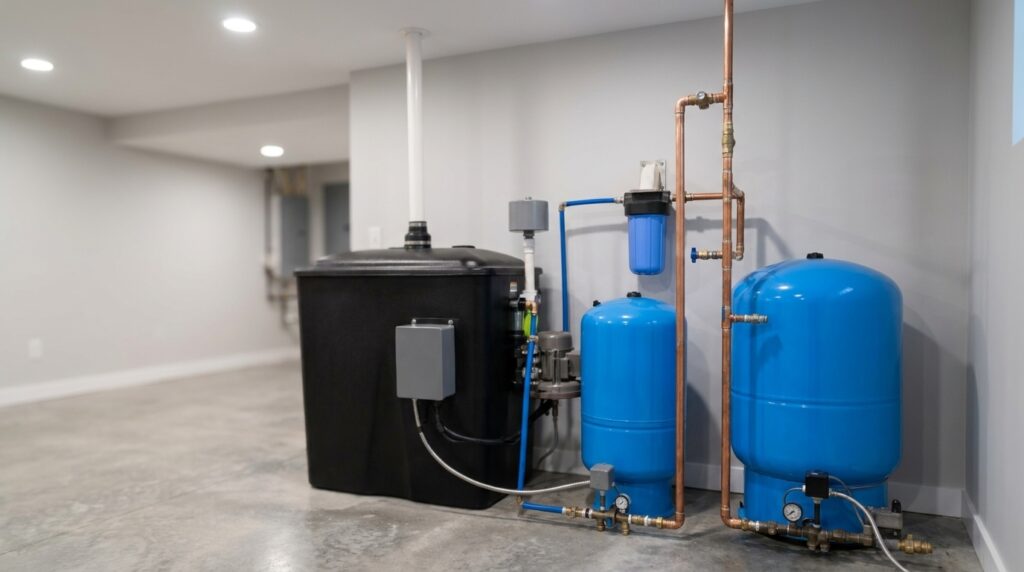
Aeration components aren’t built to run at full chlorine concentration indefinitely. In practice, this often means bypassing the aeration system during disinfection, or timing the chlorination so it happens before the aeration equipment goes in rather than after.
Order of Operations
- Address a known bacteria issue before finalizing radon treatment equipment where possible
- Coordinate both processes together when they need to happen close in time
- Avoid running shock chlorination through equipment that hasn’t been protected for it
Getting the order wrong doesn’t just risk the equipment. A poorly sequenced project can end up needing rework on both sides: disinfection that has to be repeated because it interacted badly with treatment equipment, and aeration equipment that needs servicing because it was exposed to something it shouldn’t have been.
Retesting once corrective work is done confirms bacteria levels have returned to normal and that equipment ahead of the aerator is still functioning as expected once everything settles.
Get Both Problems Solved in the Right Order
Radon aeration and well disinfection or bacteria treatment aren’t the same job, but they can affect each other if the sequence is wrong. Jersey Radon and Water Treatment evaluates radon alongside other well-water conditions rather than assuming one system solves everything. Contact us if your well is dealing with more than one issue at once.
