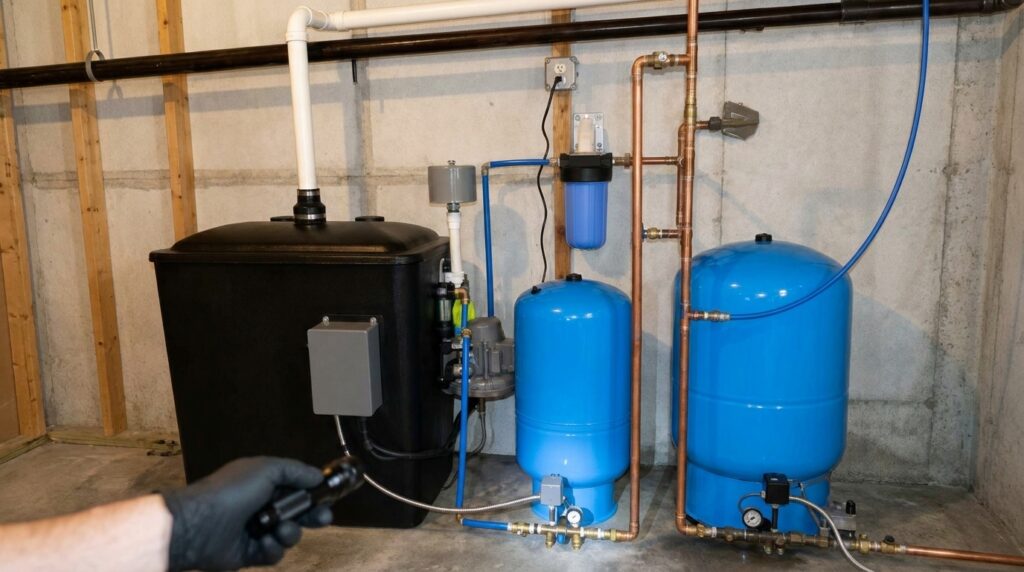
A home with an existing radon aeration system isn’t automatically a home with the radon problem solved. An inspector looking at that equipment is checking for something more limited than most buyers assume, and closing that gap starts with understanding exactly what’s being evaluated.
What an Installed System Actually Proves
Existing equipment tells you a previous owner addressed radon at some point. It doesn’t confirm the system is still performing today.
A system installed five or ten years ago with no documented service since is a very different situation from one with regular maintenance records and a recent water test. The equipment might look identical sitting in the basement. What’s happened to it since installation is the part that actually matters.
The Inspector’s Checklist
| Area | What’s Being Checked |
|---|---|
| Visible condition | Leaks, corrosion, general wear on components |
| Installation quality | Whether the setup follows standard practice or looks improvised |
| Vent placement | Distance from windows, doors, and air intakes |
| Plumbing connections | Whether they look professionally done |
Visible wear, corrosion, or components that look far older than the rest of the system can suggest maintenance has lapsed, even if everything is technically still running. An inspector working through this list is doing exactly what a home inspection is designed to do. That’s genuinely useful, and it catches real problems. It just isn’t the same exercise as confirming the water itself is being treated effectively.
The One Thing Inspection Can’t Measure
A visual inspection can’t confirm radon concentration in the water. What buyers and sellers should already know about existing aeration includes this exact gap.
This is worth repeating, because it’s the single most common misunderstanding in this whole process. A clean-looking installation with no visible defects can still be failing to reduce radon to a meaningful degree. Looks and performance are not the same thing.
Questions Worth Asking
- Are there maintenance records for the system?
- How old are the major components?
- When was the most recent water test, and what did it show?
A seller who can answer all three confidently is signaling a well-maintained system. Vague or missing answers aren’t necessarily a red flag on their own, but they do shift the burden onto the buyer to verify performance independently.
If service history isn’t available, or the most recent test is old, a fresh water test after purchase confirms current performance instead of relying on an inspection that was never designed to measure it.
Pair the Inspection With an Actual Water Test
What an NJ home inspector checks when aeration is already installed is useful, but it stops well short of confirming radon levels. Jersey Radon and Water Treatment can test the well and evaluate treatment performance on any property with existing aeration equipment. Contact us for an evaluation before or after closing.
