Brown or Orange Water From Your NJ Well? Here’s What’s Causing It and How to Fix It
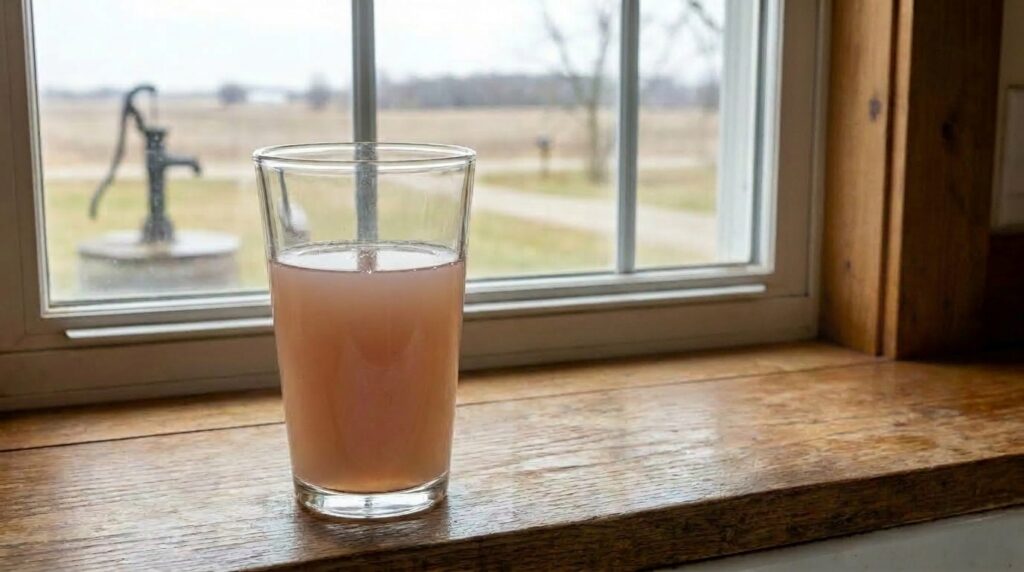
You turn on the tap and the water runs brown. Or orange. Or it looks clear when it first comes out but leaves rust-colored stains in the sink, the toilet bowl, and around the shower drain. Maybe your white laundry is coming out with an orange tint. Maybe the water has a metallic taste or a faint earthy smell. If you’ve just moved into a home in New Jersey with a private well, this is one of the most common water quality surprises new homeowners encounter — and one of the most visually alarming.
The good news is that brown or orange well water is rarely a sign of the most dangerous contaminants. It doesn’t mean your water is acutely toxic or that your well has catastrophically failed. But it does mean something is going on that needs to be identified, understood, and addressed — because whatever is causing the color is also affecting your appliances, your plumbing, your laundry, and potentially your health over the long term.
This guide covers the main causes of brown and orange well water in New Jersey, how to tell them apart, what the health implications are for each, and which treatment approaches are proven to work.
The Most Common Cause: Iron in Your Well Water
Iron is the single most common cause of brown, orange, or red-tinted well water in New Jersey, and it’s present at elevated levels in groundwater across a wide range of NJ counties and aquifer systems. Iron occurs naturally in soil and rock, and as groundwater moves through iron-bearing formations, it dissolves iron and carries it into your well. The result is water that may look perfectly clear when it first comes out of the tap — because the iron is dissolved — but turns orange or brown when exposed to air, as the dissolved iron oxidizes and forms rust particles.
The EPA’s secondary drinking water standard for iron is 0.3 milligrams per liter (mg/L). This is not a health-based standard — it’s an aesthetic standard, set because iron above 0.3 mg/L causes noticeable staining, taste, and odor problems. Many NJ private wells produce water with iron levels well above this threshold. Levels of 1, 2, 5, or even 10 mg/L are not unusual in well water from the coastal plain aquifers serving Toms River, Brick, Jackson, and Howell, or from the Piedmont aquifer systems underlying parts of Somerset, Middlesex, and Monmouth counties.
Iron in well water manifests in several forms, and understanding which form you’re dealing with matters for treatment selection.
Ferrous Iron (Dissolved Iron)
Ferrous iron — also called clear water iron — is dissolved in the water and invisible when the water is first drawn. Fill a glass from the tap and it looks clear. Let it sit for a few minutes and it turns orange or brown as the iron oxidizes on contact with air. This is the most common form of iron in NJ well water and the most straightforward to treat. Ferrous iron is what causes the orange staining in toilet bowls — where water sits and oxidizes — and in sinks and showers where water dries on surfaces.
Ferric Iron (Particulate Iron)
Ferric iron — also called red water iron — is already oxidized when it comes out of the tap. The water looks orange, brown, or cloudy immediately, with visible particles suspended in it. Ferric iron has already converted from its dissolved form to solid rust particles, either in the aquifer, the well casing, or the plumbing. It’s physically filterable, but requires a different treatment approach than dissolved ferrous iron.
Iron Bacteria
Iron bacteria are microorganisms that consume dissolved iron in groundwater and produce a slimy, rust-colored biofilm as a byproduct. They’re not a direct health hazard, but their presence is a nuisance and an indicator of biological activity in the well system. Iron bacteria produce a distinctly unpleasant odor — often described as oily, petroleum-like, or like cucumber — that’s different from the sulfur smell of hydrogen sulfide. They create thick orange or reddish-brown slime that can clog well screens, pressure tanks, and plumbing, and they make iron removal treatment more complex. If you’re seeing gelatinous orange or rust-colored slime inside your toilet tank or around fixtures, iron bacteria are likely involved.
Manganese: The Less Talked-About Cause of Dark Water
Manganese is iron’s frequent companion in NJ groundwater, and it causes its own distinct discoloration — typically black, dark brown, or gray rather than orange. Manganese often co-occurs with iron in the same water supply, and the combination produces complex staining that ranges from orange-brown to nearly black depending on the relative concentrations of each mineral.
The EPA’s secondary standard for manganese is 0.05 mg/L — lower than iron’s threshold, because manganese is more problematic at lower concentrations. The NJDEP has established a health-based standard for manganese in drinking water at 0.3 mg/L, reflecting growing research linking long-term manganese exposure at elevated levels to neurological effects, particularly in infants and young children. Manganese is not purely an aesthetic issue — it warrants treatment on health grounds when levels are elevated, not just when it’s causing staining.
In New Jersey, manganese is commonly elevated in well water throughout the coastal plain aquifer system serving Ocean, Monmouth, Burlington, and Atlantic counties, as well as in parts of the Highlands serving Morris, Sussex, and Passaic counties. Homeowners in Toms River, Brick, Lacey Township, and Barnegat frequently encounter manganese alongside iron in their well water.
Other Causes Worth Considering
While iron and manganese account for the overwhelming majority of brown and orange well water cases in New Jersey, a few other causes are worth ruling out.
Tannins — organic compounds leached from decaying vegetation and organic matter in soil — can give water a yellowish-brown tea-like color without the metallic taste or staining associated with iron. Tannins are more common in shallow wells drawing from the water table in areas with high organic content in the soil, and they’re particularly prevalent in the coastal plain regions of southern New Jersey. Tannin-colored water typically doesn’t leave the hard orange staining that iron does, and a water test will distinguish between the two.
Disturbed sediment from well construction, pump work, or nearby excavation can temporarily cause brown or cloudy water. If the discoloration appeared suddenly after work was done near the well or inside the plumbing, sediment disturbance is the likely cause and the issue may resolve on its own with flushing. If it persists, a water test is warranted.
Corroding galvanized steel pipes in older homes can leach rust into the water supply independent of what’s in the groundwater. If your new home in an older established neighborhood — Flemington, Hackettstown, or parts of Parsippany with aging housing stock — has original galvanized steel plumbing, the brown water may be coming from the pipes themselves rather than the well. Running the water for several minutes and checking whether the color clears can help differentiate; if the water runs clear after flushing but returns brown after sitting, internal pipe corrosion is a likely contributor.
Health Implications: What You Actually Need to Worry About
Iron at typical well water concentrations is not considered a health hazard. The body needs iron, and the amounts present in even heavily iron-stained well water are generally not sufficient to pose a direct health risk for most people. The EPA’s 0.3 mg/L secondary standard is set for taste and aesthetic reasons, not health protection. That said, very high iron levels can make water unpalatable enough that people stop drinking it — which creates its own problems — and iron in water accelerates the deterioration of appliances, plumbing, and water treatment equipment.
Manganese is a more nuanced story. At low levels it’s an essential trace mineral. At elevated levels — particularly the levels sometimes found in NJ coastal plain well water — it has been associated with neurological effects with long-term exposure, and the research on children’s neurodevelopment and manganese exposure has become more concerning in recent years. The NJDEP’s health-based standard reflects this concern. If your water has elevated manganese, treatment is recommended on health grounds, not just for aesthetics.
Iron bacteria, while not a direct health hazard themselves, create biofilm environments that can harbor other organisms and indicate that your well system’s biological integrity deserves attention. Their presence alongside iron and manganese warrants a comprehensive water test that includes biological parameters.
Getting a Proper Diagnosis Before Choosing Treatment
The most important thing to do before selecting any iron or manganese treatment system is to get a comprehensive water test that tells you exactly what you’re dealing with. You need to know the concentration of iron and manganese, whether the iron is ferrous or ferric, whether iron bacteria are present, what your pH is, whether hardness is elevated, and whether other contaminants are present alongside the iron.
pH matters enormously for iron treatment. The effectiveness of oxidizing filters and other iron removal technologies is pH-dependent — treatment that works well at pH 7 may be ineffective at pH 6.5. Hardness affects treatment sequencing. And the presence of hydrogen sulfide alongside iron — common in certain NJ aquifer zones — requires a treatment approach that addresses both simultaneously rather than sequentially.
Our water testing service provides the comprehensive baseline you need before any treatment decision is made. As we covered in our post on what NJ home inspections don’t tell you about water quality, iron and manganese are almost never tested at closing — which means most new homeowners with iron-stained water had no warning before they moved in.
Treatment Options That Work for NJ Well Water Iron Problems
Iron and manganese removal from well water is well-established technology. The right system for your home depends on your iron and manganese concentrations, the form of iron present, your pH, and whether iron bacteria are involved. These are the main approaches used for NJ residential well water.
Oxidizing Filtration Systems
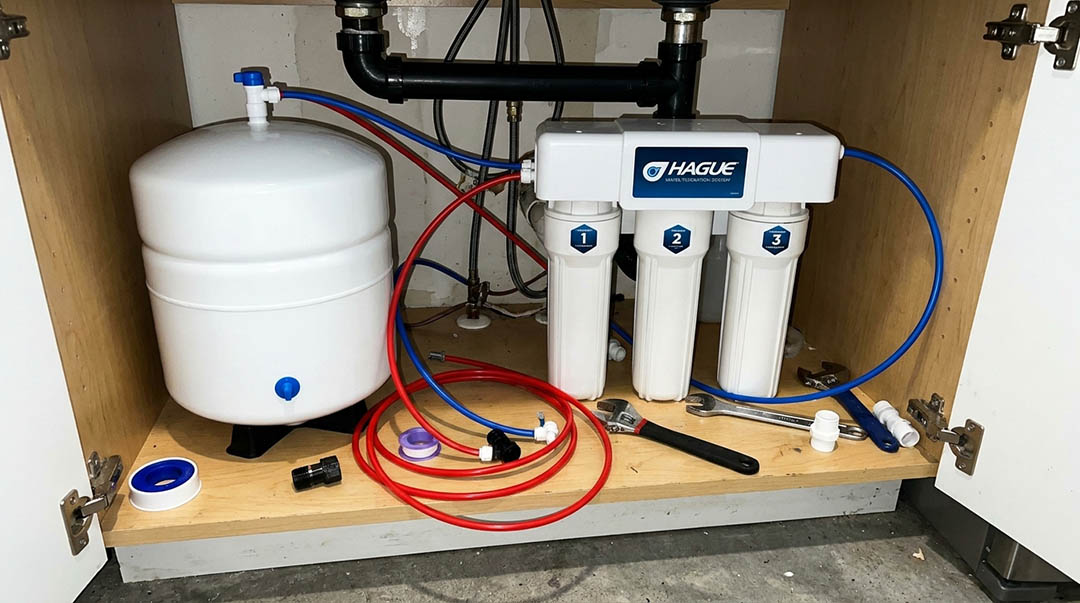
For ferrous iron at moderate levels with a suitable pH, oxidizing filtration is the workhorse treatment approach. These systems use a filter media — manganese greensand, Birm, catalytic carbon, or proprietary oxidizing media — that converts dissolved ferrous iron to solid ferric particles and then filters them out before the water enters your home. Periodic backwashing flushes the accumulated iron particles to drain and regenerates the media.
Air injection oxidizing (AIO) systems take this a step further by injecting a pocket of air into the pressure tank ahead of the filter, creating an oxidizing environment that converts iron and manganese before filtration. AIO systems are chemical-free, effective for iron and manganese simultaneously, and well-suited to the groundwater chemistry common across central and southern New Jersey.
Chlorination and Carbon Filtration
For higher iron concentrations, iron bacteria, or water with challenging chemistry that makes oxidizing filtration alone insufficient, a chemical feed system using chlorine injection followed by contact time and a carbon backwash filter is a highly effective approach. The chlorine oxidizes iron, manganese, and hydrogen sulfide, kills iron bacteria and other biological contaminants, and is then removed by the carbon filter before the water enters the home. This approach is common in Ocean and Monmouth county homes where iron, manganese, and biological activity occur together in the coastal plain aquifer.
Greensand Filtration with Potassium Permanganate
For very high iron or manganese levels, manganese greensand filtration regenerated with potassium permanganate provides strong oxidizing capacity and reliable removal performance. This system requires periodic addition of potassium permanganate to maintain the oxidizing capacity of the media, which adds a chemical handling step, but it’s proven and effective for challenging water with high iron and manganese concentrations.
Water Softeners: What They Can and Can’t Do for Iron
Ion exchange water softeners can remove low levels of ferrous iron — typically up to about 1 to 2 mg/L — as part of their normal softening process. But softeners are not designed as iron removal systems and will become fouled and degraded if used as the primary iron treatment for water with significant iron concentrations. Iron coats the resin beads and reduces softening capacity over time. If your water has both hardness and iron, the iron should be addressed upstream of the softener with a dedicated iron filter, protecting the softener resin and allowing it to do its job effectively. Our whole-house water filtration page explains how iron filtration and softening systems work together in an integrated treatment sequence.
Addressing Iron Bacteria Specifically
If iron bacteria are confirmed in your well water, treatment requires more than filtration. Shock chlorination of the well — a high-concentration chlorine treatment of the well casing, pressure tank, and plumbing — is the first step to knock down the bacterial population. A continuous disinfection system, either chlorine injection or ultraviolet treatment, provides ongoing protection against recolonization. Iron bacteria are persistent and can re-establish if disinfection is not maintained. Learn more about water purification options including UV disinfection systems for NJ well water homeowners.
What Iron and Manganese Do to Your Home Over Time
Beyond the immediate visual impact of orange water and rust stains, elevated iron and manganese take a steady toll on your home’s plumbing and appliances if left untreated. Iron deposits accumulate inside pipes, reducing flow and pressure over years of exposure. Water heaters, dishwashers, and washing machines experience accelerated wear. Fixtures and fittings corrode faster. The orange staining on porcelain fixtures — toilets, sinks, tubs — becomes increasingly difficult to remove the longer it’s allowed to build up, and some staining becomes permanent if not addressed.
Laundry washed in iron-rich water develops an orange or brown tint that standard washing cannot remove. Fabrics treated with bleach in iron-rich water can actually set the stain permanently — the chlorine in bleach reacts with iron to create a more stable rust compound. If you’ve been washing laundry in untreated iron water since moving in, switching to treated water and using a commercial iron stain remover on affected fabrics is the path to recovery.
Don’t Wait on This One
Brown or orange water is one of those water quality problems that’s easy to see and therefore easy to keep putting off addressing — because you can work around it, use bottled water for drinking, and tell yourself you’ll deal with it eventually. But every day untreated iron-rich water runs through your pipes, your water heater, your appliances, and your fixtures, the cumulative damage grows. And if manganese is part of the picture, the health case for prompt treatment is even stronger.
If you’re new to NJ well water ownership and working through your water quality priorities, our comprehensive guide on the 30-day water safety checklist for new NJ homeowners covers where iron and manganese testing fits into the broader first-month assessment process.
At Jersey Radon, we help homeowners across New Jersey — from Toms River and Brick to Freehold, Flemington, Hackettstown, and Parsippany — diagnose the source of iron and manganese problems in their well water and install treatment systems that eliminate staining, protect appliances, and deliver clean, clear water throughout the home. If your new NJ home’s water is running orange or brown and you want to know exactly what’s causing it and what will fix it, reach out to our team for a free consultation. We’ll start with a proper water test and build a treatment plan around what your water actually contains.
