Radon usually gets talked about as an air problem, something a sub-slab system handles. But if your home runs on a private well, radon can also be dissolved in the water itself, and every shower, load of laundry, or pot of pasta on the stove gives it a chance to escape into the air you breathe indoors.
A radon aeration system is built specifically for that problem. It treats the water before it ever reaches a faucet, pulling radon out and venting it outside instead of into your bathroom or kitchen.
Why New Jersey Well Water Carries Radon in the First Place
Radon is a radioactive gas produced when uranium and radium in soil and bedrock break down. As groundwater moves through that rock, it can pick up dissolved radon along the way, which means a private well can be drawing water with a radon concentration even though nothing about the water looks, smells, or tastes different, which is why it helps to know the signs a NJ well may need aeration treatment beyond taste or smell.
That’s the tricky part. You cannot see or taste your way to an answer. Testing is the only way to know what’s actually coming out of your well, which is why radon in water is one of the first things worth ruling out on any NJ property with a private well.
The EPA notes that radon dissolved in well water behaves much like carbon dioxide in a soda, staying trapped until agitation or a change in pressure lets it escape into the air.
Inside the Aeration Process, Step by Step
An aeration system is installed as a point of entry unit, meaning it treats all the water supplying the house rather than a single tap. Here’s what happens as water moves through it.
Well water enters the treatment system
Water is routed from the well into the aeration equipment before it ever reaches household plumbing. Where exactly it’s installed depends on your home’s layout and what else is going on with the water. Sediment, iron, manganese, or hardness can all complicate the picture, and sometimes call for additional treatment ahead of the aerator to keep it running well.
Water is mixed with air
Inside the aeration chamber, the system dramatically increases contact between the water and clean air, using spray nozzles, diffusers, bubble aeration, packed media, or multiple stages depending on the equipment. That turbulence gives dissolved radon a way out of the water and into the air stream moving through the chamber.
Radon laden air is vented outdoors
A blower or exhaust fan pushes that air, now carrying the radon, through a dedicated line to the outside. Where that vent terminates matters, and it has to be positioned so the discharged air doesn’t drift back in through a window, door, soffit, or intake, which is one of several reasons this tends to be a job for a licensed installer rather than a DIY project.
Treated water is repressurized
Aeration typically happens in a nonpressurized tank, so the water loses the pressure the well pump originally gave it. A repressurization pump sends the treated water back into your plumbing, often paired with a pressure tank to keep water pressure steady and reduce how often the pump cycles.
The Tanks and Filters Working Alongside the Aerator
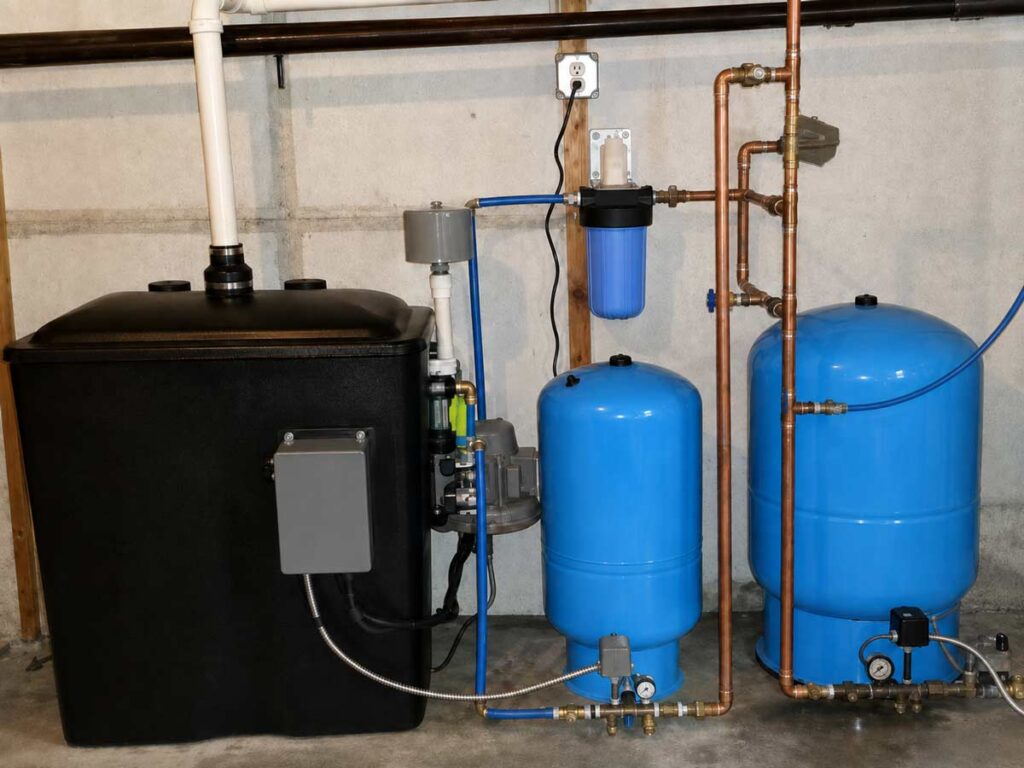
A full aeration installation is rarely just one tank. It’s usually a small system of parts working together, and knowing what each one does makes it easier to understand what a technician is actually looking at during service, or what a home buyer or seller should know if a system already exists on a property.
| Component | What It Does |
|---|---|
| Aeration chamber | Main tank where water contacts air and radon separates out |
| Blower or exhaust fan | Moves the radon laden air through the chamber and out the vent line |
| Repressurization pump | Restores pressure so showers, faucets, and appliances work normally |
| Pressure tank | Stores pressurized water and reduces pump cycling |
| Sediment or pretreatment filter | Removes particles or contaminants that could interfere with the aerator |
Not every home needs every piece. Equipment gets sized around the radon concentration, how much water the household actually uses, available space, and the rest of the well water test results, all of which factor into what actually drives the cost of a system.
Does Aeration Get Rid of All the Radon
A properly sized aeration system can achieve significant radon reduction, but no reduction number should be assumed without a post treatment test to confirm it. Too many variables affect the outcome to guess.
- Starting radon concentration in the well water
- Water flow rate through the system
- How much contact time the water gets with air
- The specific aeration method used
- Whether the equipment is sized correctly for the household
- General water chemistry and mineral content
- The condition and maintenance history of the system
Testing after installation is the only way to confirm the system is doing what it was installed to do, and periodic retesting afterward keeps that confirmation current.
Keeping an Aeration System Working the Way It Should
Maintenance needs vary by equipment, but a few habits apply across most systems.
- Keep the exterior vent termination clear of snow, debris, or anything that could block it
- Watch for unusual pump cycling, pressure swings, leaks, or alarm signals
- Replace sediment cartridges based on actual water conditions, not a fixed calendar date
- Have blowers, pumps, controls, and spray components inspected on the schedule your installer recommends
- Retest the water periodically, and always after any change to the well, pump, or plumbing
A household with heavy sediment is going to need more frequent filter changes than one with relatively clean well water, so the right maintenance schedule really comes down to what your water test shows.
How Jersey Radon and Water Treatment Builds and Sizes Aeration Systems for NJ Wells
An aeration system only performs as well as its design, and design starts with what’s actually in your water rather than a standard package applied to every home, whether treatment is simply a health decision or something you’re confirming is required by law for your specific well. Jersey Radon and Water Treatment builds each system around your specific test results, well output, and household demand.
- Water treatment services covering aeration design, installation, and full system sizing
- Well water testing to confirm your starting radon concentration before any equipment is chosen
- Water filtration for sediment or mineral issues that can affect how an aerator performs
Getting an aeration system right comes down to matching the equipment to what your well is actually producing, not guessing at a fix. If you haven’t tested your well for radon, or you want a second opinion on a system that isn’t performing the way it should, schedule a free estimate with Jersey Radon and Water Treatment and get a design built around your actual water.
