Do You Need A Radon Water Inspection For Your Home in Short Hills, NJ?
Call Us For A Free Estimate: (732)357-1988

Radon in Water in Short Hills, NJ — The Missing Piece in Most Water Quality Assessments

Short Hills homeowners apply high standards to their homes — and to their water quality. PFAS, lead from interior plumbing, chloramine byproducts — these have been part of the conversation for homeowners who’ve thought carefully about what’s in their water. Radon in water tends to be the concern that doesn’t make the list, even for thorough homeowners. Essex County sits within New Jersey’s elevated-radon geological zone, and for any Short Hills property on a private well, the groundwater radon question is directly relevant. For municipal water customers — the majority in Short Hills — treatment significantly reduces the risk, but for homeowners with unexplained elevated indoor air radon, waterborne radon is worth ruling out with a specific test rather than assuming away. A water assessment that explicitly includes radon provides that direct answer.

The Radon-in-Water Exposure Pathway — How It Works and Why It Matters

Radon is a naturally occurring radioactive gas produced as uranium decays in bedrock and soil. Most homeowners know it as the gas that rises through foundation cracks and accumulates in basements — the airborne exposure pathway. The water pathway works differently: radon dissolves into groundwater as it moves through uranium-bearing geological formations, and well water carries it into the home through the plumbing without any treatment reducing it along the way.

When radon-containing water is used in the home — running the shower, the dishwasher, or a kitchen faucet — the dissolved gas releases into the indoor air. Research has estimated that 10,000 pCi/L of radon in water contributes approximately 1 pCi/L to indoor air radon levels. For homes where both the soil-gas and waterborne pathways are active simultaneously, total indoor radon exposure is greater than either pathway alone would suggest. Testing only one gives you an incomplete picture — particularly for a home on a private well in Essex County’s elevated-radon geological zone. Radon in water produces no taste, no odor, no color — a laboratory test specifically ordered for it is the only way to detect it.

Short Hills’ Water Context and What It Means for Radon

Short Hills is part of Millburn Township, served by the Essex County municipal water system — treated surface water that undergoes aeration and other processes that significantly reduce dissolved radon before distribution. For most Short Hills municipal water customers, elevated waterborne radon arriving at the tap is unlikely. The question becomes more directly relevant in two situations: for any property drawing from a private well, and for homeowners who’ve tested indoor air and found elevated radon without a fully identified soil-gas source.

Essex County’s crystalline and mixed bedrock geology places it within New Jersey’s elevated-radon zone — the same geological profile that drives above-average airborne radon levels across northern New Jersey also influences groundwater radon concentrations in private wells throughout the county. Short Hills’ established mid-century and older housing stock means many homes have been sitting on this geology for decades without a comprehensive radon-in-water assessment. Nearby Millburn, Livingston, Summit, and Maplewood share the same Essex County geological profile and the same considerations for any private well owners in those communities.

When Radon in Water Testing Makes Sense for a Short Hills Home

  • Your property is connected to a private well anywhere in Essex County
  • You’ve tested indoor air radon and found elevated levels without a fully identified source
  • You’re purchasing a home and want a complete water quality baseline before closing
  • You want to rule out waterborne radon as a contributing factor to indoor air concerns
  • You’re on municipal water but want certainty rather than an assumption about treatment effectiveness

Radon in Water Risk by Scenario — Short Hills Area Homeowners

Scenario Risk Level Recommended Action
Private well in Essex County Higher — direct groundwater exposure in elevated-radon zone Test immediately; include in any well water panel
Short Hills municipal water customer Lower — treatment reduces radon before distribution Test if indoor air radon is elevated or if concerned
Elevated indoor air radon, source unclear Water may be contributing — unknown without testing Test water radon as part of full radon assessment
Home purchase with unknown water history Unknown — baseline needed Test before or immediately after closing

What Happens After Testing

A radon-in-water test returns a specific picocuries-per-liter concentration. Below the EPA’s suggested action level of 4,000 pCi/L, no treatment is required. Above it, aeration systems and granular activated carbon filtration are the established and effective treatment approaches — with the right choice depending on the concentration found and the home’s specific plumbing configuration. Our radon in water removal page covers the full treatment picture. For Short Hills homeowners also thinking about PFAS, lead, and chloramine byproducts in Essex County water, our water filtration page covers those concerns alongside radon. Our full New Jersey service area covers communities statewide.

Frequently Asked Questions — Radon in Water Testing in Short Hills, NJ

Is Essex County in an elevated-radon zone for groundwater?

Yes. Essex County’s crystalline and mixed bedrock geology places it within New Jersey’s elevated-radon zone — the same geological profile that drives above-average airborne radon levels across northern New Jersey also influences groundwater radon concentrations. Private well owners in Essex County have more reason than those in southern New Jersey’s sedimentary geology areas to include radon in a comprehensive well water assessment.

I’ve already had my Short Hills home’s air tested for radon — should I also test the water?

Yes, if you’re on a private well or if your air test showed elevated levels without a fully identified source. Air and water radon are separate measurements addressing separate exposure pathways. A high air radon reading with no clear soil-gas explanation may have waterborne radon as a contributing factor — a water test is the only way to know for certain.

Is radon testing included in a standard water quality panel?

No. Radon in water must be specifically requested as a separate laboratory analysis. A comprehensive panel covering PFAS, lead, hardness, and bacteria does not include radon unless it’s explicitly ordered. If radon wasn’t specifically on your water test, that question remains unanswered.

What concentration of radon in water requires action?

The EPA’s suggested action level for private well water is 4,000 pCi/L. We walk through your specific results in context when they come back — explaining what the concentration means for your household’s total radon exposure, not just how it compares to a regulatory threshold.

How quickly can testing be arranged?

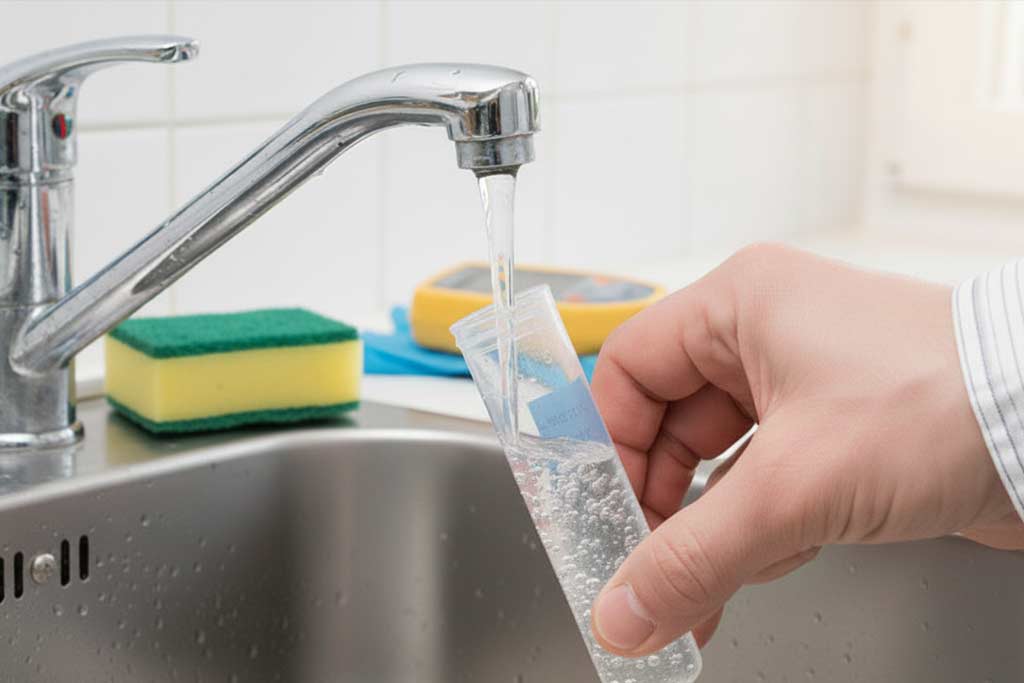
We’re typically able to schedule within a few days. Sample collection at your home takes under an hour, and laboratory results return within approximately one to two weeks.

Get a Complete Answer on Radon in Your Short Hills Home’s Water

If water quality is a priority in your Short Hills home and radon hasn’t been part of that picture — or if indoor air radon is a concern you want to fully resolve — a radon-in-water test provides the specific answer your address needs. We serve Short Hills and all of Essex County. Call us at (732) 357-1988 or reach out online.

Do You Need A Radon Water Inspection For Your Home in Short Hills, NJ?
Call Us For A Free Estimate: (732)357-1988

Learn About Solving Water-Related Risks In You Home

Request A Radon Water Inspection For Your Home in Short Hills, NJ Today!

Or call (732)357-1988

Call-Us