Cherry Hill Is Mostly a Municipal Water Community — But What the Delaware River Supply Delivers to Your Tap Is Worth Understanding
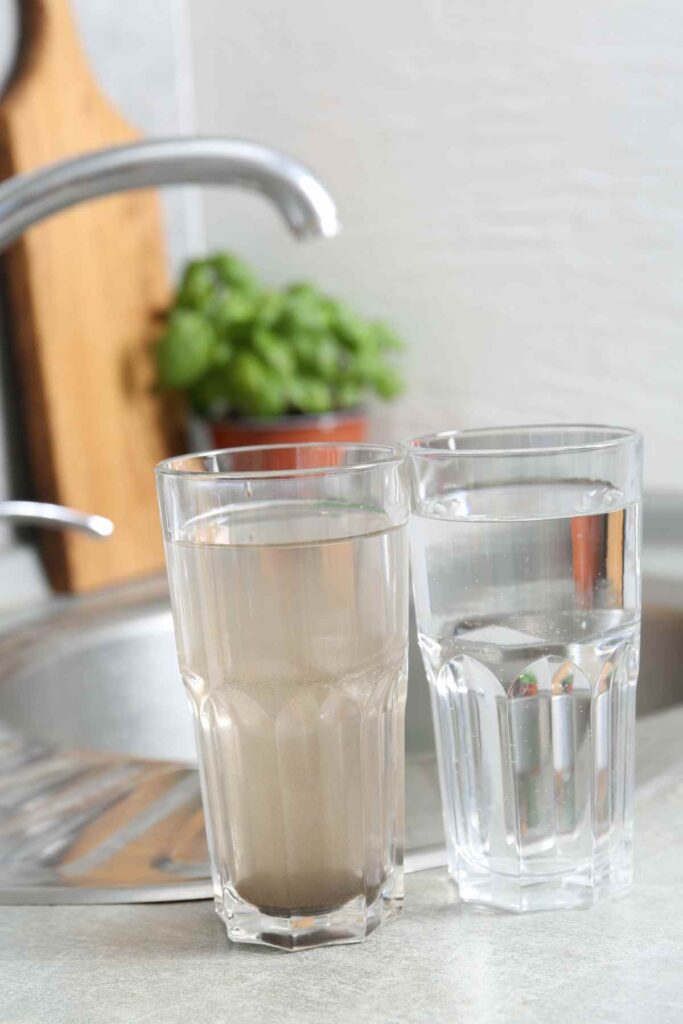
Cherry Hill’s residential landscape is predominantly served by the Camden County Municipal Utilities Authority’s Delaware River supply — treated, regulated water distributed through the utility network. Private wells are uncommon within Cherry Hill’s developed suburban footprint, though they exist in some portions of the area and in surrounding Camden County communities. For most Cherry Hill homeowners, the question isn’t well versus municipal — it’s understanding what the municipal supply actually delivers to a specific older home’s tap, and what treatment makes sense for that specific situation. Professional water testing in Cherry Hill is where property-specific answers begin.
How Cherry Hill Area Homes Get Their Water
The majority of Cherry Hill’s residential properties draw from the CCMUA’s Delaware River supply — a large-scale regulated utility treating and distributing water throughout Camden County. The utility is responsible for treatment, regulatory compliance, and annual consumer confidence reporting. Cherry Hill homeowners on this supply receive water that meets NJ DEP and EPA standards at the treatment level.
Private wells exist in some portions of Cherry Hill and in surrounding Camden County communities with more rural character. These properties draw from South Jersey’s sedimentary geological formations — a lower naturally occurring arsenic risk than North Jersey’s crystalline bedrock, but not a zero-concern situation. PFAS from surface contamination sources and groundwater migration can reach South Jersey wells regardless of the geological baseline for naturally occurring minerals.
Key Differences That Affect Cherry Hill Homeowners
CCMUA municipal customers receive treated, regulated water. The utility handles treatment and monitoring, and customers benefit from system-level regulatory protection. The limitation is property-level specificity — the annual report reflects plant-level conditions, not what arrives at the tap in a specific older Cherry Hill home where aging interior plumbing may be contributing lead or copper to the water between the distribution main and the glass.
Private well owners in Cherry Hill or surrounding Camden County bear complete water quality responsibility. New Jersey’s Private Well Testing Act requires comprehensive testing at real estate transfer, but no routine ongoing testing mandate applies. Whatever the local aquifer contains arrives at the tap without oversight unless the homeowner independently arranges testing.
Common Issues by Water Source
Cherry Hill CCMUA municipal customers most commonly deal with Delaware River source water characteristics — chloramine disinfection chemistry producing a chemical taste and smell, seasonal source water variation from agricultural runoff and algae cycles in the Delaware watershed, and disinfection byproducts. In Cherry Hill’s mid-century housing stock, lead solder at interior pipe joints is a property-specific concern not captured in the utility’s system-level reporting.
Private well owners in Camden County encounter South Jersey’s sedimentary geology contaminant profile — lower naturally occurring arsenic than North Jersey but still present, PFAS from surface contamination and groundwater migration in the Delaware watershed, nitrates from agricultural land use, iron and manganese from dissolved minerals, and bacterial risk from surface contamination events.
Well Water vs City Water — A Comparison for Cherry Hill Homeowners
| Feature | City Water (CCMUA Municipal) | Well Water (Camden County) |
|---|---|---|
| Treatment responsibility | CCMUA — treated before delivery | Homeowner — untreated at source |
| Testing requirement | Optional (recommended for older homes) | Required at real estate sale; recommended annually |
| Common issues | Chloramine taste, lead in mid-century plumbing, PFAS | PFAS, nitrates, iron, bacteria, arsenic (lower risk) |
| Regulatory oversight | CCMUA accountable to NJ DEP and EPA | No oversight — homeowner responsible |
| South Jersey-specific context | Delaware River agricultural watershed inputs | Lower natural arsenic than North NJ; PFAS still relevant |
| Ongoing maintenance | Minimal — utility manages distribution | Significant — pump, casing, water quality monitoring |
When Testing Is Required vs Recommended
For Camden County private well owners, the PWTA requires comprehensive testing before property transfer. The EPA’s private well guidance recommends annual bacteria testing and periodic comprehensive testing. For Cherry Hill CCMUA customers, testing is not legally required. Voluntary testing is recommended for older homes with lead plumbing concerns and for homeowners wanting property-specific PFAS certainty. The CDC’s drinking water resources provide broader context.
Which Treatments Make Sense and When
For Cherry Hill municipal customers, carbon filtration addresses chloramine taste. Reverse osmosis at the kitchen sink handles PFAS, lead, and byproducts. Whole-home water filtration covers broader household concerns. A water softener addresses hardness. For Camden County well owners, comprehensive testing comes first. Our full New Jersey service area covers Cherry Hill and Camden County.
Frequently Asked Questions — Well Water vs City Water in Cherry Hill, NJ
How common are private wells in Cherry Hill?
Less common than in more rural parts of New Jersey — Cherry Hill’s suburban character means most properties are on the CCMUA supply. Private wells do exist in some portions of Cherry Hill and in surrounding Camden County communities. Confirming the water source from seller disclosure documents early in any real estate transaction prevents assumptions from driving the wrong water quality conversation.
Is South Jersey’s arsenic risk meaningfully lower than North Jersey?
Yes — Camden County’s sedimentary geology produces lower naturally occurring arsenic concentrations than Morris, Hunterdon, or Sussex counties’ crystalline bedrock. “Lower” isn’t the same as zero, and individual well concentrations vary within any geological zone. Testing a specific well gives you an answer for that well — regional comparisons are context, not data.
Why should Cherry Hill mid-century homeowners test their tap water?
Cherry Hill’s 1960s and 1970s ranch homes and split-levels were built before 1986 lead-free solder requirements. The CCMUA supply is lead-free at the treatment level. Lead solder at interior pipe joints is a property-specific concern the utility’s annual report doesn’t address. A tap-level test at the kitchen faucet gives you the specific answer for your home.
Get the Right Answer for Your Cherry Hill Home’s Water
Whether you’re on Cherry Hill’s CCMUA supply or a Camden County private well — a professional water assessment gives you specific answers. We serve Cherry Hill and all of Camden County. Call us at (732) 357-1988 or reach out online.