Westfield’s Historic Homes Run on Raritan River Water. Understanding What That Water Does Inside Older Plumbing Changes the Treatment Conversation.
Westfield is predominantly served by New Jersey American Water drawing from the Raritan River system. Private wells are uncommon within the village’s historic residential neighborhoods — the municipal supply is effectively universal for most Westfield addresses. What distinguishes the Westfield water quality conversation from a simple “municipal supply, nothing to worry about” situation is the soft water corrosivity that characterizes the Raritan watershed supply and its implications for older homes with lead solder at interior pipe joints, PFAS from the Raritan Basin’s documented contamination profile, and the chloramine chemistry that shapes what arrives at every Westfield tap. For Union County properties with private wells, the comparison with regulated municipal water is directly relevant. Professional water testing in Westfield provides the property-specific answers.
How Westfield Area Homes Get Their Water
New Jersey American Water’s Raritan-sourced treated water serves the vast majority of Westfield’s residential properties. The utility is responsible for treatment, regulatory compliance, and annual consumer confidence reporting. Private wells are uncommon within Westfield’s historic village neighborhoods — the densely developed residential character means municipal infrastructure was built out comprehensively. In surrounding Union County communities with more rural character, private wells drawing from the county’s transitional geological formations supply a portion of residential properties.
Key Differences — and the Soft Water Factor Unique to Westfield
Westfield’s NJAW municipal customers receive treated, regulated water. The utility handles treatment and monitoring, and customers have system-level regulatory protection. What distinguishes Westfield from most municipal water communities is the Raritan watershed’s soft water chemistry. Soft, slightly acidic water is more corrosive to interior plumbing materials than neutral or hard water — in Westfield’s pre-war and early postwar homes, this corrosivity has been working on copper pipes and lead solder for decades, making the lead dissolution concern more significant here than in harder-water communities.
Union County private well owners bear complete water quality responsibility. New Jersey’s Private Well Testing Act requires comprehensive testing at real estate transfer. No mandatory ongoing testing schedule applies between transactions.
Common Issues by Water Source
Westfield’s NJAW municipal customers deal with chloramine disinfection chemistry — more noticeable in soft Raritan water that lacks the mineral buffer of harder water — PFAS from the Raritan Basin’s industrial contamination profile, and the soft water corrosivity that makes lead dissolution from pre-war interior plumbing a more pressing concern than in harder-water areas. Seasonal Raritan River source water variation produces temporary taste and odor changes.
Union County private well owners encounter Raritan aquifer characteristics including PFAS from industrial contamination sources, arsenic at moderate concentrations in the county’s transitional geological zone (higher than South Jersey’s baseline, lower than the North Jersey crystalline bedrock counties), nitrates from agricultural inputs, iron and manganese from dissolved minerals, and bacterial risk from surface contamination events.
Well Water vs City Water — A Westfield Comparison
| Feature | City Water (NJAW Raritan Supply) | Well Water (Union County) |
|---|---|---|
| Treatment responsibility | NJAW — treated before delivery | Homeowner — untreated at source |
| Testing requirement | Optional (strongly recommended for older homes) | Required at real estate sale; recommended annually |
| Common issues | Soft water corrosivity, chloramine, lead in older plumbing, PFAS | PFAS, arsenic (moderate), nitrates, iron, bacteria |
| Regulatory oversight | NJAW accountable to NJ DEP and EPA | No oversight — homeowner responsible |
| Westfield-specific factor | Soft Raritan water — more corrosive to older plumbing than hard water | Transitional geology — moderate arsenic between NJ’s high and low zones |
| Ongoing maintenance | Minimal — NJAW manages distribution | Significant — pump, casing, water quality monitoring |
When Testing Is Required vs Recommended
For Union County private well owners, the PWTA requires testing at real estate transfer. The EPA’s private well guidance recommends annual bacteria testing and periodic comprehensive testing including PFAS. For Westfield NJAW customers, testing is not legally required — but the combination of soft water corrosivity in older homes and Raritan Basin PFAS makes voluntary tap testing a meaningful investment in property-specific certainty. The CDC’s drinking water resources cover when testing is worthwhile regardless of source.
Which Treatments Make Sense and When
For Westfield NJAW customers, carbon filtration addresses chloramine. Reverse osmosis at the kitchen sink — ideally with remineralization to raise the pH of soft purified water slightly — addresses PFAS, lead from soft water corrosion in older plumbing, and chloramine byproducts. Whole-home water filtration covers broader concerns. A water softener addresses hardness where relevant. For Union County well owners, comprehensive testing always comes first. Our full New Jersey service area covers Westfield and Union County.
Frequently Asked Questions — Well Water vs City Water in Westfield, NJ
What makes Westfield’s water situation different from other municipal water communities?
The Raritan watershed produces soft, slightly acidic water — lower in dissolved minerals than much of New Jersey’s supply. Soft water is more corrosive to interior plumbing than hard water. In Westfield’s older homes, this corrosivity accelerates lead dissolution from pre-1986 interior pipe joints more aggressively than in harder-water communities. The blue-green staining some Westfield homeowners notice on porcelain is the visible sign of the same chemistry affecting drinking water.
Is arsenic a concern for Union County private well owners?
At a moderate level — Union County’s transitional geological position produces arsenic concentrations in groundwater higher than South Jersey’s sedimentary baseline but generally lower than North Jersey’s highest-risk crystalline bedrock counties. Individual well concentrations vary significantly within that range. Testing a specific well gives you the relevant answer for that specific property.
Should Westfield’s older homes test their tap water even on municipal supply?
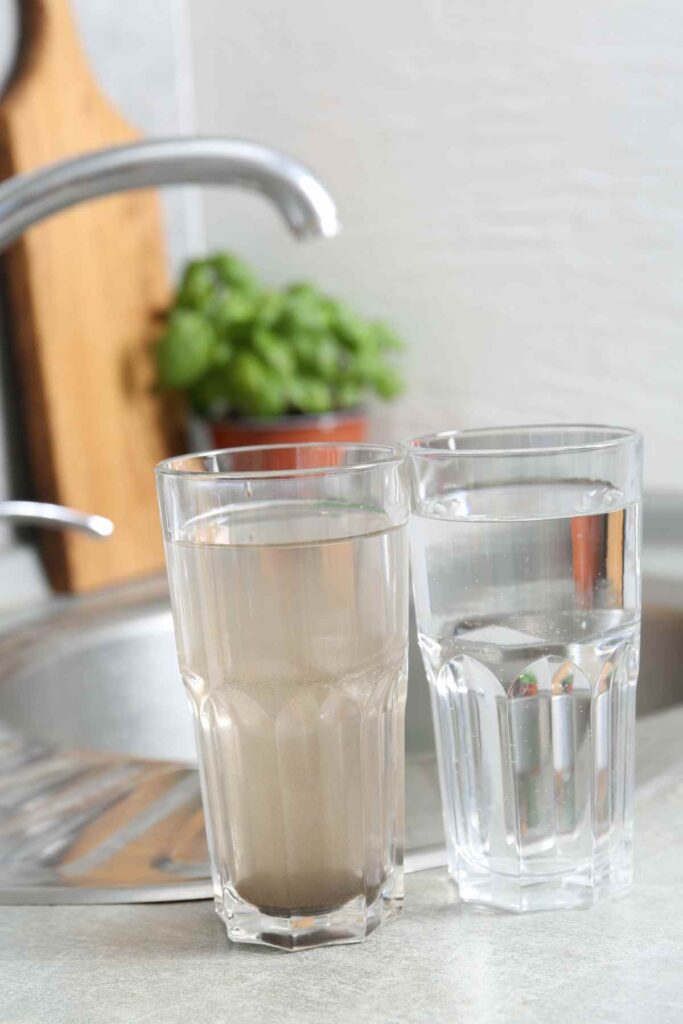
Yes — the combination of soft Raritan water’s corrosivity and pre-1986 interior plumbing makes Westfield’s older homes a stronger case for voluntary tap testing than most municipal water communities. The utility’s annual report reflects plant-level conditions. A tap-level test at your kitchen faucet tells you what the water has picked up from your specific home’s plumbing on its way to the glass.
Get the Right Answer for Your Westfield Home’s Water
Whether you’re on Westfield’s NJAW supply or a Union County private well — a professional water assessment gives you specific answers. We serve Westfield and all of Union County. Call us at (732) 357-1988 or reach out online.