You just got a radon test back above the EPA’s action level, or your well water came back with arsenic in it, and the first question is obvious: will insurance pay for this? For most New Jersey homeowners, the answer is no, and knowing that now saves you a frustrating call to your agent later.
Homeowners insurance was built to handle sudden, accidental damage. Radon and well contamination are neither of those things, which is exactly why they usually fall outside standard coverage.
Why Radon Mitigation Isn’t a Covered Expense
Radon builds up in a home gradually, seeping through foundation cracks and gaps over months and years. Insurance policies are written around the concept of sudden and accidental loss, like a storm-damaged roof or a burst pipe. Radon doesn’t meet that bar, so insurers classify it as a home maintenance issue rather than an insurable event.
Most standard homeowners policies also carry a pollution exclusion that specifically rules out naturally occurring contaminants, radon included. The EPA’s radon action level guidance makes clear that mitigation is a health and safety recommendation, not a claim trigger. A handful of specialty environmental policies offer limited pollution coverage, but they’re the exception, not something most NJ homeowners carry.
Why Well Water Contamination Usually Isn’t Covered Either
Well contamination follows the same logic. If your well has iron, arsenic, nitrates, or bacteria because of the geology under your property, that’s treated as a naturally occurring condition, not a covered loss. The water testing results that reveal these problems don’t unlock a claim on their own.
There’s one meaningful exception. If contamination can be traced to a specific covered event, like a neighbor’s oil tank leaking into the groundwater, some policies will step in. That’s a narrow scenario, and it requires documentation tying the contamination to that specific source rather than general water chemistry.
| Situation | Typically Covered |
|---|---|
| Radon mitigation system installation | No |
| Well contamination from natural minerals or bacteria | No |
| Well contamination traced to a neighbor’s oil tank leak | Sometimes, with documentation |
| Sudden pipe burst or storm damage to a well system | Usually, under standard dwelling coverage |
| Water damage from a slow, undetected leak | Usually excluded as a maintenance issue |
Where the Line Between Sudden and Gradual Falls
Insurers draw a hard line between something that happens all at once and something that develops over time. A pipe that bursts overnight is sudden. A well aquifer that slowly picks up arsenic from bedrock is gradual. That single distinction explains almost every denial homeowners run into with radon and water quality claims.
It also explains why a mitigation system failing after years of normal wear isn’t covered, even though the fix might feel urgent once you notice it. Wear and tear sits in the same excluded category as gradual contamination.
What Protects You Instead
Since insurance isn’t the backstop here, the real protection comes from testing early and treating problems before they compound. A few things make a meaningful difference:
- Testing for radon and well contaminants on a regular schedule, not just at closing
- Keeping documentation of every test and every treatment system installed
- Asking your agent directly whether your specific policy has any pollution or environmental endorsement
- Budgeting for mitigation or treatment as a home ownership cost, similar to a roof or a furnace
None of this makes the expense disappear. It does mean you’re not caught off guard by a bill you assumed insurance would cover.
How Jersey Radon Helps When Insurance Isn’t the Answer
Once a homeowner understands that insurance likely won’t cover radon or well contamination, the next question is what to do about it directly. That’s where testing and treatment take over from paperwork.
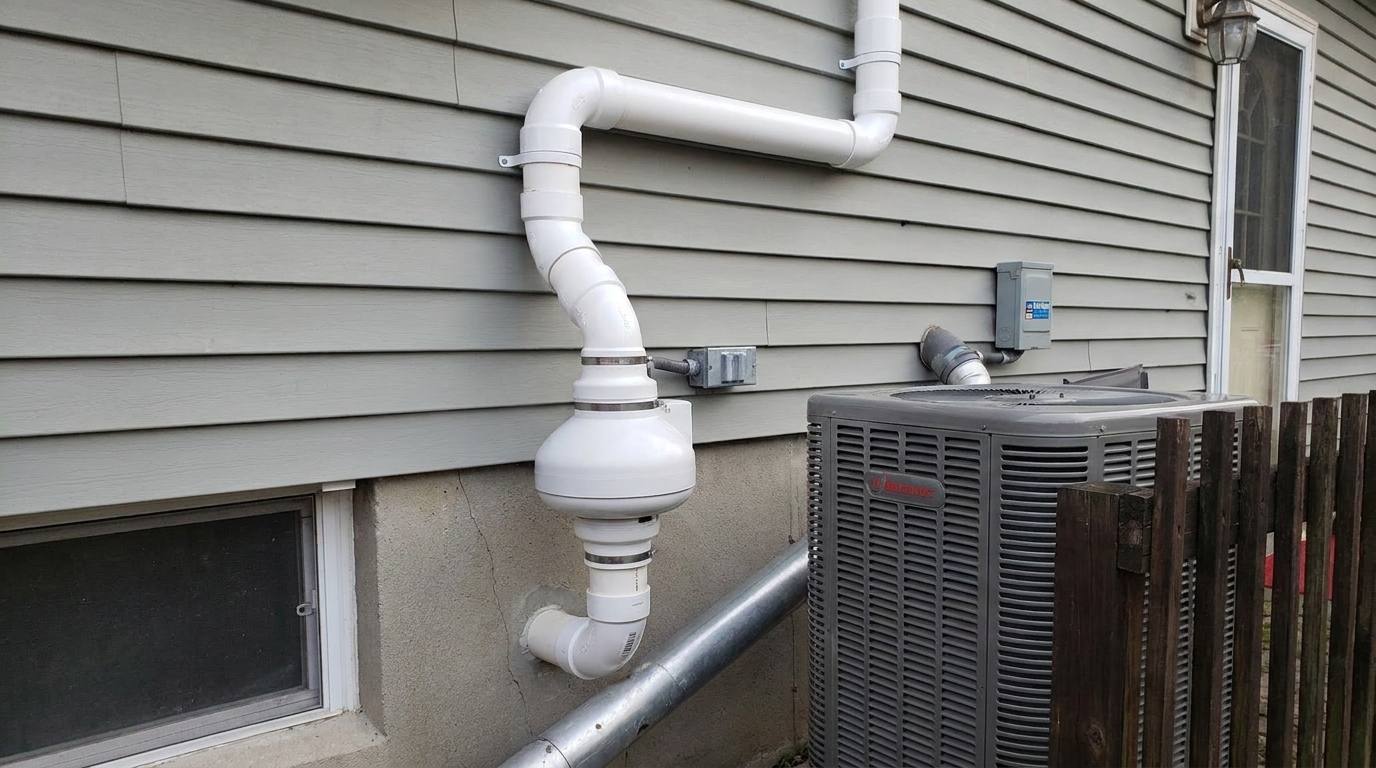
- Radon testing and mitigation system installation
- Well water testing for arsenic, nitrates, bacteria, PFAS, and other common NJ contaminants
- Whole-house and point-of-use treatment systems sized to what your test results show
- Straight answers about what a problem will cost to fix, without a sales pitch attached
Finding out your insurance won’t help with radon or well contamination is frustrating, but it doesn’t have to be expensive to fix once you know what you’re dealing with. Contact us for a free estimate and a clear picture of what treatment or mitigation would involve.
