You bought new construction, which means no radon problem, right? Not necessarily. If your home is in one of New Jersey’s designated high-radon municipalities, it likely has a passive radon system built into the foundation. That’s not the same thing as a home that’s fully protected.
The gap between “has the pipe” and “tested safe” is where a lot of new homeowners get caught off guard.
What NJ Requires Builders to Install
New Jersey’s Radon Hazard Subcode requires new homes built in designated tier one municipalities to include passive radon-resistant features. That means a continuous vapor barrier under the slab, a network of gravel and perforated pipe to collect soil gas, and a vent stack that runs the gas up through the roof instead of into the living space. It’s a smart, low-cost way to build in protection before drywall goes up.
The EPA’s guidance on radon-resistant construction confirms the same basic approach nationally: build the passive pathway in now, and add a fan later only if testing shows it’s needed.
Passive Does Not Mean Active
Here’s the part builders don’t always explain clearly. A passive system relies on natural air pressure differences to vent soil gas. There’s no fan, no power draw, nothing running. It reduces radon entry, but it doesn’t guarantee the home will test below the EPA’s action level.
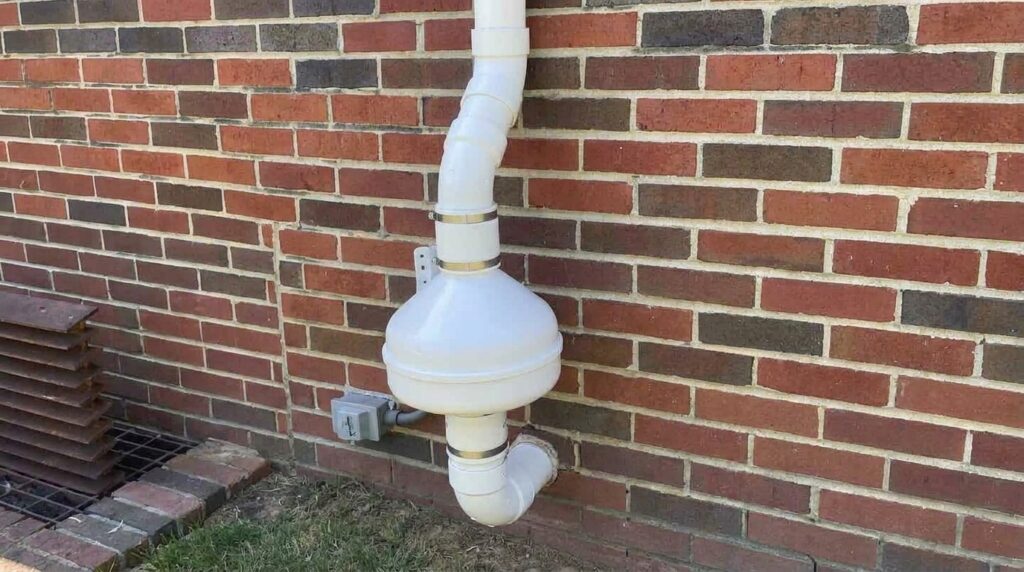
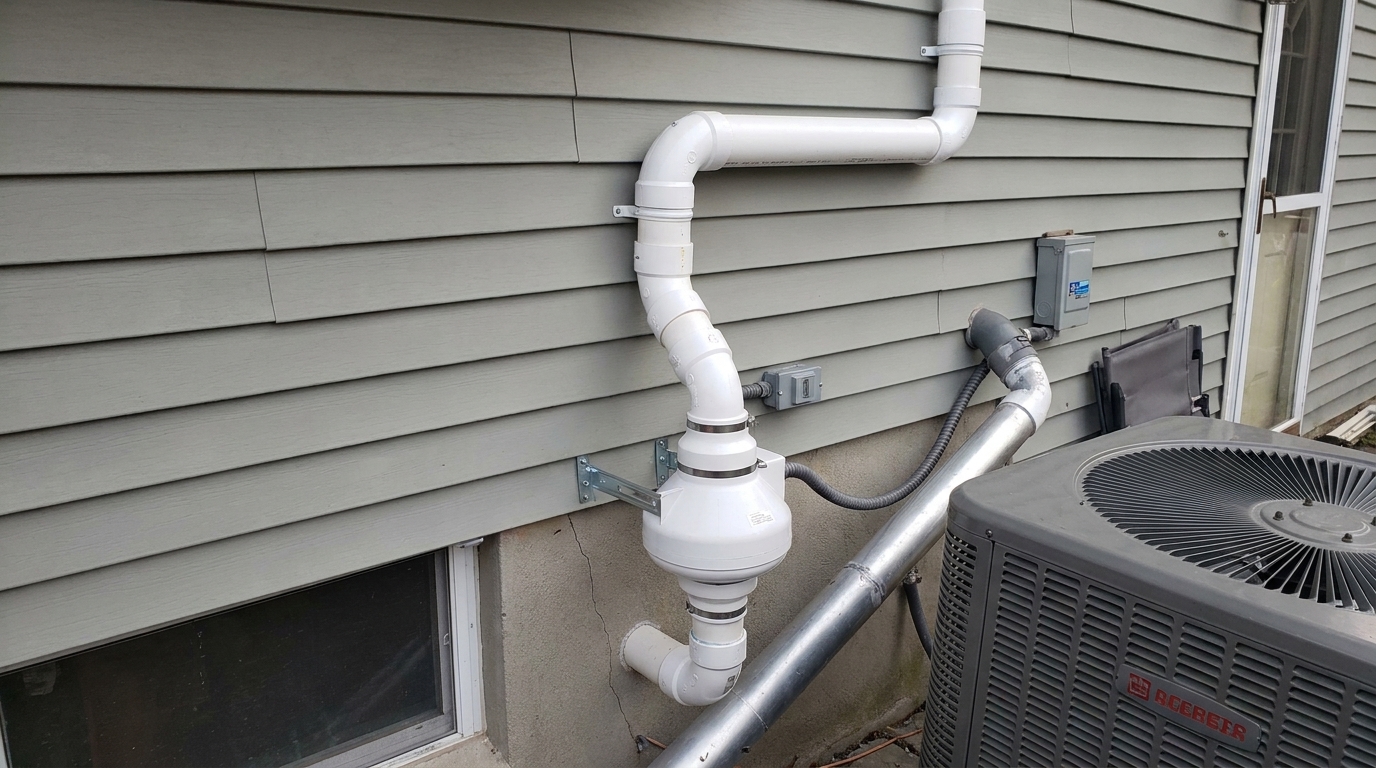
An active system, the kind used in most radon mitigation installations, adds an inline fan to the same basic pipe network. That fan creates continuous negative pressure under the slab, which is a meaningfully stronger pull than a passive system provides on its own.
| System Type | How It Works | Guarantees Below 4 pCi/L |
|---|---|---|
| Passive system | Vapor barrier, gravel, pipe, vent stack, no fan | No |
| Active system | Same pipe network plus an inline fan | In most cases, yes |
Why Every New Home Still Needs a Test
Soil conditions vary block to block, sometimes lot to lot. A passive system that performs well next door can still leave a neighboring home above 4 pCi/L, depending on how the soil gas moves underneath each specific foundation. That’s why testing after move-in isn’t optional just because the home was built with radon-resistant features.
If your test comes back at or above the EPA’s action level, the fix usually isn’t a new system. It’s activating the one already in your foundation by adding a fan to the existing pipe.
Signs a New NJ Home Might Have a Passive System Already
Not sure what’s under your slab? A few things point to a passive system already being in place:
- A labeled vent pipe running from the basement or slab up through the roof
- A capped or unused electrical junction box near the vent pipe in the basement or attic, left in place for a future fan
- Documentation in your closing paperwork referencing radon-resistant construction techniques
- A location in one of New Jersey’s designated tier one radon municipalities
If you see the pipe but don’t see a fan, you have a passive system waiting to be tested, not an active one already protecting you.
How Jersey Radon Helps New Homeowners Close the Gap
A passive system is a good starting point, not a finished job. The only way to know where your new home really stands is a test, and the only way to close the gap if the number comes back high is activating what’s already built in.
- Radon testing for newly built and recently purchased NJ homes
- Fan installation to activate an existing passive system
- Full mitigation system design for homes without any existing radon infrastructure
- Straight answers about what your specific foundation and test results mean
A pipe in your foundation isn’t the same as a number on a test report. If you’ve moved into new construction and haven’t tested yet, or your result came back higher than you expected, contact us to find out what activating your system would involve.
