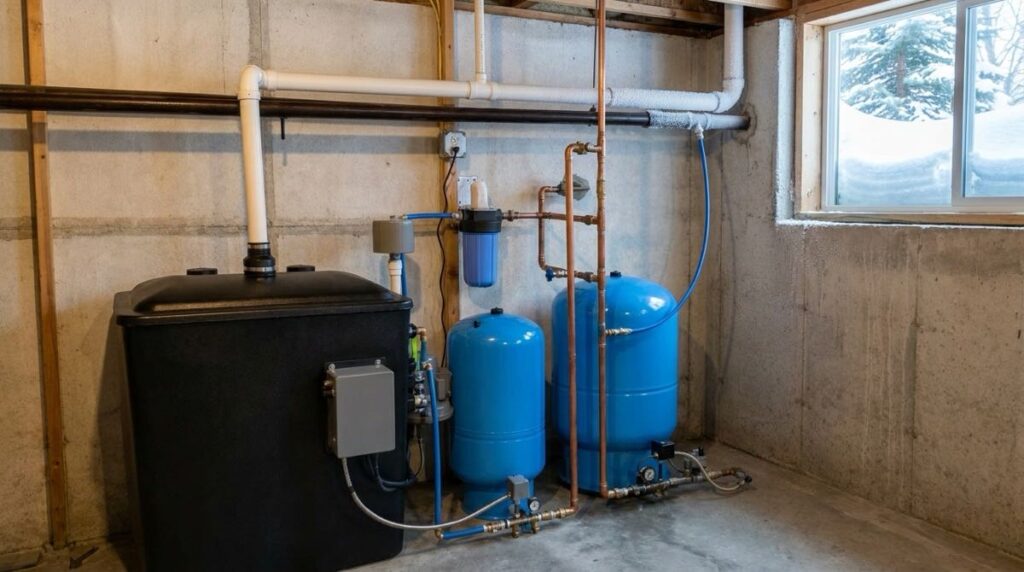
An aeration system holds water in multiple components, and freezing is a real risk under the wrong conditions. It’s usually preventable with proper planning, but it’s worth understanding where the vulnerability actually sits.
Which Parts Actually Hold Water
The aeration chamber, pressure tank, and connecting plumbing all hold water at various points. Any of them can be vulnerable to freezing if exposed to sufficiently cold temperatures, though not all of them face the same level of exposure.
| Component Location | Freeze Risk |
|---|---|
| Heated basement or mechanical room | Low, well protected under normal conditions |
| Unheated garage or crawlspace | Meaningfully higher |
| Exposed exterior vent line | Higher, direct cold exposure |
Location Is the Biggest Factor
A system installed in a heated basement or mechanical room is well protected from freezing under normal conditions. Equipment in an unheated space, like a garage or crawlspace, faces meaningfully higher risk, and that risk isn’t always obvious at installation time if the space seems fine on a mild day.
Vent lines and any exterior-facing plumbing connected to the system are more exposed to cold than components inside a heated space. This deserves attention during installation planning in colder climates, not as an afterthought once winter arrives.
Seasonal Properties Face a Different Risk
Managing aeration equipment when a property sits unused during winter requires extra attention, since a lack of regular water flow through the system removes one of the natural protections against freezing.
What to Check After a Cold Snap
- Leaks around the aeration chamber or connecting plumbing
- Unusual noise from the blower or pump
- Inconsistent water pressure compared to before the cold event
Following a severe cold snap, checking for these signs helps catch any freeze-related damage before it becomes a larger problem. Any sign of frozen or damaged components after a cold event is worth having evaluated promptly, since continuing to run a system with freeze damage can compound the issue.
Cold-Weather Problems Are Easier to Address Early
Can a radon aeration system freeze during a NJ winter? Yes, under the wrong conditions, though good planning prevents most of it. Jersey Radon and Water Treatment can evaluate an aeration system when freezing or winter shutdown raises concerns about performance. Contact us with cold-weather concerns.
