If your New Jersey home has a radon mitigation system, there’s a small but critical component running quietly in your basement, garage, or attic right now: the radon fan. This fan is the heart of your sub-slab depressurization system — it creates the negative pressure beneath your foundation that draws radon from the soil before it can enter your living space and vents it safely outside. Without a functioning fan, your radon mitigation system is just a pipe. Understanding what your radon fan does, how to verify it’s working, what happens when it fails, and when to replace it is essential maintenance knowledge for any NJ homeowner with an installed system.
This guide covers everything New Jersey homeowners need to know about radon fans — how they work, how to choose one for a new system, how to know if yours is still performing, what replacement costs, and why the fan is the one component of a radon mitigation system that deserves periodic attention even when everything seems fine.
What a Radon Fan Actually Does
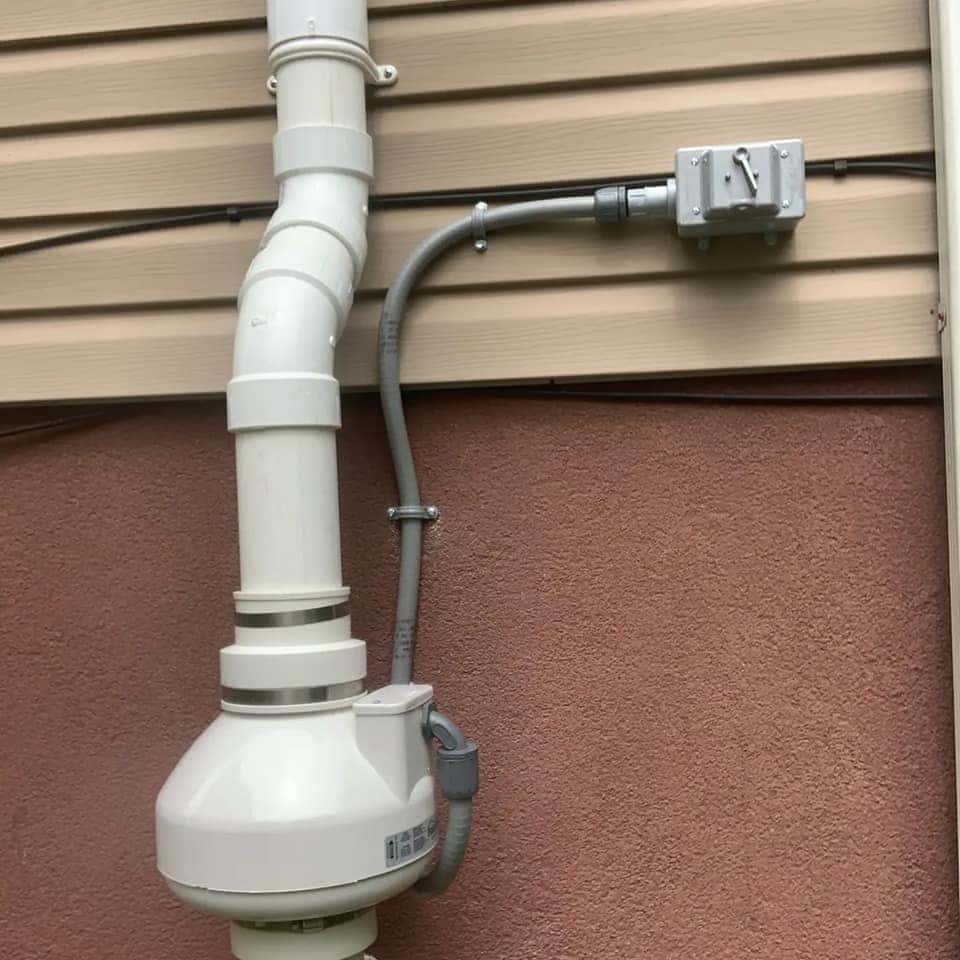
A radon fan is a continuously running centrifugal fan specifically designed for sub-slab depressurization applications. It’s installed on the vent pipe that runs from the suction pit beneath your foundation slab to the exterior of your home, typically mounted on the exterior wall, in the attic, or in the garage. The fan draws air — and the radon dissolved in that air — from beneath the slab through the suction pit and pipe, and exhausts it outside where it disperses harmlessly into the atmosphere.
The key word is continuously. A radon fan runs 24 hours a day, 365 days a year. It doesn’t cycle on and off based on radon levels or a timer — it runs constantly to maintain the persistent negative pressure differential beneath the foundation that prevents radon from entering the home. This continuous operation is what makes radon mitigation systems so effective — and it’s also why fan longevity and reliability matter more than for most home mechanical systems that cycle on and off.
Radon fans are specifically engineered for this application. They’re designed to move relatively small volumes of air at consistent flow rates against varying sub-slab resistance, to run continuously for years without overheating, and to operate quietly enough not to be intrusive as a household background sound. Standard HVAC fans are not appropriate substitutes — they’re not designed for continuous operation in this application and will fail prematurely.
How to Know If Your Radon Fan Is Working
The simplest way to verify your radon fan is working is the manometer — the small U-shaped liquid-filled gauge mounted on the vent pipe near the fan. A manometer shows the pressure differential between the inside of the pipe (sub-slab) and the ambient air outside. When the fan is running correctly and the system is creating negative pressure beneath the slab, the fluid levels in the two sides of the U-tube will be unequal. If the fan fails or the system loses suction, the fluid levels equalize and the manometer reads zero differential.
Check your manometer every few months. It takes five seconds and costs nothing. If the fluid levels are unequal, your fan is running and creating suction. If they’re equal, something has failed and your system is not protecting you — schedule a service call immediately.
A manometer should be installed on every properly completed radon mitigation system. If your home in Parsippany, Toms River, Flemington, or Hackettstown has a mitigation system but no manometer on the pipe, it was either never installed or has been removed — either way, you have no passive way to verify system performance between formal radon tests. Adding a manometer is a minor, inexpensive correction that a service technician can make on a routine call.
Beyond the manometer, you can verify fan operation by listening and feeling for airflow. A running radon fan produces a low, consistent hum — audible near the fan location but typically not intrusive from the living space. Holding your hand near the exterior vent termination should reveal exhaust airflow when the fan is running. No airflow at the vent termination with the manometer showing zero differential confirms fan failure.
What Happens When a Radon Fan Fails
When a radon fan stops working, the sub-slab depressurization effect stops immediately. Radon that was previously being drawn from beneath the foundation and vented outside now follows its natural path — through foundation cracks, construction joints, pipe penetrations, and other entry points into the living space. Indoor radon levels will begin rising within hours to days of fan failure, depending on local geology, foundation type, and the home’s natural ventilation rate.
The insidious aspect of fan failure is that there’s no visible or sensory indication that it’s happened. The pipe is still there. The exterior vent still exists. From the outside, nothing looks different. The only way to know your system has failed without a manometer is to conduct a radon test — which by then may have already allowed days or weeks of elevated radon exposure.
This is precisely why the manometer check matters and why periodic formal radon retesting is the recommended practice even for homes with installed mitigation systems. The EPA recommends retesting every two years after mitigation. For homeowners in high-radon geology areas of New Jersey — Morris, Sussex, Warren, and Hunterdon counties in particular — this schedule is worth following consistently. Our post on why winter is the most important time to test for radon in NJ covers the testing schedule and seasonal considerations for post-mitigation monitoring.
How to Choose a Radon Fan
Radon fans vary in airflow capacity, static pressure rating, noise level, and power consumption. The right fan for a specific installation depends on the sub-slab conditions — primarily the permeability of the material beneath the slab, which determines how much resistance the fan needs to overcome to maintain adequate suction. A fan that’s too weak for a dense sub-slab fill won’t create sufficient negative pressure across the full foundation footprint. A fan that’s too powerful for a highly permeable sub-slab wastes electricity and may create suction so strong that it draws conditioned indoor air into the sub-slab, increasing heating and cooling costs.
The most widely used residential radon fans in New Jersey installations are from manufacturers like RadonAway, Festa Radon, and Fantech, which produce fan series specifically rated for different sub-slab resistance categories. A certified radon mitigation contractor selects the fan model based on a diagnostic assessment of your specific sub-slab conditions — typically measured during the installation process by drilling a test hole and measuring the pressure field extension achieved with a test fan before committing to the final system design.
Fan noise is worth considering for installations where the fan is located near living spaces or bedrooms. Most residential radon fans produce 30 to 45 decibels of sound — comparable to a quiet library or a soft whisper — but installations in attached garages, tight attic spaces, or exterior walls adjacent to bedrooms may benefit from lower-noise fan models. Ask your installer about noise level specifications if fan placement is near a living space.
Radon Fan Lifespan and Replacement
Quality radon fans from reputable manufacturers have a design lifespan of 10 to 15 years under continuous operation. Real-world performance varies based on fan model, installation environment, and operating conditions — some fans last 20 years, others fail at 8. Most fan manufacturers offer a 5-year warranty on their residential products; extended warranties are available from some manufacturers and worth considering for new installations.
Signs that a radon fan is approaching the end of its life include increasing noise during operation from bearing wear, vibration that wasn’t present previously, reduced airflow visible at the exterior vent, and the manometer showing a reduced pressure differential compared to its baseline reading from when the system was first installed. If your fan is more than 10 years old and showing any of these signs, proactive replacement before it fails entirely is preferable to waiting for a complete failure that leaves your home unprotected.
Radon fan replacement in New Jersey typically costs $150 to $350 for parts and labor, depending on the fan model needed and the accessibility of the installation location. This is a minor expense relative to the value of continuous radon protection, and proactive replacement on an aging fan is consistently the right decision for NJ homeowners in high-radon geology areas. Our 2026 radon mitigation cost guide covers fan replacement in the context of the full system maintenance picture.
Radon Fan for a New Installation: What to Discuss With Your Contractor
If you’re planning a new radon mitigation installation for your New Jersey home, the fan selection conversation with your contractor should include the diagnostic basis for fan selection, the specific fan model being installed and its rated specifications, where the fan will be mounted and why that location was chosen, the warranty coverage on the fan, and what the long-term service and replacement plan looks like.
A contractor who can’t explain their fan selection in terms of your specific sub-slab conditions is making a guess rather than an informed engineering decision. Sub-slab conditions vary significantly across New Jersey’s diverse geology and construction practices — a home in Toms River built on coastal plain sand has very different sub-slab permeability than a home in Hackettstown on compacted soil over bedrock — and the fan needs to be matched to the actual conditions, not a generic residential default.
For homeowners who also have radon in their well water — a separate issue requiring a separate treatment system — our guide on radon in water and air for NJ homeowners covers how the two pathways interact and why both need to be addressed to achieve complete radon exposure reduction.
Keep Your Radon Fan Working, Keep Your Home Protected
A radon mitigation system is only as good as its fan. Check your manometer regularly, retest your radon levels every two years, and address fan issues proactively rather than waiting for a complete failure. In high-radon geology areas of New Jersey — Morris, Sussex, Warren, Hunterdon, Somerset, and parts of Monmouth counties — the consequence of an undetected fan failure is rapid return to elevated radon levels that undo the protection the system was installed to provide.
At Jersey Radon, we install, service, and replace radon fans throughout New Jersey — from Hackettstown, Chester, and Mendham to Parsippany, Flemington, Somerville, Toms River, and communities across the state. If your system’s manometer is showing zero differential, your fan is making unusual noise, or you simply haven’t had your system checked in several years, reach out to our team for a service assessment. We’ll verify your system is performing correctly and address any issues before they leave your home unprotected.
