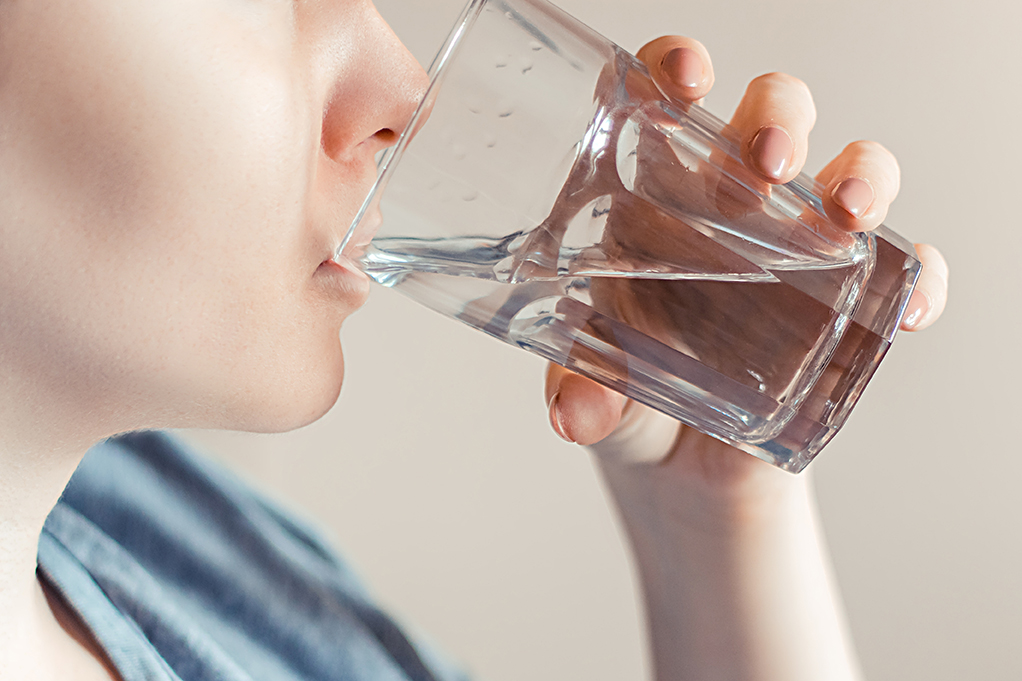
The well is there. The water comes out of the tap. And for many families who move into a property on a private well in New Jersey, the assumption is that if the water looks clear and has no obvious smell, it’s probably fine to drink.
That assumption has a gap in it. A significant one.
The Answer Depends Entirely on What’s in the Water
Private well water in New Jersey is not regulated the way municipal water is. It does not get tested before it reaches the tap. It does not get treated by a utility. No agency monitors it on the household’s behalf. The responsibility for knowing what’s in the water, and ensuring it’s safe, rests entirely with the property owner.
Some wells in New Jersey produce water that requires little or no treatment beyond basic filtration. Others contain contaminants at levels that pose real health risks. Most fall somewhere in between, with a mix of aesthetic issues and low-level chemical concerns that vary by location, geology, and nearby land use.
The EPA recommends that private well owners test their water at least once a year, and any time there is a change in color, taste, or smell. Without testing, there is no reliable way to know which category a particular well falls into.
Two Kinds of Well Water Problems: Aesthetic and Health-Related
Not everything found in NJ well water poses a health risk. It helps to understand the difference between contaminants that affect how water looks, smells, or tastes, and those that carry documented health consequences at elevated concentrations.
Aesthetic contaminants are the ones most people notice first. Iron and manganese are among the most common in New Jersey, occurring naturally in bedrock across much of the state. At elevated levels they stain fixtures, discolor laundry, and give water a metallic taste. Rust stains and discoloration are often the first sign. Hard water, caused by dissolved calcium and magnesium, affects a large percentage of private wells and creates scale on appliances, reduces soap performance, and causes the dry skin and hair complaints many well water households notice quickly. These are real problems worth solving, but they are not acute health risks.
Health-related contaminants are a different matter. Arsenic, nitrates, PFAS, lead, and coliform bacteria all carry documented health risks at elevated concentrations. None of them produce visible or detectable signs in water under normal circumstances. A well that produces clear, odorless water can still contain arsenic above the EPA maximum contaminant level, or coliform bacteria from a compromised casing, or PFAS from contaminated groundwater in the surrounding area. The absence of visible problems is not confirmation of safety.
What Cannot Be Detected Without Testing
This is where the practical stakes are highest. The contaminants that represent the most serious health risks in NJ well water are, as a group, completely undetectable through sensory observation.
- Arsenic has no color, odor, or taste at concentrations that exceed safe thresholds
- Nitrates are invisible in water and produce no smell at any concentration
- PFAS cannot be seen, smelled, or tasted
- Coliform bacteria leave no visual trace and typically no odor in early-stage contamination
- Lead leaches from plumbing rather than the well itself, with no way to detect it at the tap without testing
A household can drink water containing any of these contaminants for years without knowing it. The risks are cumulative rather than immediate, which means the absence of noticeable illness does not confirm the water is safe.
How New Jersey’s Geology and Land Use Affect the Risk
Where a property sits in New Jersey shapes what’s most likely to be in the well water. This isn’t a reason for alarm — it’s useful information for prioritizing what to test for.
The Highlands and Piedmont regions in the north and northwest, covering much of Morris, Hunterdon, Somerset, Warren, and Sussex counties, are characterized by uranium-bearing bedrock. Wells in these areas have historically shown elevated arsenic and, in some cases, radon in water. Hard water is nearly universal in this geography.
Agricultural areas in southern and central New Jersey, including parts of Monmouth, Burlington, Gloucester, and Salem counties, carry higher nitrate risk from fertilizer and septic activity. PFAS contamination has been detected in groundwater in multiple NJ counties, concentrated in areas near industrial sites, military installations, and firefighting training facilities.
Iron and sulfur odor problems are common enough to be considered typical across much of the state rather than exceptions. PFAS exposure and arsenic contamination are geographically concentrated, which is exactly why testing, rather than assumption, is the only reliable approach.
What Happens When You Choose Treatment Without Testing First
One of the most common and costly mistakes well water households make is purchasing a treatment system before knowing what the water actually contains. A water softener addresses hardness but does nothing for arsenic, nitrates, or bacteria. A basic sediment filter has no effect on PFAS or coliform. Reverse osmosis addresses a broad range of contaminants but is unnecessary for hardness and not the right tool for every situation.
Matching treatment to the actual problem requires knowing what the problem is. That means testing first, then selecting equipment based on the results. Professional water testing identifies what’s present, at what concentrations, and how those concentrations compare to health standards. That information makes the treatment decision straightforward rather than a guess.
How Jersey Radon Helps Well Water Households Get Reliable Answers
Jersey Radon provides water testing and treatment services throughout New Jersey for residential properties on private wells. We work with homeowners who are new to well water, those who have been on a well for years without ever testing, and those who received a test result that raised more questions than it answered.
We help households that want to:
- Understand what their well actually contains before making treatment decisions
- Test for contaminants beyond the standard real estate closing panel
- Match treatment equipment to the specific contaminants found in the test results
- Confirm water safety after moving into a property with no recent test history
If you have a private well and you are not certain what’s in the water, contact Jersey Radon for a free estimate. A water test is the only way to answer the question with confidence.
