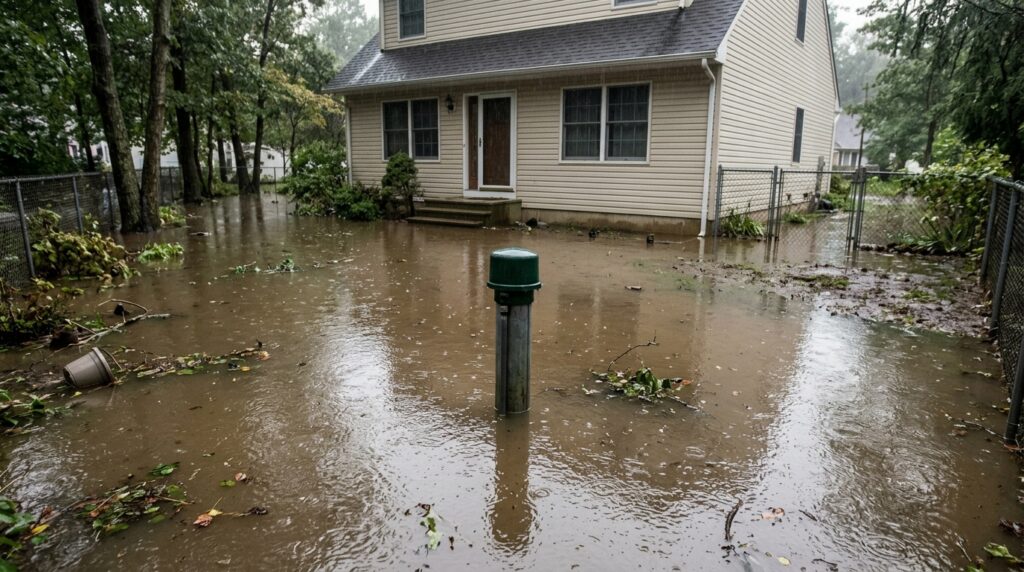
When floodwater recedes after a storm in New Jersey, the visible damage gets attention first. Flooring, walls, belongings. What often goes unnoticed is what happened to the well.
Flooding can contaminate a private well in ways that have no visible sign at the tap. The water may look clear. It may smell normal. And it may still be unsafe to drink. Understanding what flooding does to a well, and how to properly restore the water before using it again, protects the household from a problem that would otherwise go undetected.
How Flooding Compromises a Private Well
A properly constructed well is designed to keep surface water out. The wellhead sits above grade, the casing is sealed, and the cap prevents insects, debris, and runoff from entering. When floodwater rises high enough to submerge or surround the wellhead, that protection can be overwhelmed.
Surface water carries bacteria, agricultural runoff, sewage from overwhelmed septic systems, and a range of chemical contaminants depending on what’s upstream. When that water makes contact with the wellhead or finds its way through a compromised casing seal, those contaminants can enter the water supply. Even wells that are not submerged can be affected if floodwater surrounds the area around the well casing and infiltrates through cracks, loose fittings, or aging seals.
The EPA advises homeowners not to use water from a flooded private well until the well has been inspected, disinfected, and tested. This guidance applies even if the water appears completely normal.
What to Check Before Using the Well Again
Before running any water from the well after a flood, a visual inspection of the wellhead and surrounding area is the starting point.
- Check whether the wellhead was submerged or surrounded by floodwater
- Look for visible damage to the well cap, casing, or the area immediately around the wellhead
- Check for debris, sediment, or obvious contamination around or inside the well cap
- Inspect the pressure tank and treatment equipment for signs of water damage or submersion
- Look for unusual odors or discoloration when water is first run
If the wellhead was clearly submerged, or if any damage to the casing or cap is visible, treat the well as contaminated until testing confirms otherwise. Do not attempt to use the water for drinking, cooking, or food preparation during this period.
The Contaminants Most Likely to Enter After a Flood
Coliform bacteria and E. coli are the primary concerns immediately following a flood. Sewage overflow, animal waste, and surface runoff all carry bacterial contamination that can enter a compromised well. These are the contaminants most associated with acute illness and the ones that make post-flood water the most immediate health risk.
Discolored or cloudy water after a flood often signals suspended sediment and particulate matter that has entered the system. This is a visual sign of contamination even when the water would otherwise appear normal.
Nitrates from fertilized agricultural land, septic system effluent, and surface runoff can enter wells during flooding, particularly in areas where farming or high-density septic use is common. Chemical contamination from flooded basements, storage areas, or nearby commercial properties is an additional consideration depending on the specific flooding event and what was upstream.
Shock Chlorination: What It Is and When to Use It
Shock chlorination is the standard process for disinfecting a private well after flooding or bacterial contamination. It involves introducing a concentrated chlorine solution into the well to kill bacteria throughout the system, including the water in the casing, the pump mechanism, the pressure tank, and the distribution pipes throughout the property.
The process is not complicated, but it needs to be done correctly. Chlorine concentration matters, contact time matters, and flushing the system thoroughly after treatment matters. Residual chlorine in the water following shock chlorination needs to be cleared from the system before the water is suitable for use.
After completing shock chlorination and flushing, testing for coliform bacteria and E. coli confirms whether the disinfection was effective. Some wells require more than one round of treatment before bacterial testing comes back clean, particularly if the contamination was significant or the well has structural issues that allowed floodwater in.
Testing After a Flood: What to Include
Bacterial testing is the immediate priority after flooding, but it should not be the only test conducted. A post-flood water test for private wells in New Jersey should include:
- Total coliform and E. coli
- Nitrates
- Turbidity and any sediment-related parameters
- Any contaminants known to be elevated in the local groundwater before the flood
If the flooding was associated with a known industrial, agricultural, or chemical release upstream, the test panel should be expanded accordingly. Professional water testing after a flood provides a clear picture of what entered the system and what treatment, if any, is needed before the water is safe again.
What to Do With Treatment Equipment After Flooding
Water treatment systems that were submerged or water-damaged during a flood require attention before being put back into service. A water softener that took on floodwater may have contaminated resin. A UV purification system that was submerged needs inspection and likely lamp replacement before it provides reliable protection. Filters that were wet need to be replaced rather than dried and reused.
Putting contaminated treatment equipment back online before inspecting it can reintroduce the very problems you’re trying to eliminate. A professional inspection of the full treatment system after flooding, not just the well itself, ensures the water path is clean from the casing to the tap.
How Jersey Radon Helps After a Flooding Event
Jersey Radon provides water testing and treatment services throughout New Jersey for residential properties on private wells. After a flooding event, we help homeowners understand what entered the well, what the testing shows, and what treatment is needed to restore the water to safe use.
We work with households that need:
- Post-flood water testing to confirm what’s in the water before resuming use
- Guidance on shock chlorination procedures and follow-up testing
- Inspection and service of water treatment equipment affected by flooding
- Ongoing water filtration solutions for properties with recurring contamination concerns
If your property on a private well was affected by flooding and you want to confirm the water is safe before using it again, contact Jersey Radon for a free estimate. We’ll test the water and help you understand exactly what needs to happen next.
