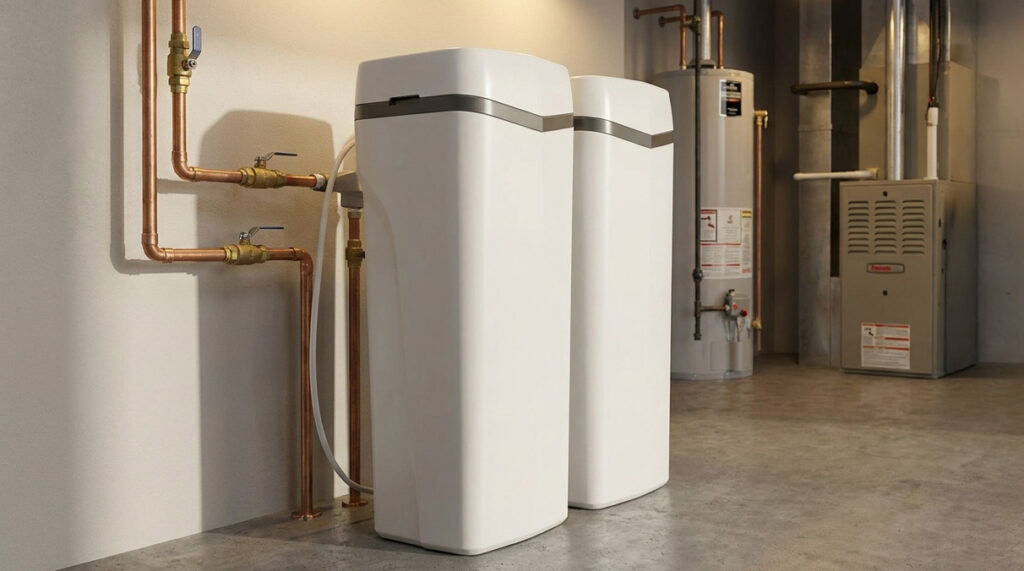
If you have a water softener, you already know it needs salt. What’s less obvious is that not all softener salt is the same, and the type you use affects how well the system performs, how often you’re dealing with maintenance issues, and how the softener handles the specific water chemistry in a New Jersey private well.
The choice isn’t complicated once you understand what each option does. Here is what to know before the next trip to the hardware store or the next service call.
How Salt Works in an Ion Exchange Softener
Before comparing salt types, it helps to understand what the salt is actually doing. A water softener works by passing hard water through a resin bed filled with sodium-charged beads. Calcium and magnesium ions, the minerals that cause hard water damage, attach to the resin in exchange for sodium ions. The result is softened water at the tap.
Over time the resin becomes saturated with calcium and magnesium and needs to be regenerated. The softener draws a concentrated salt brine from the brine tank, flushes it through the resin, and recharges the beads. The purity and form of the salt directly affects the quality of that brine, the cleanliness of the brine tank, and the efficiency of each regeneration cycle.
The Water Quality Association recommends using high-purity salt in softening systems to reduce brine tank maintenance and optimize system performance over time. That general guidance is the starting point for understanding the differences between the main salt types available.
Rock Salt: The Lowest-Cost Option With Trade-Offs
Rock salt is mined directly from underground salt deposits and is the least processed of the three main options. It is typically the least expensive, which makes it appealing for households trying to reduce the ongoing cost of softener operation.
The trade-off is purity. Rock salt contains higher levels of insoluble minerals and impurities than other options. Those insoluble materials don’t dissolve into the brine and accumulate in the brine tank over time as a sediment layer. If not cleaned regularly, this buildup can interfere with the float mechanism, create mushing that blocks the draw line, and reduce the effectiveness of regeneration cycles.
For NJ well water systems with high iron content, the impurity level in rock salt is an additional concern. Iron can interact with sediment in the brine tank in ways that accelerate fouling of the resin bed. A system already dealing with iron-laden water generally performs better with a higher-purity salt option.
Solar Salt and Evaporated Salt: The Most Common Recommendation
Solar salt is produced by evaporating saltwater in large ponds, leaving behind salt crystals with a significantly higher purity level than rock salt. Evaporated salt goes one step further, produced through a mechanical evaporation process that results in pellets or crystals with purity levels typically above 99 percent.
Both solar and evaporated salt produce a cleaner brine than rock salt, which means less sediment accumulation in the brine tank, fewer bridging and mushing issues, and more consistent regeneration performance. These are the options most commonly recommended by water treatment professionals for residential softeners.
For New Jersey private wells with moderate to high hardness and the iron levels common across the state, evaporated salt pellets are often the practical choice. Pellets are less likely to bridge in the brine tank than crystals, particularly in humid conditions or when the tank goes several weeks between refills.
Potassium Chloride: The Salt-Free Alternative to Sodium-Based Salts
Potassium chloride is not sodium chloride. It regenerates the resin the same way sodium-based salts do, replacing calcium and magnesium on the resin bed during the regeneration cycle, but it introduces potassium ions rather than sodium ions into the softened water.
For households where a member is on a low-sodium diet or has been advised by a physician to reduce sodium intake, potassium chloride is worth considering. Softened water contains a modest amount of sodium added during regeneration, and in households with high water consumption, that addition can be a dietary consideration.
The primary trade-off with potassium chloride is cost. It is significantly more expensive than sodium-based salt options and can be harder to find locally. Performance is comparable to high-purity sodium salt for most applications, though some systems may require adjustment of the regeneration cycle to account for potassium chloride’s slightly different chemistry.
Iron-Specific Salt Products: When Standard Salt Is Not Enough
Several salt products on the market are specifically formulated for systems dealing with iron in the water supply. These typically contain additives that help clean iron deposits from the resin during regeneration cycles, extending resin bed life in wells where iron is a consistent issue.
Iron fouling of softener resin is a real concern for New Jersey private wells with elevated iron levels. Once the resin becomes coated with iron, its ability to exchange calcium and magnesium decreases. Iron-specific salt or periodic resin cleaning treatments can slow this process. For wells with significant iron concentrations, dedicated iron filtration upstream of the softener is the more comprehensive solution, reducing the iron load before it reaches the resin at all.
Salt Bridges and Mushing: Two Maintenance Problems Salt Choice Can Prevent
Two common softener problems are directly influenced by salt quality and the conditions in the brine tank.
A salt bridge forms when a hard crust develops across the top of the salt in the brine tank, creating an air space below it. The softener continues drawing brine, but the separated layer of salt never dissolves into the water below. The system appears to be functioning normally but is regenerating with increasingly weak brine, which means hardness minerals are not being fully removed from the resin.
Mushing occurs when dissolved salt recrystallizes at the bottom of the brine tank, forming a thick, wet layer of sediment that can block the draw line. Like bridging, it affects regeneration quality without producing an obvious sign at the tap. Higher-purity salt reduces the likelihood of both problems by leaving less insoluble material in the tank over time.
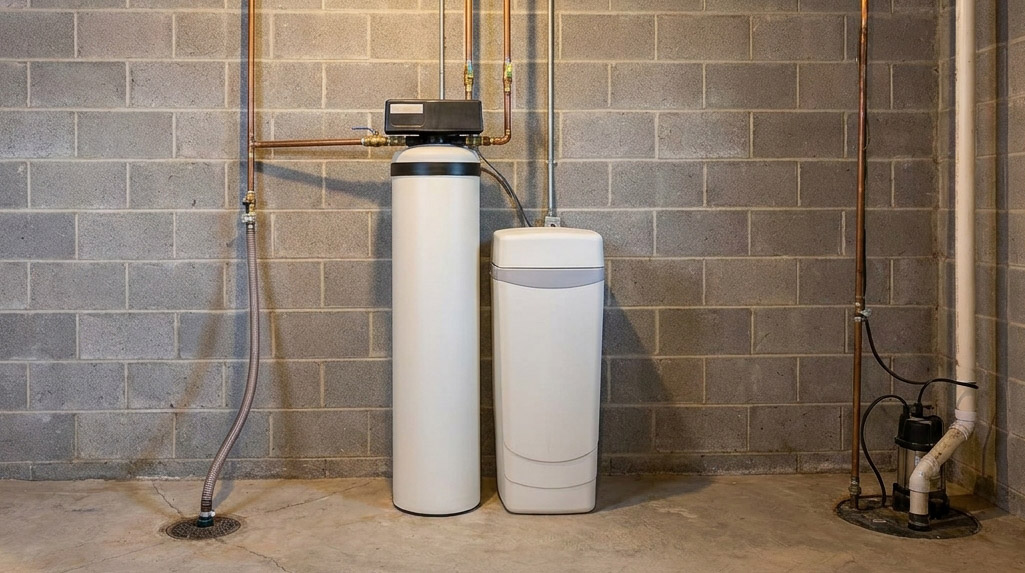
Salt purity only helps as much as the underlying equipment allows, which is part of why we standardize on one brand — our explanation of the Hague systems we install and why covers the equipment side of softener performance. And if a softener is still underperforming despite the right salt, it may be a mechanical issue rather than a salt issue — our guide on deciding between a softener repair and a full replacement walks through how to tell the difference.
How Jersey Radon Supports Softener Performance in NJ Well Homes
Jersey Radon installs and services water softening systems throughout New Jersey, including Hague water treatment equipment. When a system isn’t performing as expected, the salt type and brine tank condition are among the first things we check.
We help well water households with:
- Water softener installation in New Jersey sized correctly for local hardness levels and household usage
- Guidance on salt type selection based on specific well water chemistry
- Maintenance service for systems showing signs of bridging, mushing, or resin fouling
- Iron filtration recommendations for wells where iron is degrading softener performance
If the softener isn’t keeping up with limescale or hard water symptoms the way it should, or if the brine tank needs attention, contact Jersey Radon for a free estimate. We’ll assess the system and help you get it back to where it should be.
