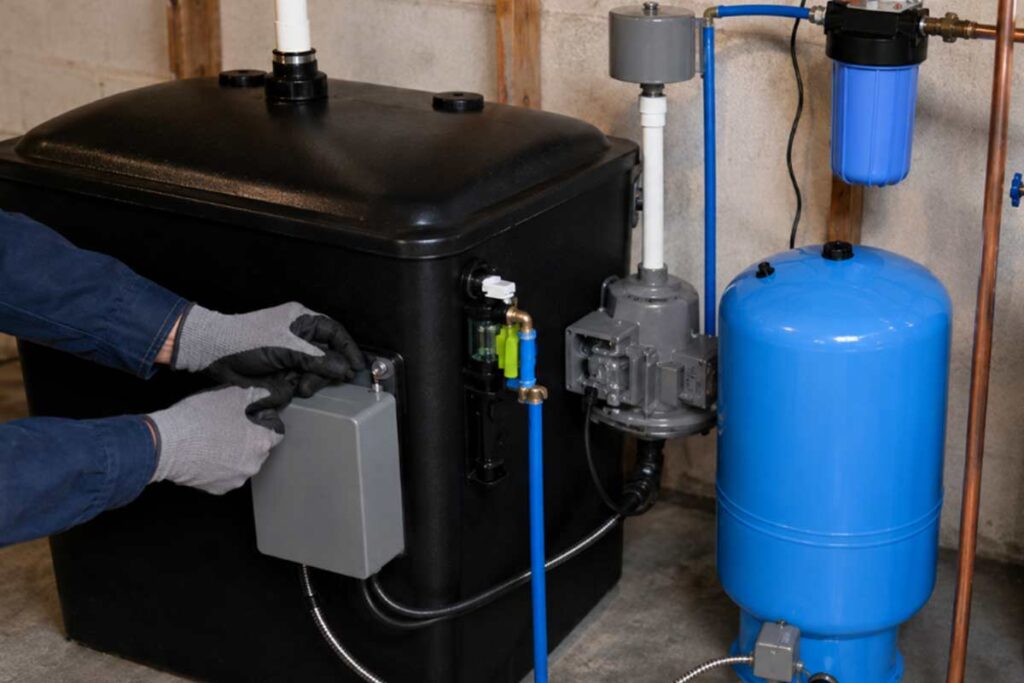
Aeration equipment is available for purchase without a contractor, and that alone makes some homeowners wonder whether installing it themselves is realistic. The equipment isn’t the hard part. Getting every connected system to work together correctly is.
Before deciding either way, it helps to understand what the installation actually involves and where a DIY approach tends to break down.
Why This Isn’t Comparable to a Standard Water Filter Swap
A basic filter swap is plumbing. A radon aeration system is plumbing, electrical, and exhaust venting working together, with each piece affecting whether the others function correctly. The repressurization and venting steps aeration requires are where most DIY attempts run into trouble, since both have to be done correctly for the system to work at all, let alone treat radon effectively.
Get the vent termination wrong and radon-laden air can drift back into the house. Get repressurization wrong and water pressure throughout the home suffers.
What a Professional Install Accounts For That a DIY Attempt Often Misses
A few things separate a properly executed installation from one that technically runs but underperforms.
- Correct sizing based on radon concentration and household water demand, not a generic unit pulled off a shelf
- Vent placement that keeps exhaust air away from windows, doors, and intake vents
- Electrical work for blowers and pumps done to code
- Pretreatment for sediment, iron, or hardness that could damage the aerator over time
- Post-installation testing to confirm the system is actually reducing radon
Skipping any of these doesn’t necessarily mean the system fails outright. More often it means the system runs, but doesn’t reduce radon as much as it should, which defeats the purpose of installing it in the first place.
Verification Matters as Much as the Install Itself
Independent organizations exist specifically to evaluate radon water treatment equipment and installers. The EPA points homeowners toward certifying bodies like NSF International for exactly this reason, since equipment performance and installation quality both affect whether treatment actually works.
A self-installed system has no equivalent check built in. Whatever the install looks like on completion is what you’re left with, without a professional evaluating whether it was done correctly.
Where DIY Genuinely Falls Short
Beyond the technical risk, there’s a practical one. Manufacturer warranties on aeration equipment often require professional installation to remain valid, and improperly vented systems can create their own indoor air issues if exhaust isn’t routed correctly. What starts as a cost-saving decision can end up costing more once a licensed installer has to correct the setup.
How Jersey Radon and Water Treatment Handles Installation From Test to Finished System
Every install starts with a water test, moves through system sizing based on that result, and ends with post-installation testing to confirm performance. That sequence is what separates a system that’s installed from one that’s actually working.
If you’re weighing a DIY approach against professional installation, contact us for a straight assessment of what your well and home actually need.
