A well that doesn’t produce much water changes the math on radon treatment. Equipment built for a high-output well can struggle, or simply not fit, on a well with limited yield. This isn’t rare in New Jersey. Older wells, wells drilled into tighter rock formations, and wells serving larger households on modest output all run into some version of the same constraint, and the equipment doesn’t fail outright. It just doesn’t perform the way the spec sheet promised.
Yield and Radon Concentration Are Two Different Numbers
Well yield is how much water a well can produce over time. It has nothing to do with radon concentration. An aeration system has to work within whatever the well can actually supply, not just what the house wants to use on a given day, and those two numbers get confused more often than you’d expect.
A homeowner focused entirely on the radon reading can walk into an equipment decision without ever asking how much water the well actually puts out per minute. That gap is where sizing problems start.
Peak Demand, Not Average Demand
A household using water faster than the well replenishes it runs into supply problems no matter what treatment equipment sits downstream. Peak demand is usually the real issue. A household might average a modest amount of water per day but still hit a demand spike every morning when three people are showering and a washing machine is running at once. A low-yield well has to be sized around that peak, not the average.
Storage as the Workaround
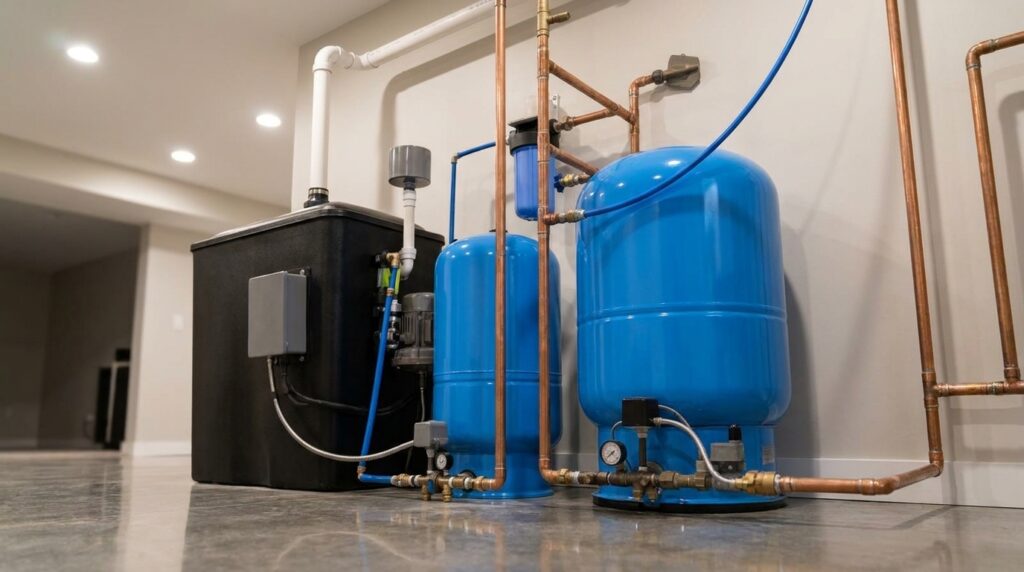
How water flow affects the aeration process means storage tanks often step in to buffer demand against a limited supply rate.
A larger storage tank smooths out the mismatch between what the well can produce steadily and what the household needs in short bursts. It’s not a fix for the well’s output. It’s a design choice around a limitation that isn’t going away, and repressurization has to account for that reality rather than fight it.
| Sizing Mismatch | What Tends to Happen |
|---|---|
| Equipment sized for a higher-yield well | Overwhelms available supply, inconsistent pressure |
| Undersized storage for household demand | Pressure drops during peak usage |
| Sizing based on radon alone, ignoring flow | System doesn’t match the well’s real output |
The frustrating part is that a mismatched system often works fine for weeks or months before the problem shows up. Usually the first time the household pushes real demand through it. By then, the equipment is already installed, and the fix costs more than getting it right the first time would have.
What a Real Flow Assessment Looks Like
A well’s radon concentration and its yield are both necessary before choosing equipment. Skip the flow assessment and size based on radon alone, and you risk a system that looks right on paper but doesn’t match what the well actually delivers.
A proper assessment typically measures how the well recovers after a period of heavy draw, not just a single snapshot reading. That recovery rate tells you more about real-world performance than a one-time yield number ever could.
Get a System Sized for Your Well’s Real Output
Radon aeration systems for low-yield NJ wells need site-specific planning, not a standard package. Jersey Radon and Water Treatment evaluates the well, water conditions, and household demand together before recommending anything, which matters more here than on wells with ample supply. Contact us to discuss sizing for a well that doesn’t produce much.
