Lead in drinking water is one of the most important and most frequently overlooked water quality concerns for homeowners on private wells. Unlike municipal water systems, which are required to test for lead and notify customers when action levels are exceeded, private well owners receive no such monitoring. Whether lead is present in your water depends on your well’s construction, the age and materials of your household plumbing, and the chemistry of your water itself. The only way to know is to test, and testing for lead requires a specific protocol that a standard water quality panel does not always include. Our water testing service covers lead testing alongside the comprehensive parameters that give you a complete picture of your water quality.
Lead has no taste, no color, and no odor. There is no sensory indication that it is present. Long-term exposure at elevated levels causes serious and irreversible health effects, particularly in children and pregnant women. This combination of invisibility and severity is what makes lead one of the contaminants that deserves explicit attention in any well water assessment, even when everything else about the water seems fine.
Where Lead in Well Water Actually Comes From
Lead can enter well water through several pathways, and understanding which pathway applies to a specific home is important for designing the right solution.
The Well Itself
Older wells constructed with lead components, lead-based joint compounds, or submersible pumps with brass or bronze components containing elevated lead can introduce lead directly from the well into the water supply. Brass and bronze alloys have historically contained up to 8 percent lead by weight, and while regulations have tightened significantly, older pumps and well components installed before modern lead-free standards may still be leaching lead into the water they contact.
Well casings themselves are rarely a lead source, but the pump, the pitless adapter, and any fittings inside the casing that were installed before lead-free standards became standard practice are worth considering as potential contributors, particularly in older wells that have never been upgraded.
Household Plumbing: Solder, Pipes, and Fixtures
The most common source of lead in household water is the plumbing inside the home rather than the well or the groundwater itself. Homes built before 1986 were constructed with lead-based solder connecting copper pipes. That solder leaches lead into water that sits in contact with it, particularly when the water is slightly acidic or has low mineral content. The leaching rate is highest when water has been sitting in the pipes for several hours without use, which is why lead levels are typically highest in the first draw from the tap in the morning or after a period of low water use.
Brass fixtures, including faucets, valves, and fittings manufactured before 2014, may also contain significant lead. Even fixtures marketed as low-lead still contained up to 8 percent lead until the federal Reduction of Lead in Drinking Water Act tightened the standard to 0.25 percent weighted average in 2014. Any home with older fixtures, regardless of pipe material, may have lead entering the water at the point of final delivery.
Homes with galvanized steel pipes face a related concern. Galvanized pipes are not themselves a lead source, but they accumulate lead deposits from lead-containing solder and fixtures over time. As the galvanized coating corrodes with age, that accumulated lead can be released back into the water supply, sometimes at levels higher than the original source would have produced.
Water Chemistry as a Catalyst
The amount of lead that leaches from plumbing components depends significantly on water chemistry. Low pH water is more corrosive and leaches lead more aggressively from solder, fixtures, and pipe surfaces. Low hardness water, which lacks the calcium and magnesium that form a thin protective scale layer on pipe interiors, also accelerates corrosion and leaching. Well water in certain geological regions tends toward low pH and low hardness, creating conditions that maximize lead release from any lead-containing plumbing components present in the system.
This is why two identical homes built in the same year with the same plumbing materials can have very different lead levels depending on the chemistry of their water source. The water chemistry is the catalyst. The plumbing materials are the source. Understanding both is necessary for an accurate risk assessment.
Health Effects of Lead Exposure Through Drinking Water
Lead is a neurotoxin with no known safe level of exposure, particularly for children. The health effects of lead exposure are dose-dependent and cumulative, building over time with repeated exposure rather than producing acute symptoms from a single incident. This makes lead exposure through drinking water particularly concerning because it can continue undetected for years while causing damage that may not be clinically apparent until it is substantial.
In children, lead exposure affects brain development and cognitive function. Even low levels of lead exposure are associated with reduced IQ, learning disabilities, behavioral problems, and developmental delays. These effects are not reversible. Lead that has caused neurological damage in a developing child cannot be undone by removing the exposure source after the fact. This makes prevention through testing and treatment the only effective approach.
In adults, lead exposure is associated with cardiovascular disease, kidney damage, and reproductive effects. In pregnant women, lead crosses the placental barrier and can affect fetal development, cause premature birth, and contribute to low birth weight. Elevated blood lead levels in pregnant women are also associated with increased risk of miscarriage.
The EPA has established an action level of 15 parts per billion (ppb) for lead in drinking water from public systems. For private wells, there is no federal enforcement mechanism, but the 15 ppb threshold is the reference level used by most water treatment professionals and state health agencies. Some health researchers and pediatric organizations argue that meaningful developmental effects occur at levels below 15 ppb, and recommend treating any detectable lead as worth addressing, particularly in households with children or pregnant women.
How to Test for Lead Correctly
Testing for lead requires a specific sampling protocol that differs from standard water quality sampling. Because lead contamination in household water primarily comes from plumbing materials rather than the water source itself, the most informative test is a first-draw sample, collected from the tap without running the water first, after the water has been sitting in contact with household plumbing for at least six hours, typically overnight.
A first-draw sample captures the water that has been in extended contact with solder, fixtures, and pipe surfaces, reflecting the actual lead exposure experienced by household members who drink water first thing in the morning or after returning home after hours away. A flushed sample taken after running the tap for several minutes will often show much lower lead levels because the water being collected has spent less time in contact with the lead-containing components and has been replaced with water from the supply line or well.
Some testing protocols include both a first-draw and a flushed sample to help identify whether lead is entering from the well and supply line or from household plumbing specifically. Both results together give a more complete picture of where remediation should be focused. Our guide on what a water test actually shows covers lead testing protocols alongside the other parameters relevant to a comprehensive well water assessment.
Use a laboratory certified for lead analysis. Standard home test kits from hardware stores are not reliable for lead at the concentrations relevant to drinking water safety and should not be used for anything other than a preliminary screening that is confirmed by certified laboratory analysis.
Treatment Options for Lead in Drinking Water
When lead is detected at levels of concern, treatment is available and effective. The right treatment depends on where the lead is entering the water, the lead concentration, and whether the goal is whole-house treatment or point-of-use protection for drinking and cooking water.
Reverse Osmosis
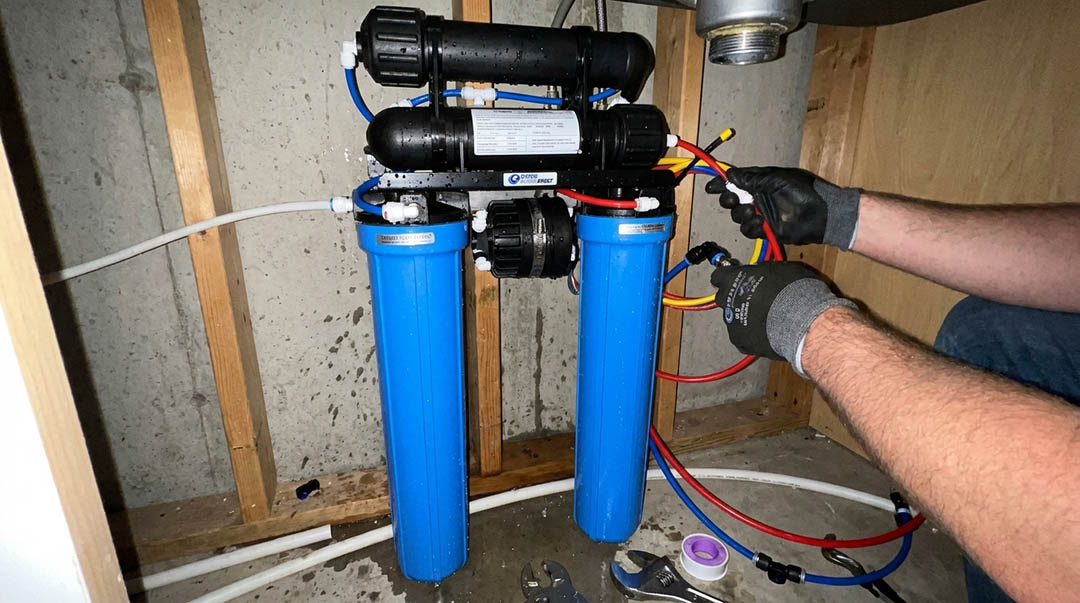
Point-of-use reverse osmosis at the kitchen sink is the most widely recommended treatment for lead in drinking water. A properly certified RO system removes lead at 95 percent or better efficiency, producing water at the kitchen tap that is effectively lead-free for drinking and cooking purposes. RO systems certified under NSF/ANSI Standard 58 specifically for lead removal provide documented, third-party verified performance. Our water purification service covers RO installation and the ongoing membrane maintenance that keeps the system performing correctly over time.
Certified Carbon Block Filters
Certain solid carbon block filters certified under NSF/ANSI Standard 53 for lead reduction can effectively reduce lead at the point of use. Not all carbon filters remove lead, and the certification must specifically list lead as a reduced contaminant. Loose granular activated carbon filters do not reliably remove lead. If carbon block filtration is being considered for lead, verify the NSF/ANSI 53 certification for lead specifically before purchasing.
What Does Not Remove Lead
Water softeners do not remove lead. The ion exchange process that removes calcium and magnesium does not target lead ions. UV disinfection systems do not remove lead. Standard sediment filters do not remove lead. Boiling water does not remove lead and actually concentrates it as water volume is reduced through evaporation. Any treatment approach for lead must use a technology specifically certified for lead removal.
Addressing the Source
In homes where lead is entering from old solder, fixtures, or galvanized pipes, replacing the lead-containing plumbing components addresses the problem at its source rather than treating the water after lead has entered it. Fixture replacement is straightforward and often inexpensive for individual faucets. Full plumbing replacement for a home with extensive galvanized or lead-soldered copper pipe is more involved, but in homes where lead levels are significantly elevated and the plumbing is old enough to warrant replacement regardless of lead concerns, it is the most permanent solution.
For most homeowners, a combination approach is practical: a certified point-of-use filter or RO at the kitchen tap addresses the most critical exposure pathway immediately, while plumbing components are replaced over time as part of normal home maintenance. Our whole-house water filtration guide covers how point-of-use and whole-house treatment options relate to each other for homes with multiple water quality concerns, and our water problems page covers the full range of contaminants we address for homeowners.
A Note on the Existing City Water Lead Post
If your home is on municipal water rather than a private well, the lead risk profile is somewhat different. Municipal water typically has lower lead from the source itself, but aging distribution infrastructure and household plumbing create the same fixture and solder risks that well water homeowners face. Our tip page on lead in city water covers the municipal water lead picture specifically, including lead service lines and the regulatory framework that applies to public water systems.
Test First, Then Treat
Lead is invisible, tasteless, and odorless. The only way to know whether it is present in your water at levels worth addressing is to test using the correct protocol. For homeowners in older homes with pre-1986 plumbing, homes with brass fixtures installed before 2014, or well water with low pH or low hardness that accelerates leaching, the case for testing is clear. And for households with children or pregnant women, the case is urgent.
If you want to test your water for lead and understand your results, or if you have already received test results showing elevated lead and want to know which treatment approach is right for your home, reach out to our team for a free consultation. We will start with your water and build a solution around what it actually contains.
