Do You Need Information About Chances of Arsenic In Your Morristown, NJ Home’s Drinking Water?
Call Us For A Free Estimate: (732)357-1988

Arsenic in Drinking Water in Morristown, NJ — What Morris County Homeowners Should Understand

Arsenic doesn’t taste like anything. It doesn’t smell. It doesn’t change the color or clarity of water. You cannot detect it at the tap, in the glass, or in the shower. And yet arsenic in drinking water is a real and documented concern in Morris County — particularly for homes on private wells drawing from the bedrock aquifers that underlie this part of North Jersey. Understanding where arsenic comes from, what it does over time, and why Morris County homeowners face a higher baseline risk than those in other parts of New Jersey is the starting point. The next step is professional water testing that specifically screens for arsenic.

This page is educational. It won’t tell you whether your water has arsenic — only a laboratory test can do that. What it will give you is enough context to understand whether testing makes sense for your situation.

Where Arsenic in Groundwater Comes From — The Geology Behind the Risk

Arsenic is a naturally occurring element found in rock, soil, and sediment throughout the earth’s crust. It enters groundwater when water moves through arsenic-bearing geological formations — dissolving trace amounts of the element as it percolates through bedrock and accumulates in aquifers. This is not industrial contamination in the traditional sense. It’s geology. The rock that makes up Morris County’s subsurface contains arsenic-bearing minerals, and the groundwater that private wells draw from has been in contact with that rock long enough to pick up dissolved arsenic at concentrations that vary by location.

New Jersey’s crystalline bedrock zone — which runs through Morris, Hunterdon, Sussex, Somerset, and Warren counties — is the part of the state with the highest documented naturally occurring arsenic in groundwater. Morris County sits squarely in that zone. Studies by the New Jersey Geological and Water Survey have found elevated arsenic in private wells throughout the county, with some wells exceeding both the federal maximum contaminant level of 10 parts per billion and New Jersey’s own arsenic standards. The bedrock formations around Morristown, Morris Plains, Madison, and the surrounding township are exactly the geological environment that produces this kind of contamination.

Well Water vs. Municipal Water — The Risk Is Not Equal

Morristown’s municipal water supply is treated before distribution. Treatment processes reduce arsenic in treated water to levels that meet regulatory standards before it reaches homes. For municipal water customers, the risk of elevated arsenic at the tap is meaningfully lower than for private well owners.

Private well owners draw water directly from local groundwater — the same bedrock aquifer that geology has been depositing arsenic into for millennia. There’s no treatment step between the aquifer and the kitchen faucet. Whatever arsenic concentration the local geology produces in that aquifer arrives at the tap unchanged. In Morris County’s crystalline bedrock geology, that concentration can be significant — and it varies enough between neighboring properties that the only reliable answer for any specific well is a test of that specific well. Nearby Morris Plains, Parsippany, Madison, and Florham Park homeowners on private wells face the same geological context and the same baseline risk.

What Long-Term Arsenic Exposure Does — The Health Picture

Arsenic’s health effects are driven by cumulative exposure over time — not by a single glass of water. This is what makes it particularly difficult to recognize: there’s no immediate symptom that tells you something is wrong. The effects accumulate quietly over years of drinking, cooking, and preparing food with arsenic-containing water.

Long-term exposure to elevated arsenic in drinking water has been associated with increased risk of several serious health conditions. The EPA classifies arsenic as a known human carcinogen — chronic exposure is linked to elevated risk of bladder, lung, and skin cancers. Beyond cancer risk, long-term arsenic exposure has been associated with cardiovascular effects, neurological impacts, and immune system concerns. In children, arsenic exposure during development has been linked to cognitive and developmental concerns. None of these effects announce themselves early. A family can drink arsenic-containing well water for years without recognizing any symptom as connected to the water. The absence of obvious signs is not evidence of safety.

New Jersey’s Arsenic Standards and What They Mean for Private Well Owners

The federal maximum contaminant level for arsenic in public water systems is 10 micrograms per liter — 10 parts per billion. This standard applies to public water systems, not private wells. Private well owners in New Jersey are not subject to mandatory monitoring or regulatory enforcement around arsenic. The responsibility for testing and acting on results rests entirely with the homeowner. There is no government program proactively monitoring your private well. If you haven’t tested, you don’t know.

Arsenic Risk by Scenario — Morristown Area Homeowners

Scenario Risk Level Recommended Action
Private well in Morris County bedrock geology Higher — crystalline bedrock is known arsenic source Test immediately; include in any comprehensive well panel
Municipal water in Morristown area Lower — treatment reduces arsenic before distribution Review annual water quality report; test if concerned
Well water, never tested for arsenic Unknown — no baseline established Test now; arsenic requires specific lab analysis
Home purchase with private well Unknown — prior testing may not be recent Test before closing or immediately after
Well tested more than 3 years ago Uncertain — groundwater chemistry can shift Retest; arsenic levels in wells can change over time

What an Arsenic Test Actually Involves

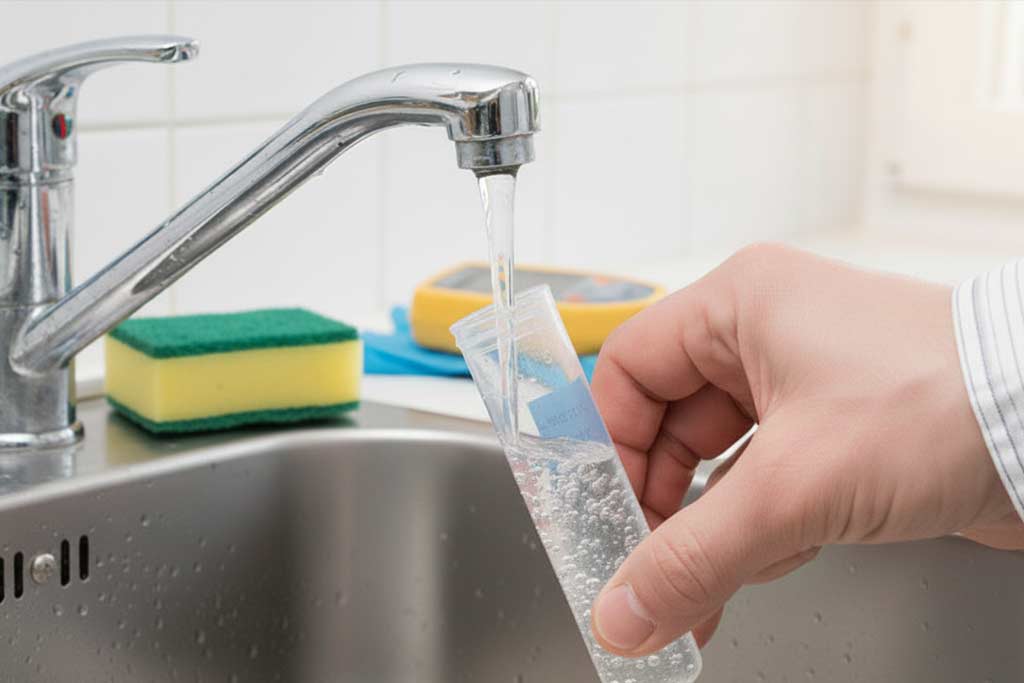
Testing for arsenic in well water requires a sample collected at the tap and sent to a certified laboratory for analysis. It must be specifically requested — arsenic is not automatically included in a standard water quality panel. The laboratory returns a specific concentration in micrograms per liter that can be compared to federal and state standards and used to determine whether action is warranted.

A comprehensive well water panel for a Morris County home should include arsenic alongside bacteria, nitrates, pH, hardness, iron, manganese, and radon in water. Understanding the full picture of what your well produces is more useful than testing for individual contaminants in isolation. Our professional water testing page covers what a comprehensive assessment includes. If arsenic is found at levels that warrant action, our arsenic in water removal page covers what treatment involves. For the broader water quality picture in Morristown, our Morristown water testing page covers the full range of concerns. Our full New Jersey service area covers communities statewide.

Frequently Asked Questions — Arsenic in Drinking Water in Morristown, NJ

Is arsenic in well water common in Morris County?

It’s documented frequently enough that testing is a standard recommendation for any Morris County home on a private well. The crystalline bedrock geology underlying much of the county is a known natural source of arsenic in groundwater. Studies by New Jersey geological agencies have found elevated arsenic concentrations in private wells throughout the county. The only way to know your specific well’s arsenic level is a direct test.

Can I tell if my water has arsenic by how it tastes or smells?

No. Arsenic at concentrations that pose long-term health risks is completely undetectable by taste, smell, or appearance. Water containing arsenic above the federal action level looks and tastes exactly like clean water. Testing is the only reliable way to find it.

How often should I test my Morris County well for arsenic?

If you’ve never tested, test now. If you’ve tested previously, retesting every three to five years is reasonable — groundwater chemistry in bedrock aquifers can shift over time, particularly after drought periods or heavy rainfall. More frequent testing is warranted if you notice any changes in water taste, odor, or color.

Is arsenic testing included in a standard water quality panel?

Not automatically. Arsenic requires a specific laboratory analysis that must be explicitly requested. A standard panel covering hardness, bacteria, and common minerals does not include arsenic unless it’s ordered. If your previous test didn’t specifically include arsenic, you don’t have an answer to this question.

What level of arsenic in water is considered unsafe?

The EPA’s maximum contaminant level for arsenic in public water systems is 10 micrograms per liter. For private wells there’s no federal enforcement threshold, but the same 10 ppb standard is widely used as a reference point for action. Some health authorities recommend action at lower concentrations given arsenic’s carcinogenic classification. We walk through what your specific result means in context when results come back.

Find Out Whether Arsenic Is a Concern in Your Morristown Home’s Water

If you’re on a private well in Morris County and haven’t specifically tested for arsenic — or if your last test was several years ago — this is a straightforward and important question to answer. We serve Morristown and all of Morris County. Call us at (732) 357-1988 or reach out online and we’ll help you determine the right next step.

Do You Need Information About Chances of Arsenic In Your Morristown, NJ Home’s Drinking Water?
Call Us For A Free Estimate: (732)357-1988

Learn About Solving Water-Related Risks In You Home

Request Information About Chances of Arsenic In Your Morristown, NJ Home’s Drinking Water Today!

Or call (732)357-1988

Call-Us