PFAS in Morristown’s Water — The Contaminant You Can’t Taste, Smell, or See, But Still Need to Understand
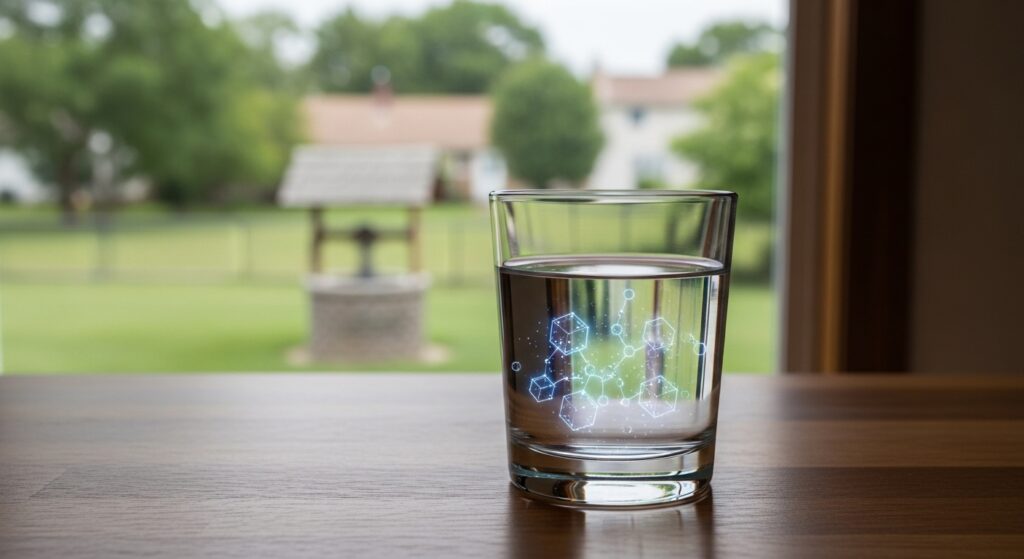
PFAS — per- and polyfluoroalkyl substances — have become one of the most discussed water quality topics in New Jersey, and for good reason. These synthetic chemicals have been detected in water supplies across the state, including in portions of Morris County’s groundwater and distribution systems. They don’t announce themselves through taste or odor. They don’t produce visible changes in the water. The only way to know whether PFAS are present in your Morristown home’s water at concerning levels is to test specifically for them. This page explains what PFAS are, how they enter water supplies, what the health research says, and what Morris County homeowners can do with that information.
What PFAS Actually Are — The “Forever Chemical” Explanation
PFAS is a broad category of more than 12,000 synthetic chemical compounds that share a common structural feature: an extremely strong carbon-fluorine bond. That bond is what makes PFAS so chemically useful — and so environmentally problematic. The carbon-fluorine bond doesn’t break down under heat, light, water exposure, or biological processes. PFAS persist in the environment essentially indefinitely. They accumulate in soil, enter groundwater, and once in a water supply, move through the distribution system to every tap it serves.
The term “forever chemicals” is accurate. PFAS that enter a groundwater aquifer don’t degrade over time. They don’t respond to standard water treatment processes like coagulation, sedimentation, or basic carbon filtration. They require specific treatment technologies — activated carbon filtration, reverse osmosis, or ion exchange — to be removed from drinking water at the household level. The EPA’s PFAS overview covers the chemistry and regulatory background in detail.
How PFAS Enter Drinking Water — The Sources Relevant to Morris County
PFAS entered the environment through decades of industrial and commercial use across a wide range of products and processes. The pathways most relevant to Morris County homeowners include:
Industrial discharge is the primary documented source of PFAS in New Jersey groundwater. Manufacturing facilities that used PFAS-containing compounds in their processes — including facilities producing non-stick coatings, food packaging, textile treatments, and electronic components — discharged PFAS into wastewater or allowed it to leach into soil. Morris County’s industrial history includes facilities in and around the county that have contributed to regional groundwater contamination. Once in the soil, PFAS migrate downward into groundwater and spread through the aquifer system.
Aqueous film-forming foam (AFFF), used in firefighting training and emergency response at military installations, airports, and industrial sites, is one of the most concentrated PFAS sources in New Jersey’s groundwater. Facilities throughout the state — including military and aviation sites — have AFFF-related PFAS plumes that have spread into adjacent aquifers. The movement of those plumes depends on groundwater flow patterns that don’t respect municipal boundaries.
Consumer products that contained PFAS — including some coatings, water-resistant fabrics, and food packaging materials — have also contributed to PFAS loading in landfill leachate and wastewater treatment plant effluent that ultimately reached surface water and groundwater. New Jersey’s NJDEP PFAS resources page provides state-specific information on known contamination sites and monitoring data.
Municipal Water vs. Private Wells — How PFAS Risk Differs
Morristown’s municipal water supply is regulated — New Jersey has some of the strictest PFAS standards in the country, and utilities are required to test, report, and take action when PFAS exceeds state maximum contaminant levels. Municipal customers can access their utility’s annual consumer confidence report to see where PFAS levels stand against those limits.
Private well owners in Morris County face a different situation. No mandatory monitoring requirement applies to private wells. No government program tests private wells for PFAS on the homeowner’s behalf. Whatever PFAS concentration the local groundwater contains — influenced by the geological and contamination history of that specific aquifer zone — arrives at the private well tap without regulatory oversight. This is why testing is the essential first step for any Morris County private well owner who wants to understand their PFAS exposure.
What the Health Research Says — A Responsible Summary
PFAS research is active and evolving. The scientific consensus supports the conclusion that long-term exposure to elevated PFAS levels in drinking water is associated with health concerns — the specific risks studied include effects on immune system function, thyroid hormone levels, cholesterol levels, and certain cancer risks with prolonged exposure. The EPA and CDC both characterize PFAS as compounds warranting precautionary action.
What the research does not support is panic over a single test result or a single exposure event. PFAS health effects are associated with long-term cumulative exposure — the same pattern seen with other persistent environmental contaminants. The appropriate response to PFAS in drinking water is accurate measurement followed by informed decision-making, not alarm. The CDC’s PFAS resource page provides regularly updated health guidance.
PFAS in Context — What Morristown Homeowners Are Actually Dealing With
| Contaminant | Source | Detection Method | Why It Matters |
|---|---|---|---|
| PFAS compounds (PFOA, PFOS, others) | Industrial discharge, AFFF firefighting foam, consumer product leaching | Laboratory water test only — no taste, smell, or visual sign | Long-term exposure concern; persistent in body and environment |
| PFOA specifically | Non-stick coating manufacturing, industrial runoff | Specific PFAS panel laboratory test | Most studied PFAS compound; NJ has specific MCL |
| PFOS specifically | AFFF firefighting foam, textile treatment | Specific PFAS panel laboratory test | Military and airport site contamination plumes in NJ |
| Short-chain PFAS alternatives | Industrial substitutes for older PFAS compounds | Comprehensive PFAS panel | Less studied; emerging regulatory concern |
What PFAS Testing Actually Involves
A PFAS water test requires a water sample collected at the tap and submitted to a certified laboratory for specific PFAS analysis. It must be explicitly requested — standard water quality panels covering hardness, bacteria, and common minerals do not include PFAS. The result is a concentration in parts per trillion (ppt) for each compound tested, which can be compared to New Jersey’s maximum contaminant levels and EPA health advisories.
New Jersey has established MCLs for PFOA and PFOS individually, as well as for two additional PFAS compounds — among the strictest PFAS standards of any state. A comprehensive PFAS panel tests for multiple compounds simultaneously and provides the most complete picture of what’s present. PFAS testing is not the same as a general water quality test, and the two should not be confused.
What to Do If PFAS Is Found
If testing confirms PFAS above New Jersey’s maximum contaminant levels, treatment options exist and are effective. Whole-home activated carbon filtration reduces PFAS throughout the home. Reverse osmosis at the kitchen sink provides the highest level of PFAS reduction specifically for drinking and cooking water. Ion exchange systems are another effective option for higher-concentration situations. Treatment selection depends on the specific compounds found, their concentrations, and the household’s water use patterns.
Our PFAS removal page covers the treatment options in detail. For the broader water quality picture in Morristown, our Morristown water testing page covers the full contaminant profile worth understanding. Our full New Jersey service area covers communities statewide.
Frequently Asked Questions — PFAS in Drinking Water in Morristown, NJ
Has PFAS been confirmed in Morristown’s municipal water supply?
PFAS has been detected in portions of New Jersey’s water supply system, including in some Morris County water sources. Whether PFAS is present at concerning levels in a specific municipal supply or private well in Morristown depends on that specific source — which is why testing is the only reliable answer. Your utility’s annual consumer confidence report shows PFAS levels in the treated municipal supply; private well owners have no equivalent monitoring without independent testing.
Is PFAS testing included in a standard water quality test?
No. PFAS requires a specific laboratory analysis that must be explicitly requested. A standard panel covering hardness, bacteria, lead, and common contaminants does not include PFAS. If PFAS wasn’t specifically on your water test panel, you don’t have an answer to this question.
What are New Jersey’s PFAS standards compared to federal limits?
New Jersey has established maximum contaminant levels for PFOA, PFOS, PFNA, and GenX that are among the strictest in the country — in some cases significantly lower than the EPA’s federal standards. This means water that meets federal standards may still exceed New Jersey’s state standards. Testing against NJ standards specifically gives Morristown homeowners the most relevant benchmark.
Can I filter PFAS out of my tap water at home?
Yes — with the right technology. Standard pitcher filters and basic carbon filters don’t reliably remove PFAS. Reverse osmosis at the point of use and high-quality activated carbon systems designed specifically for PFAS reduction are the most effective household-level options. The specific PFAS compounds present and their concentrations guide system selection.
How quickly can I arrange PFAS testing in Morristown?
We can typically schedule within a few days. PFAS-specific laboratory analysis takes somewhat longer than standard panels — typically two to three weeks for results. We walk through what the results mean and what options make sense for your specific situation once they come back.
Get PFAS Testing Arranged for Your Morristown Home
If you’re a Morristown homeowner on a private well and haven’t tested for PFAS — or if your municipal water’s PFAS picture isn’t clear from the utility’s annual report — a direct test at your tap is the most reliable way to know what you’re working with. We serve Morristown and all of Morris County. Call us at (732) 357-1988 or reach out online.