PFAS in Montclair’s Water — What Essex County Homeowners Need to Know Before Assuming They’re Not Affected
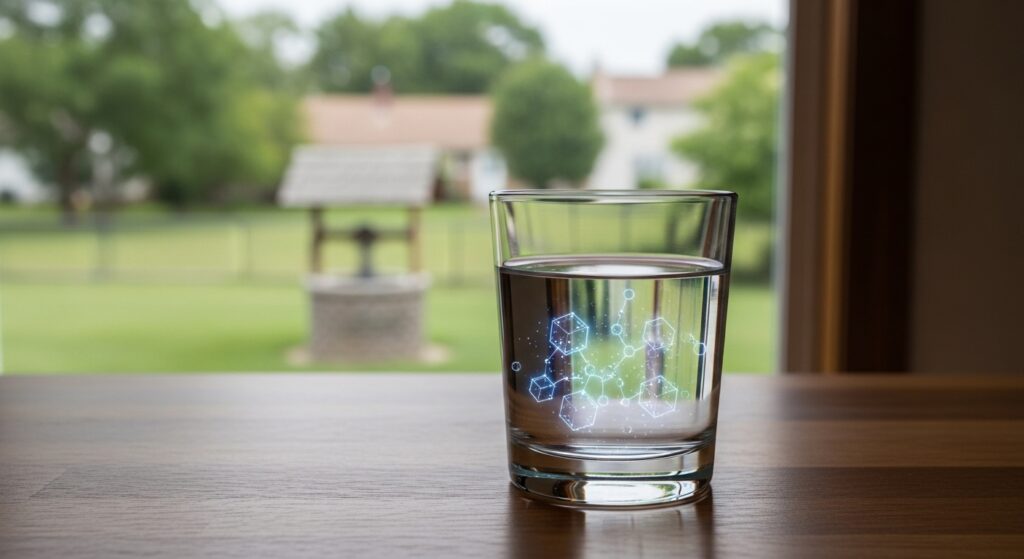
PFAS — per- and polyfluoroalkyl substances — have been detected in portions of New Jersey’s water supply, including in parts of Essex County’s water system. These synthetic chemicals don’t produce any taste, smell, or visual change in water. You cannot tell whether they’re present without a test. And because their health effects are associated with long-term cumulative exposure rather than acute events, most homeowners who have PFAS in their water have no idea. This page explains what PFAS are, how they end up in Montclair area water supplies, what the health research actually says, and what options exist for addressing them.
What PFAS Are — The Chemistry Behind “Forever Chemicals”
PFAS is a category of more than 12,000 synthetic chemical compounds defined by an extremely strong carbon-fluorine bond. That bond is what gives PFAS their useful properties — heat resistance, oil resistance, water resistance — and what makes them environmentally persistent. The carbon-fluorine bond doesn’t break down under heat, UV exposure, biological processes, or water. PFAS that enter the environment stay there. They accumulate in soil, migrate into groundwater, and move through water distribution systems without degrading.
The “forever chemical” label is chemically accurate. PFAS that reach a water supply don’t resolve on their own over time. Standard water treatment processes — coagulation, sedimentation, conventional filtration — don’t reliably remove them. Specific technologies are required: activated carbon filtration, reverse osmosis, and ion exchange are the established approaches for removing PFAS from drinking water at the household level. The EPA’s PFAS overview covers the regulatory and scientific background.
How PFAS Reach Montclair Area Water Supplies
Essex County’s PFAS picture is shaped by a combination of industrial history and regional groundwater dynamics. The same industrial corridor that runs through much of northern New Jersey — manufacturing, chemical processing, and waste disposal sites that used PFAS-containing compounds for decades — has contributed to groundwater contamination that moves through aquifer systems without regard for municipal boundaries.
Aqueous film-forming foam (AFFF) — a firefighting agent that contains concentrated PFAS — has been used at multiple sites in and around Essex County including industrial facilities and emergency response training areas. AFFF-related PFAS plumes spread through soil into groundwater and can affect water supplies at considerable distances from the original application site. Consumer products that contained PFAS — including certain coatings, packaging, and fabrics — have also contributed PFAS loading through landfill leachate and wastewater treatment plant effluent.
New Jersey’s NJDEP has been among the most active state agencies in the country on PFAS monitoring and regulation. The NJDEP PFAS resources page provides current information on known contamination sites and monitoring data across the state, including Essex County.
Municipal Water vs. Private Wells — Different Risk Profiles
Montclair is predominantly served by the Essex County municipal water system. Municipal utilities in New Jersey are required to test for PFAS, meet the state’s maximum contaminant levels — among the strictest in the country — and report results publicly in annual consumer confidence reports. Municipal customers can review those reports to understand where PFAS levels stand relative to state limits.
Any Montclair-area property on a private well occupies a different risk position entirely. No mandatory monitoring applies. No government program tests private wells for PFAS. Whatever the local groundwater contains — shaped by the industrial and contamination history of that specific aquifer zone — arrives at the private well tap without regulatory oversight. Testing is the only way to establish what’s actually present.
What the Health Research Says — Responsibly Summarized
The scientific literature on PFAS health effects is substantial and growing. The consensus among regulatory and health agencies is that long-term exposure to elevated PFAS in drinking water is associated with health concerns — the most studied include immune system effects, thyroid hormone disruption, elevated cholesterol levels, and increased risk of certain cancers with prolonged exposure at elevated concentrations. The EPA and CDC both recommend precautionary action when PFAS is present above established thresholds.
What the research does not support is alarm over a single test result. PFAS health effects are associated with long-term cumulative exposure — which means the appropriate response is measurement, evaluation, and informed action rather than immediate crisis response. The CDC’s PFAS health guidance provides regularly updated information on what the research shows.
PFAS at a Glance — What Montclair Homeowners Are Working With
| Contaminant | Primary Source in Essex County Context | Detection Method | Why It Matters |
|---|---|---|---|
| PFAS compounds (broad category) | Industrial discharge, AFFF, consumer product leaching | Specific laboratory test — no sensory indicator | Persistent; long-term exposure concern |
| PFOA | Non-stick coating manufacturing, industrial runoff | PFAS panel lab test | NJ has specific MCL; most studied compound |
| PFOS | AFFF firefighting foam, textile treatment | PFAS panel lab test | Military and industrial site plumes in NJ |
| PFNA, GenX, other compounds | Industrial substitutes and byproducts | Comprehensive PFAS panel | NJ has MCLs for PFNA and GenX specifically |
Testing and What Comes After
A PFAS water test is a specific laboratory analysis that must be explicitly requested — it’s not included in a standard water quality panel. The result is a concentration in parts per trillion for each compound tested, compared to New Jersey’s maximum contaminant levels. New Jersey’s PFAS standards are among the strictest in the country — in some cases significantly below the EPA’s federal guidance levels.
If testing confirms PFAS above action levels, treatment options are effective. Activated carbon whole-home filtration reduces PFAS throughout the home. Reverse osmosis at the kitchen tap provides the highest level of PFAS reduction for drinking and cooking water. The specific compounds present and their concentrations guide which approach is most appropriate.
For the broader water quality picture in Montclair, water testing in Montclair covers the full contaminant profile worth understanding. Our full New Jersey service area covers communities statewide. Full detail on PFAS treatment is available through our PFAS removal resources.
Frequently Asked Questions — PFAS in Drinking Water in Montclair, NJ
Has PFAS been detected in Montclair’s water?
PFAS has been detected in portions of New Jersey’s water supply system, including in some Essex County water sources. Whether PFAS is present at concerning levels in a specific Montclair address depends on that property’s water source and its relationship to known contamination plumes. Municipal customers should review their utility’s annual consumer confidence report; private well owners need independent testing.
Is PFAS testing included in a standard water quality test?
No. PFAS requires a specific laboratory analysis explicitly requested as part of the testing order. A standard panel covering hardness, bacteria, lead, and common minerals does not include PFAS. If PFAS wasn’t on your previous test panel, you don’t have an answer to this question yet.
How does New Jersey’s PFAS standard compare to federal limits?
New Jersey has established maximum contaminant levels for PFOA, PFOS, PFNA, and GenX that are significantly stricter than the EPA’s federal standards in some cases. Water meeting federal standards may still exceed NJ’s state MCLs. Testing against New Jersey’s standards gives Montclair homeowners the most relevant benchmark for their situation.
Can PFAS be removed from tap water at home?
Yes, with the right technology. Standard pitcher filters and basic carbon filtration don’t reliably remove PFAS. Reverse osmosis and high-quality activated carbon systems designed for PFAS reduction are the most effective household-level options. System selection depends on the specific compounds present and their concentrations.
How long does PFAS testing take?
We can typically schedule sample collection within a few days. PFAS-specific laboratory analysis takes approximately two to three weeks for results. We walk through what the results mean and what options apply to your specific situation.
Get PFAS Testing Arranged for Your Montclair Home
If you’re a Montclair homeowner who hasn’t tested for PFAS — or if the utility’s annual report leaves you wanting more property-specific certainty — a direct tap test gives you the clearest answer available. We serve Montclair and all of Essex County. Call us at (732) 357-1988 or reach out online.