Radon in well water attracts a lot of casual advice that doesn’t hold up under scrutiny. A few myths are worth addressing directly, since acting on them can leave a real problem untreated. Most aren’t malicious. They sound reasonable enough to repeat, get passed along at a barbecue or in a forum thread, and eventually turn into something homeowners treat as settled fact.
Myth: Boiling Water Solves a Whole-House Radon Problem
Boiling water releases dissolved radon into the air of that one room. It doesn’t reduce exposure, and it can briefly increase it in an enclosed kitchen. It does nothing for radon released elsewhere during showers or laundry.
This myth persists partly because it sounds intuitive. Boiling gets rid of plenty of things in water, so it seems reasonable that it would handle radon too. The mechanism just doesn’t work that way here.
Myth: A Pitcher Filter Removes the Household Exposure
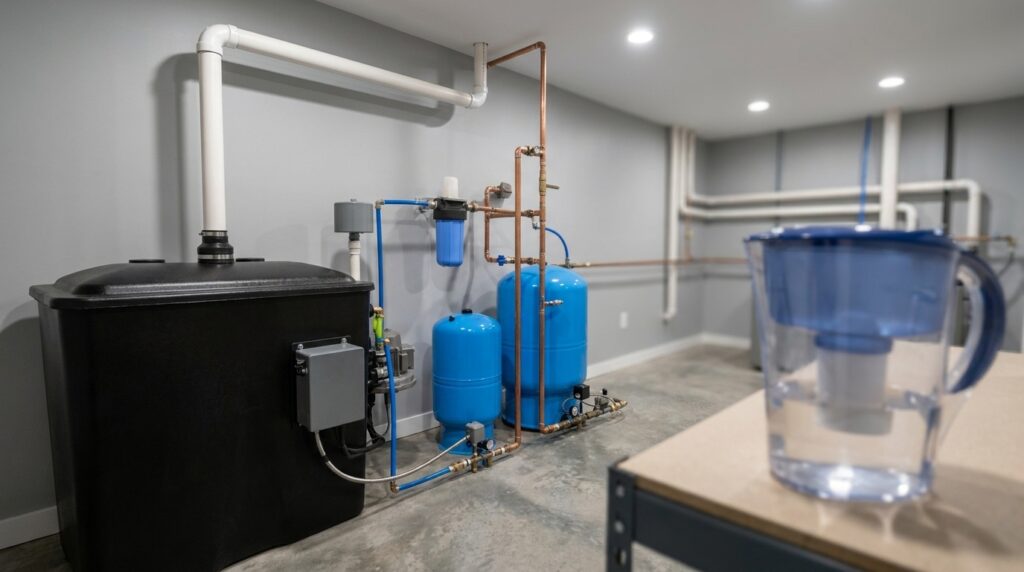
A pitcher filter treats water for drinking at one point in the house. Most radon exposure comes from inhaling it during other activities, so a pitcher filter misses the pathway that actually matters. This one comes from a reasonable place too, since pitcher filters genuinely improve taste and remove certain contaminants.
Myth: Every Private Well Needs an Aeration System
Radon concentration varies significantly by well, even within the same neighborhood. A well without elevated radon doesn’t need aeration treatment, which is exactly why a water test comes before any equipment decision, never after.
This myth tends to spread in higher-risk regions, where enough neighbors have installed treatment that it starts to feel like a given. Geography raises the odds. It doesn’t guarantee the result.
| Myth | Reality |
|---|---|
| Boiling water fixes the problem | Can briefly worsen indoor exposure in that room |
| A pitcher filter is enough | Misses the shower and laundry exposure entirely |
| Every well needs treatment | Depends entirely on the test result |
| Equipment size doesn’t matter | Undersized or oversized units can both underperform |
Myth: Aeration Treats Every Water-Quality Problem
An aeration system is built specifically for dissolved radon. It doesn’t touch bacteria, iron, or hardness. A comprehensive water test matters more than assuming one system covers everything a well might need.
Myth: No Follow-Up Testing Is Needed
An installed system still needs maintenance and periodic retesting to confirm it’s performing as designed. This is probably the myth with the highest real-world cost, since it doesn’t cause an obvious problem right away.
A neglected system can run for months or years while quietly underperforming. Nobody notices until a retest happens to catch it, if a retest ever happens at all.
Myth: Equipment Size Does Not Matter
How a real aeration system removes radon from water depends on correct sizing for concentration and household demand. Sizing gets treated as a minor technical detail when it’s actually one of the more consequential decisions in the whole project. The right brand installed at the wrong size still won’t perform the way it’s supposed to.
Get Facts Instead of Forum Advice
Common myths about radon aeration systems in NJ wells tend to spread faster than the testing that would actually settle them. Jersey Radon and Water Treatment tests the water before recommending anything, which is the most reliable way to separate fact from what’s circulating online. Contact us if you’re sorting through conflicting information.
