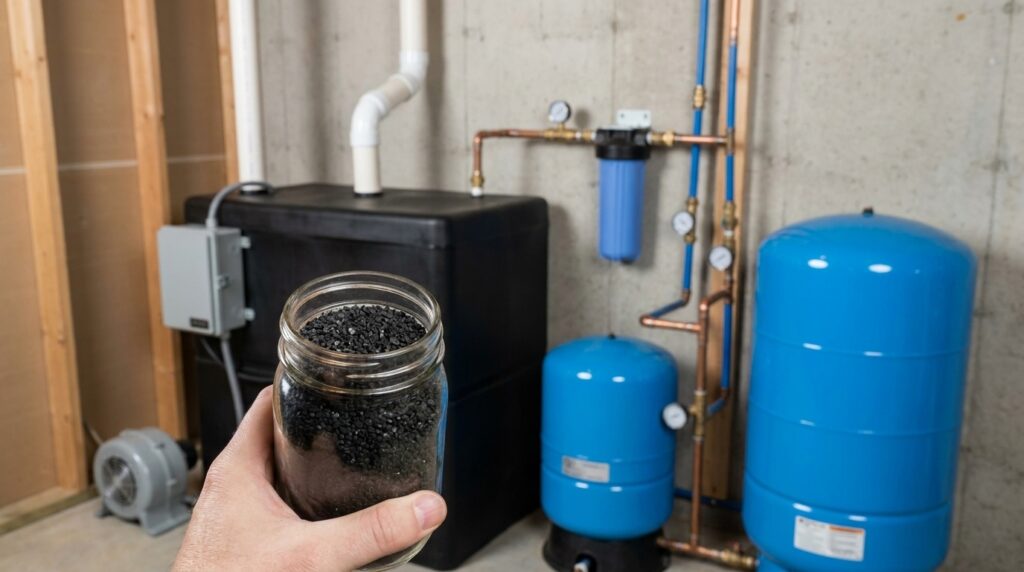
Two methods dominate radon-in-water treatment, and they don’t work anything alike. The EPA identifies aeration and granular activated carbon as the two recognized point-of-entry approaches, and picking between them means understanding what actually happens to the radon once each system gets hold of it.
Two Ways to Solve the Same Problem
Radon treatment options for private wells generally split into these two camps. Both work. They just don’t work the same way, and that difference matters more than most homeowners expect going in.
How Each Method Actually Handles Radon
| Aeration | Granular Activated Carbon | |
|---|---|---|
| How it works | Transfers dissolved radon into an air stream, then vents it outside | Captures radon within carbon filter media as water passes through |
| Where the radon ends up | Vented off the property entirely | Held in the filter media on site |
| Ongoing concern | Mechanical upkeep on blowers and pumps | Radioactive buildup in spent media over time |
| Footprint | Larger, multiple components | Often more compact |
Aeration moves radon out. GAC holds onto it. That single distinction drives most of the practical differences below.
The Radioactive Buildup Question
Because GAC captures rather than releases, radioactive material can accumulate in the filter media as it keeps working. Eventually that media needs handling as a contained material, not just a spent filter. Aeration sidesteps this entirely, since nothing radioactive stays behind in a filter waiting to be dealt with.
Maintenance Looks Different Depending on Which You Choose
Aeration systems need attention to blowers, pumps, and vent lines, the mechanical parts doing the work. GAC systems need media replaced on a set schedule, with proper handling for the spent material given the accumulation issue above. Neither is maintenance-free. The type of maintenance is just different.
What Actually Decides This for a Given Home
- Radon concentration and how much reduction the water actually needs
- Available space for equipment
- Water flow rate through the home
- How a household feels about storing radioactive media on site versus venting radon away entirely
A closer look at how the aeration process actually works helps put these tradeoffs in real terms rather than abstract ones.
Three Questions Worth Asking Before You Choose
What happens to the radon once it’s removed? What does the maintenance schedule actually look like month to month? How does the system perform at the specific concentration your well tested at? A straight answer to all three narrows this decision considerably.
Get a Recommendation Based on Your Water, Not a Sales Pitch
Choosing between radon aeration and granular activated carbon for a NJ well isn’t a coin flip. It comes down to your test results, your space, and how you feel about the tradeoffs above. Jersey Radon and Water Treatment evaluates the water first and discusses which method actually fits before recommending either one. Contact us to talk through which approach makes sense for your well.
