A pitcher filter solves a drinking-water problem. It doesn’t solve a radon problem. Radon exposure from water rarely comes from drinking it in the first place, which surprises a lot of homeowners the first time they hear it. The instinct is to treat radon the way you’d treat a bad taste, at the tap where you notice something’s wrong. Radon doesn’t work that way, and treating it like it does leaves the real exposure pathway completely untouched.
Where the Exposure Actually Happens
Most radon exposure from water occurs when dissolved radon escapes into the air during everyday use, not from swallowing the water itself. That single distinction is what makes single-tap treatment ineffective, no matter how good the filter is.
Radon behaves a bit like carbon dioxide in a soda. It stays dissolved under pressure, then releases once that pressure changes or the water gets agitated. A shower does both at once.
- Hot showers, where heat and agitation release radon efficiently into a small, enclosed space
- Washing machines and dishwashers, spread throughout the house rather than confined to one room
- Any fixture or appliance that heats or agitates water in daily use
None of these involve drinking the water. All of them involve breathing the air around it. Drinking water with dissolved radon isn’t risk-free either, but inhalation is generally treated as the larger concern. That distinction affects how treatment gets prioritized. It doesn’t change the underlying point.
Why One Faucet Isn’t Enough
A filter installed under one sink treats water at that single point of use. Every other faucet, shower, and appliance in the house keeps drawing untreated water.
Homeowners sometimes install an under-sink system after hearing about a radon result and assume they’ve addressed the issue. They’ve addressed the smallest part of it. The shower down the hall and the washing machine in the basement release radon into the air exactly as before.
Point of Entry Changes Everything
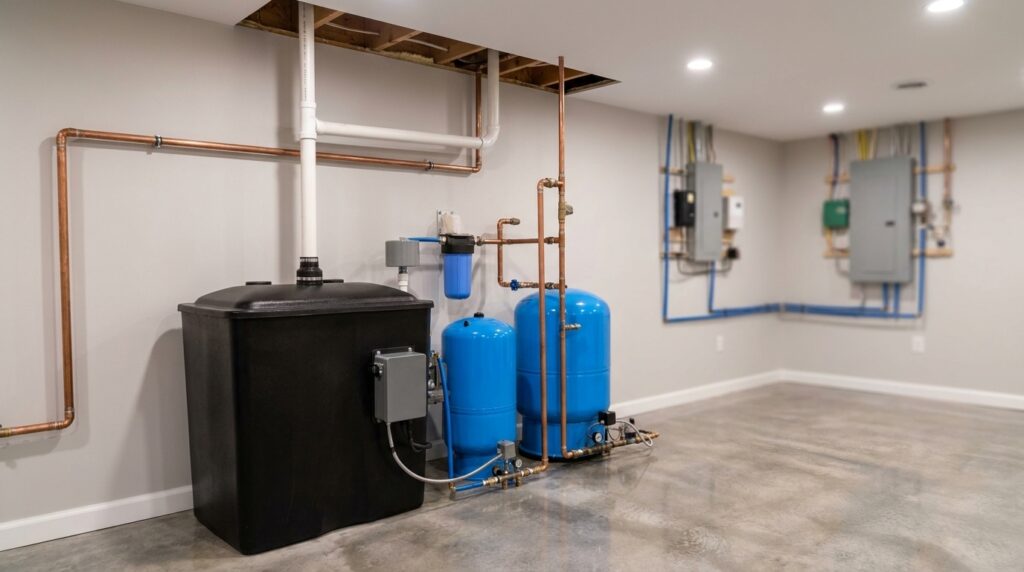
The difference between point-of-use and whole-house systems is exactly why radon treatment has to happen where water enters the home, before it reaches any tap, shower, or appliance. A closer look at how a radon aeration system actually works shows why this point-of-entry design is the mechanism behind that whole-house coverage.
| Treatment Type | Coverage |
|---|---|
| Under-sink filter | One faucet only |
| Whole-house aeration | Every fixture, shower, and appliance in the home |
Point-of-entry treatment doesn’t just add coverage. It changes the fundamental logic of the system, since every fixture downstream of the treatment point receives the same treated water. That’s the only way to close off the exposure pathway that matters, and it’s exactly why an aeration system is installed as a point-of-entry unit rather than a single fixture attachment.
Because a whole-house system ties into the home’s main plumbing rather than a single fixture, installing one is a bigger job than swapping in an under-sink filter. Whether that kind of installation requires a local permit is worth confirming before work begins, since it touches plumbing and sometimes electrical work throughout the house rather than one isolated fixture.
Get Treatment That Actually Covers the Exposure
Why radon water treatment has to cover the whole house comes down to where the exposure actually happens, not where the water gets consumed. Jersey Radon and Water Treatment starts with testing and evaluates whole-house treatment based on the home’s actual conditions. Contact us to discuss what your results mean for treatment.
